Home / Events / Kishi Yuma Symposium: Botanical/Artificial Intelligence
Art Incubation

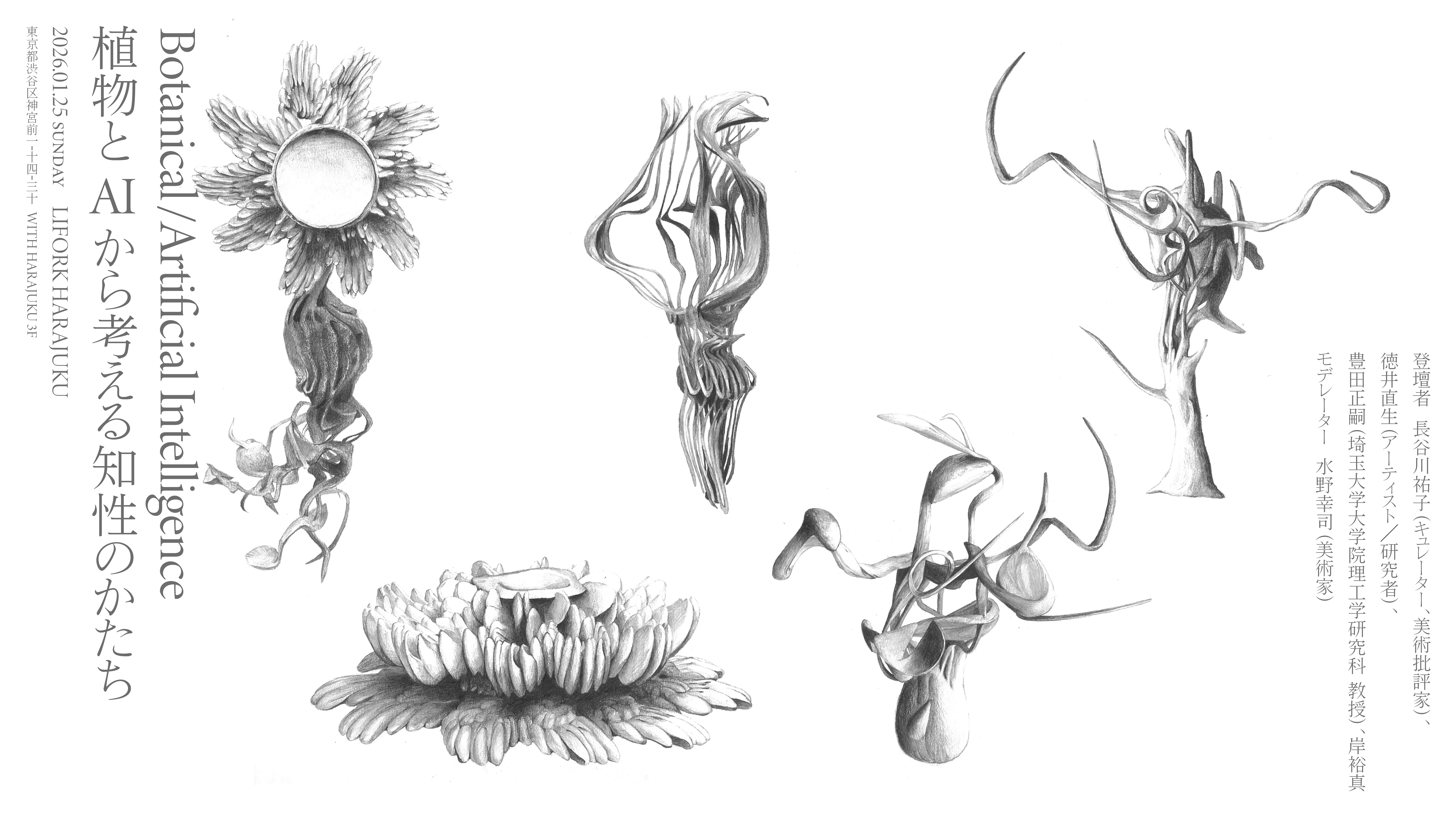
Kishi Yuma Symposium: Botanical/Artificial Intelligence

2026.01.25(Sun)
LIFORK HARAJUKU(1-14-30 Jingumae, Shibuya-ku, WITH HARAJUKU 3F)
 
Date & Time
January 25, 2026 2:00 pm – 4:30 pm (last entry: 1:30 pm)
Venue
LIFORK HARAJUKU(1-14-30 Jingumae, Shibuya-ku, WITH HARAJUKU 3F)
Capacity
80
Admission
Free
Registration
Reservations required in advance *First-come, first-served basis

Speakers: Yuko Hasegawa (Curator, Art Critic), Nao Tokui (Artist/Researcher), Masatsugu Toyoda (Professor, Graduate School of Science and Engineering, Saitama University), Yuma Kishi
Moderator: Koji Mizuno (Artist)

The symposium “Botanical/Artificial Intelligence—Thinking about Intelligence through Plants and AI” is a related event to 2025 CCBT artist fellow Kishi Yuma’s Parallel Botanical Garden project.

As part of 2025 artist fellow Kishi Yuma’s project Parallel Botanical Garden, this symposium considers the forms of intelligence that emerge at the intersection of generative AI and plants. Against a backdrop of the language and images that generative AI is now continually producing, questioning the very nature of human creativity, Kishi has focused on the intelligence of plants, which have responded to their environments for millions of years despite not having a brain.

This symposium redefines the contours of intelligence in the modern era, cutting across the three fields of art, technology, and botany. It features specialists in technology and botany, including curator Hasegawa Yuko, who has organized numerous exhibitions related to ecology and art, and provides a forum for a wide-ranging discussion about two different types of intelligence: plant and AI.

For his project in the Art Incubation program, Kishi is developing a platform of botanical intelligence (BI), where art and R&D intersect, interfacing with the behavior of plants to experiment with creative collaboration and dialogue with unknown intelligence. It hypothesizes an image of plant-like intelligence that frees AI from human-centered frameworks and constitutes a form of knowledge that encompasses a whole environment. This symposium explores what intelligence not limited to humans looks like, as well as forms of society, cities, and expression based on that premise.

Access

LIFORK HARAJUKU(1-14-30 Jingumae, Shibuya-ku, WITH HARAJUKU 3F)

1 minute walk from Harajuku Station East Exit, 1 minute walk from Meiji-jingumae (Harajuku) Station Exit 2

Parallel Botanical Garden


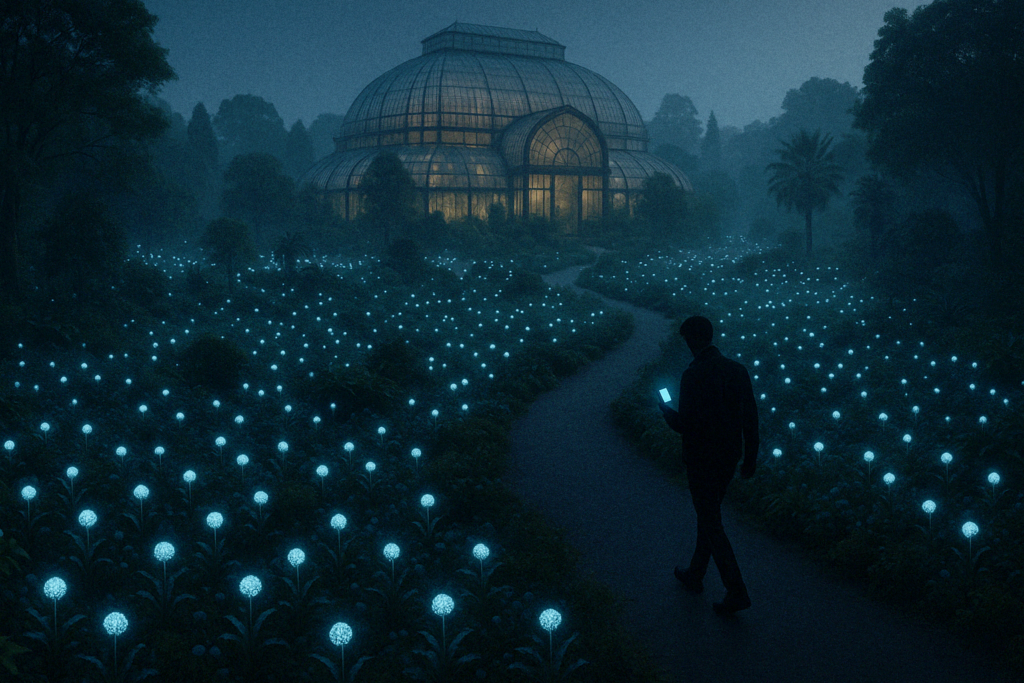
This project develops “botanical intelligence” (BI), a way of looking at AI from the perspective of botany. Through precise sensing of pluralistic environmental data on light, wind, soil, and more, and adopting a generative BI approach that outputs text and speech, it aims to develop a commons where humans and nonhumans alike can prosper. In addition to showcasing the completed system as an installation in the form of a botanical garden, the project collaborates with experts and holds public lectures and workshops as part of the research and development process. While based at CCBT, the project explores its themes in terms of nature as a resource shared by all beings, and strives to discover a new co-prosperity zone.

CCBT Art Incubation Program

One of CCBT’s core programs, the Art Incubation Program provides opportunities for creative talent to undertake new projects and makes those processes accessible to the public, facilitating forms of artistic expression, exploration, and action that change our city for the better. Selected through an open call, five artist fellows will act as CCBT partners, developing their projects, making the creative process public, exhibiting the results, and holding workshops and talks.

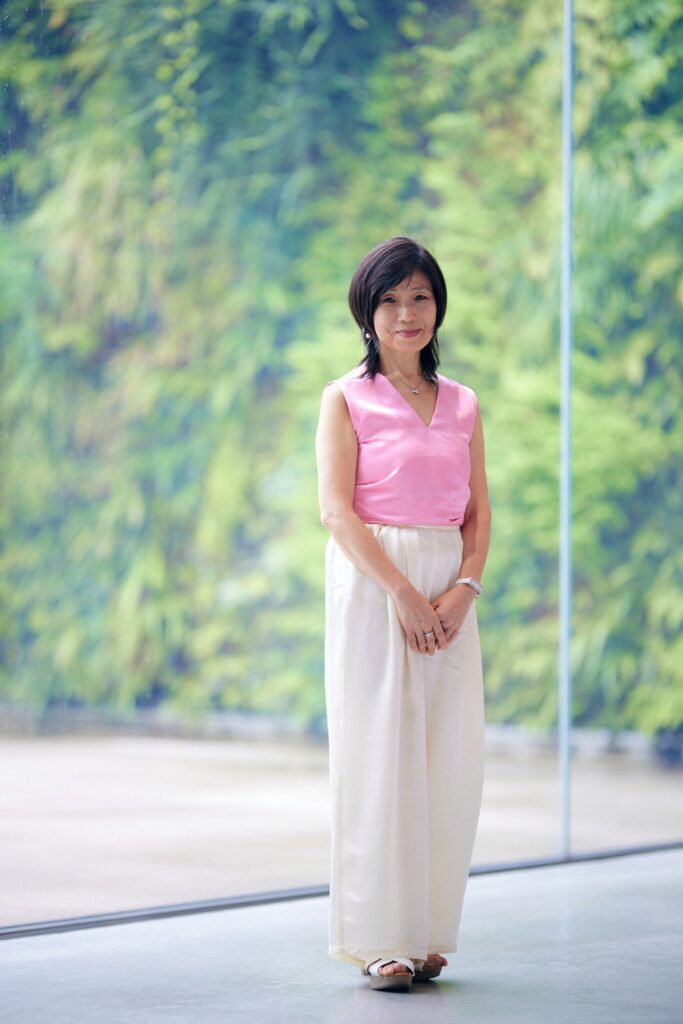
Photo: Tezuka Natsume

Kishi Yuma

Artist

Kishi Yuma reinterprets AI as alien intelligence and proposes the emergent relationship between humans and AI as an alien subjectivity, which he explores through paintings, sculptures, and installations created in collaboration with an AI that he developed himself. Since 2023, the AI model MaryGPT has curated almost all of his work. Kishi’s exhibitions include the solo show Oracle Womb (2025, √K Contemporary, Tokyo) and the group show DXP2 (2024, 21st Century Museum of Contemporary Art, Kanazawa). His awards include the short list for the CAF Award 2024. He is the author of Creating with the Unknown: On the Alien Encounter between Humans and AI (2025, Seibundo Shinkosha).

Hasegawa Yuko

curator, art critic

Hasegawa Yuko is a visiting professor at Kyoto University Graduate School of Management and professor emeritus at Tokyo University of the Arts. She also serves as program director of the Art and Design Department at International House of Japan, visiting professor at the Research Institute for Humanity and Nature, and artistic director of the Inujima “Art House Project.” She is the recipient of the Commissioner for Cultural Affairs Award (2020), the French Ordre des Arts et des Lettres (2015, 2024), and Brazil’s Ordem do Mérito Cultural (2017). She was previously director of the 21st Century Museum of Contemporary Art, Kanazawa, and also a professor at Tama Art University (2006–16) and the Tokyo University of the Arts Graduate School (2016–23). As a curator, Hasegawa has been responsible for numerous biennials and international exhibitions, including Japanorama: New Vision on Art since 1970 and Japonismes 2018. Her publications include Curation.

Tokui Nao

artist, researcher

Tokui Nao explores the expansion of human creativity by AI through both research and artistic practice. With a PhD in engineering, he leads Qosmo, a collective of artists, designers, and AI researchers engaged in creative production and technology development. In 2023, he founded Neutone, where he develops new AI-based musical instruments. Tokui’s works have been exhibited at the Museum of Modern Art (New York), Barbican Centre (London), and Ars Electronica Center (Linz, Austria), and he has performed AI-driven live shows at festivals including Sónar and MUTEK. His major English publication includes Surfing human creativity with AI—A user’s guide.

https://naotokui.net/

Toyota Masatsugu

Professor, Graduate School of Science and Engineering, Saitama University

Toyota Masatsugu graduated from the Department of Physics in the Nagoya University School of Science in 2002. He completed a master’s degree in materials science (physics) at the Graduate School of Science, Nagoya University, in 2004. He then completed his doctorate in cell signaling and medical studies, earning a PhD in medicine in the same university’s Graduate School of Medicine in 2008. Toyota served as a JSPS Research Fellow and JST PRESTO researcher at Nara Institute of Science and Technology and the University of Wisconsin–Madison, among other institutions, before taking up his current position in 2022. Toyota’s numerous awards include the Early Career Award in Biophysics from the Biophysical Society of Japan in 2015, the Young Scientists Award from the Minister of Education, Culture, Sports, Science and Technology in 2017, the Encouragement Award from the Japanese Society of Plant Physiologists in 2024, and the Shimadzu Encouragement Award and the Okazaki Prize in 2025.

https://www.jst.go.jp/erato/toyota/index.html
Photo: Shibata Hina

Mizuno Koji

Artist

With a focus on painting and calligraphy, and an interest in how painters and poets think about and express nature, Mizuno Koji is primarily active in art practice, criticism, and exhibition curation. He graduated from the Tokyo University of the Art Department of Intermedia Art in 2025. His major curatorial projects include the special Gakuten exhibition Unknown Visitors (2022, National Art Center, Tokyo) and Poltergeist (2024, Motoeigakan). Mizuno has co-curated such exhibitions as Kishi Yuma’s solo show The Frankenstein Papers (2023, DIESEL ART GALLERY).

Production
Kishi Yuma
Organizer
Civic Creative Base Tokyo [CCBT] (Arts Council Tokyo, Tokyo Metropolitan Foundation for History and Culture)