
DAY 1
2026.10.10
Where Do Imagination and Technology Reside?
- Program Introduction: About the Program
- Participant’s Self-introductions
- Workshop: “Realization of the Imagination in Theater”
Lecturer: Okada Toshiki (artistic director, Performing Arts Festival: Autumn Meteorite Tokyo) - Lecture: “Technology in Collaboration with Imagination”
Lecturer: Kakehi Yasuaki (researcher, artist / Professor at The University of Tokyo) - Introduction of Facilitators
Nagamatsu Ayumu, Sato Tomoko, Usami Nao - Group Work
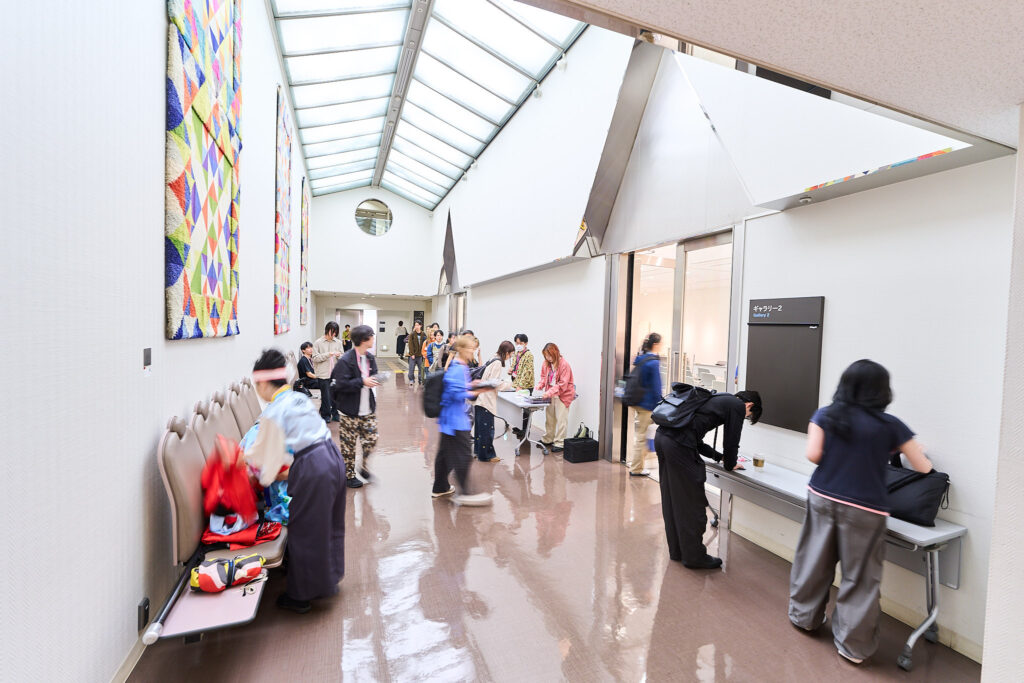
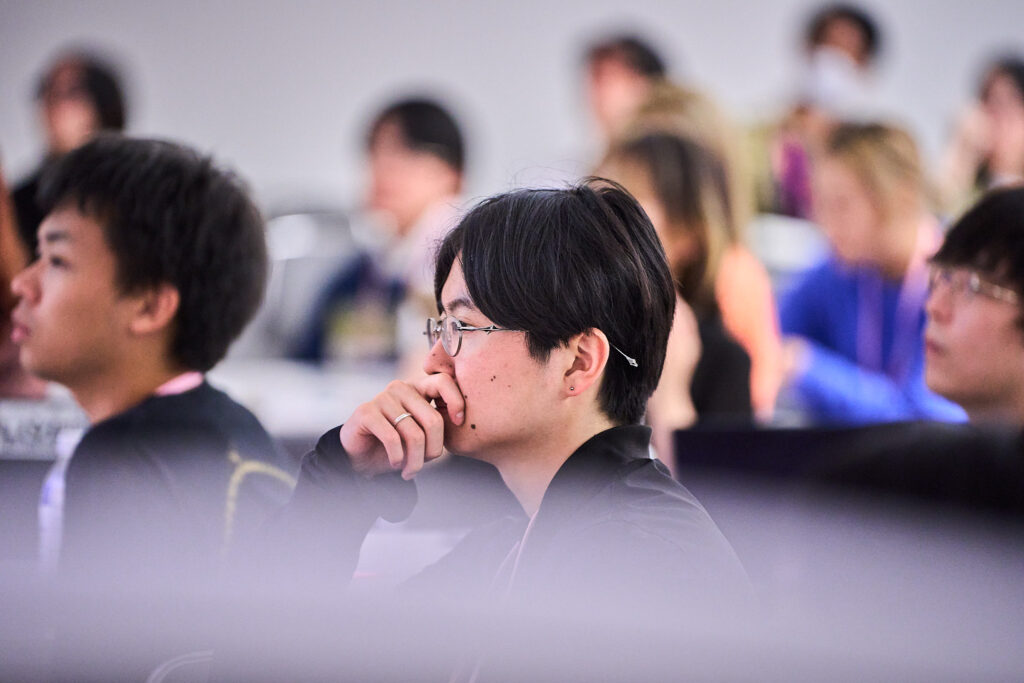
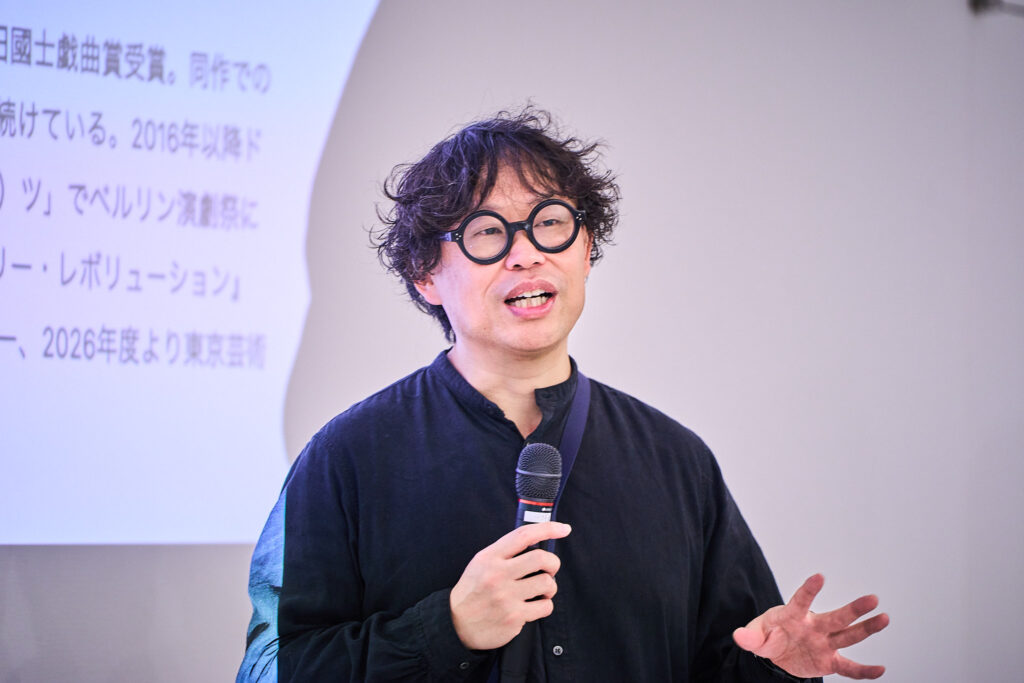
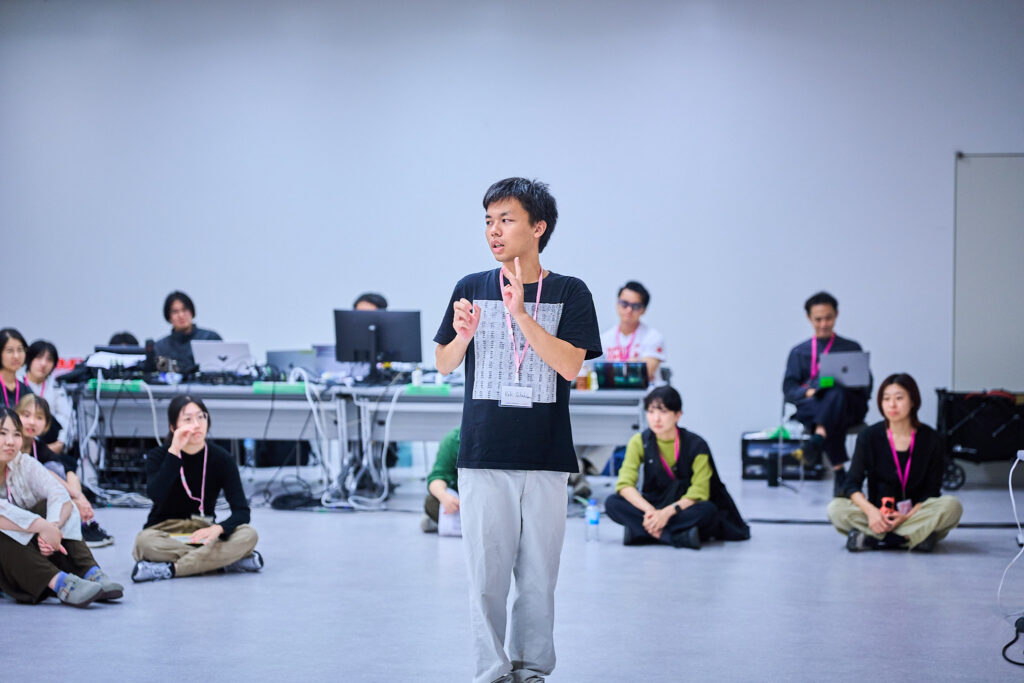
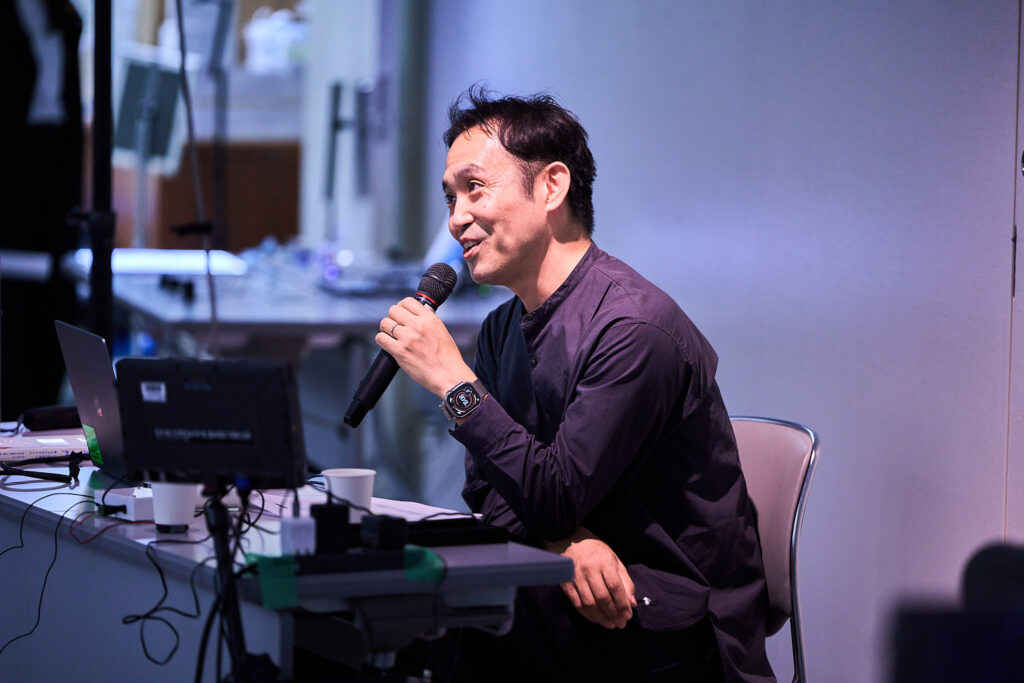
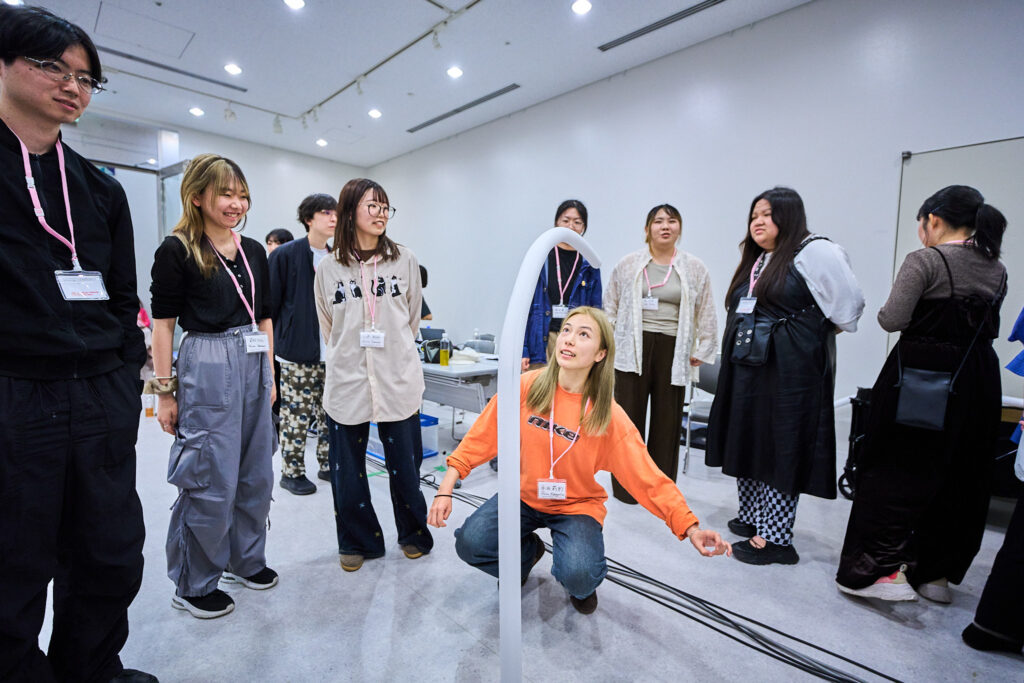
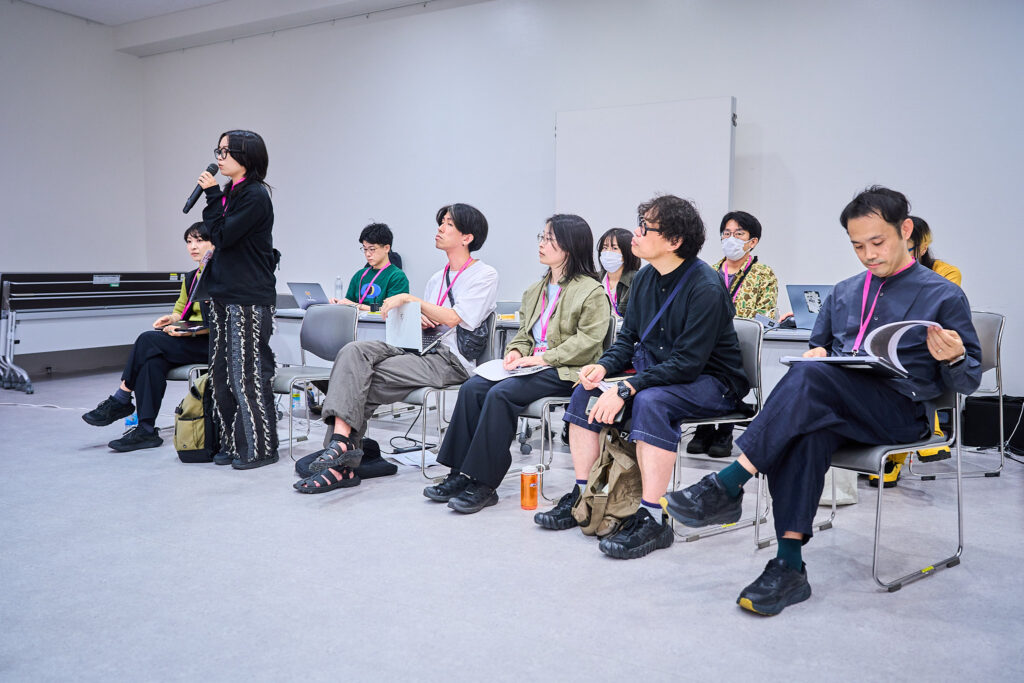
photo: Saito Jumpei
The first day opened with remarks from Camp Director, Toshiki Okada, who spoke of the unrealised possibilities in theatre and his desire to explore them through the collaboration with technology.
The 24 participants then stepped forward to each give one-minute self-introductions. Their fields ranged from theatre and media art to publishing, curation, robotics, fashion, and archiving. The group consisted of students, company employees, and entrepreneurs from a variety of countries and professional backgrounds. Okada asked each participant thoughtful questions about their relationship with theatre and what they hoped to gain from working together during the Camp.
In his afternoon workshop, Okada invited the participants to describe particular houses they remembered, using words and gestures. The exercise and subsequent discussion helped establish a shared understanding of “imagination” and “fiction” as integral to theatre: a house that is not physically in front of us can become to exist “there” as it is acknowledged by the performers’ and audiences’ combined imaginative efforts. Okada explained that one of his criteria for judging a work of theatre is whether it finds ways to engage the audiences’ imaginations.
The second half of Okada’s workshop drew on examples from film and his own “EIZO theatre.” He recalled being moved by a scene depicting a character’s fantasy of a city being destroyed precisely because it was obviously CGI. By contrast, the scene in which a CGI bear was presented as a real animal attacking people fell flat for him. He further explained that he leaves the projectors visible in his own projects because revealing the mechanism does not prevent the fiction from taking hold. What does this suggest about the relationship between technology and imagination in theatre? When participants expressed uncertainty about whether—and why—to use technology, Okada noted that working through these questions was itself one of the aims of the Camp.
In the lecture that followed, Kakehi Yasuaki presented a wide range of his works and collaborations. Rather than simply employing sophisticated technology, he approaches it as a means of reconfiguring the relationship between people and objects. His presentation offered insight into the hands-on sensibility and underlying questions that inform this approach. Reflecting on collaborations with Arai Hideo—who had also performed at the Performing Arts Festival: Autumn Meteorite 2026 Tokyo– and others, Kakehi described moments when the technology could not keep up with the performers’ bodies and movements.
During the Q&A, Kakehi spoke about exploring what to create through playful experimentation with materials and technology and also discussed his interest in experiences that retain the sense of wonder even when their underlying mechanisms are visible and understood. During the break, participants gathered around his works to try them for themselves.
After the facilitators Usami Nao, Sato Tomoko, and Nagamatsu Ayumu introduced their practices, the participants moved into five groups assigned by the organizers to begin their group work. As they shared their interests, they were free to experiment with a range of devices including thermal imaging equipment, VR, directional speakers, and devices created by Kakehi. Some groups remained at their tables as they were absorbed in their discussions; others moved around the room, trying one device after another. The facilitators listened to their discussions, asked questions, and helped the participants operate the devices. By the end, the venue walls were covered with cards bearing the participants’ reflections.
When people from diverse backgrounds come together to collaborate, they need a common ground that connects their interests and questions. Okada’s workshop and Kakehi’s lecture invited participants to reconsider the roles of imagination and technology in artistic practices. The questions and criteria they presented seemed to take root as a shared foundation for collaboration, and the lively discussions made the participants’ enthusiasm palpable, bringing the first day to a close with a growing sense of anticipation for the three days ahead.
DAY 2
2026.10.11
Finding Reality through Objects
- Workshop: “Fictional Introductions of an Other”
Lecturer: Sato Tomoko (artist) - Presentations and Feedback
Respondents: Okada Toshiki, Usami Nao, Kakehi Yasuaki, Konno Keina, Sato Tomoko, and Nagamatsu Ayumu - World Cafe
- Group Work
- Keynote Lecture: “Nodal Practices for Cities and What Lies Beyond”
Lecturer: Fujikura Asako (Artist)
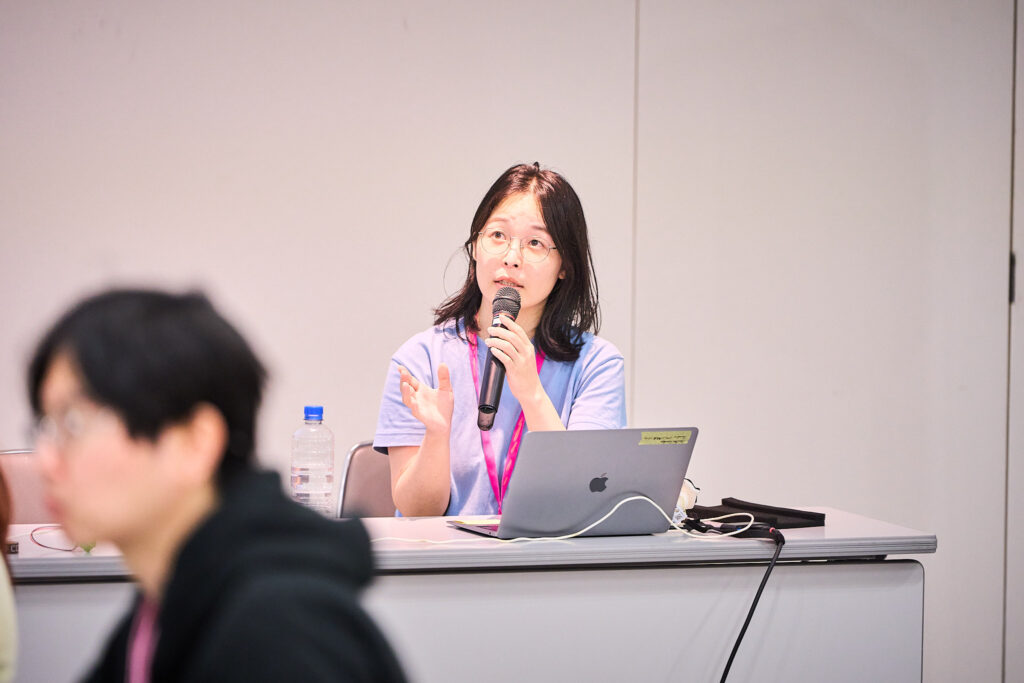
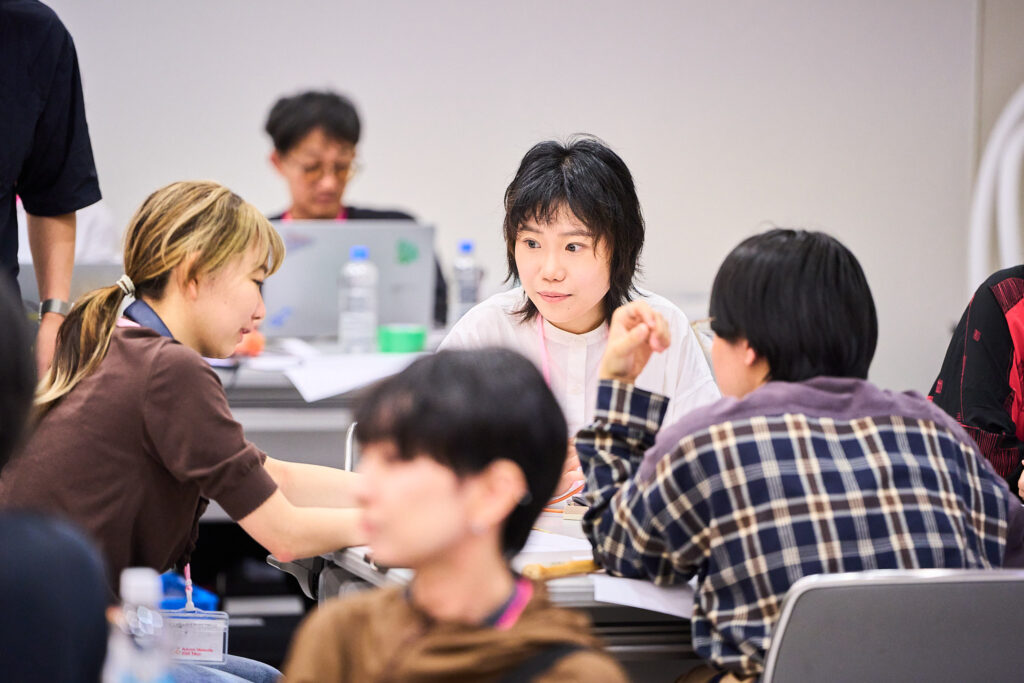
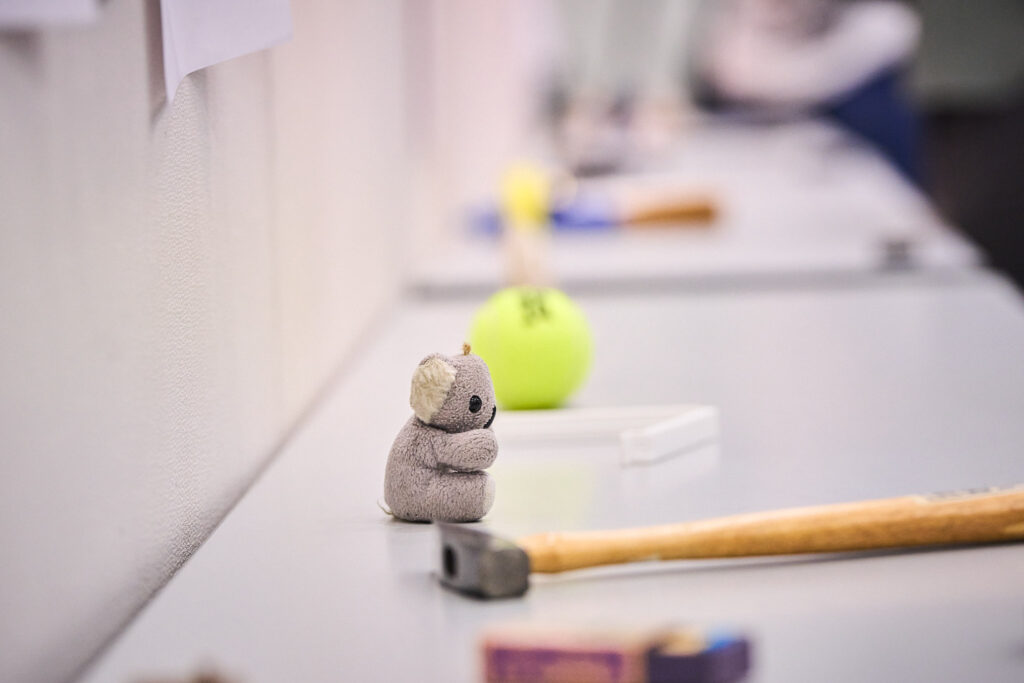
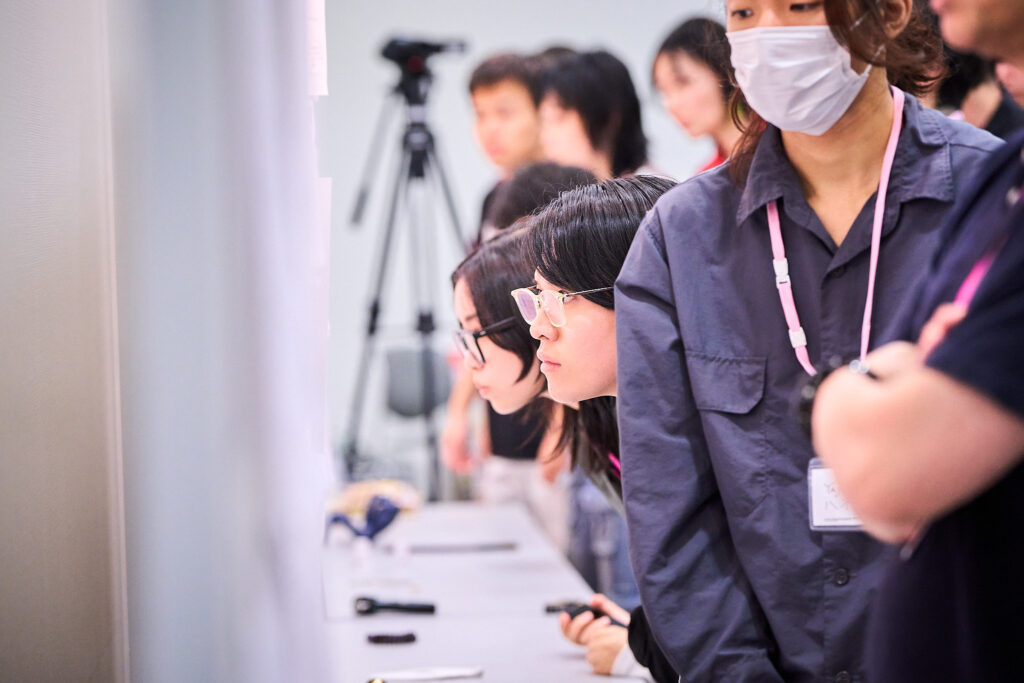
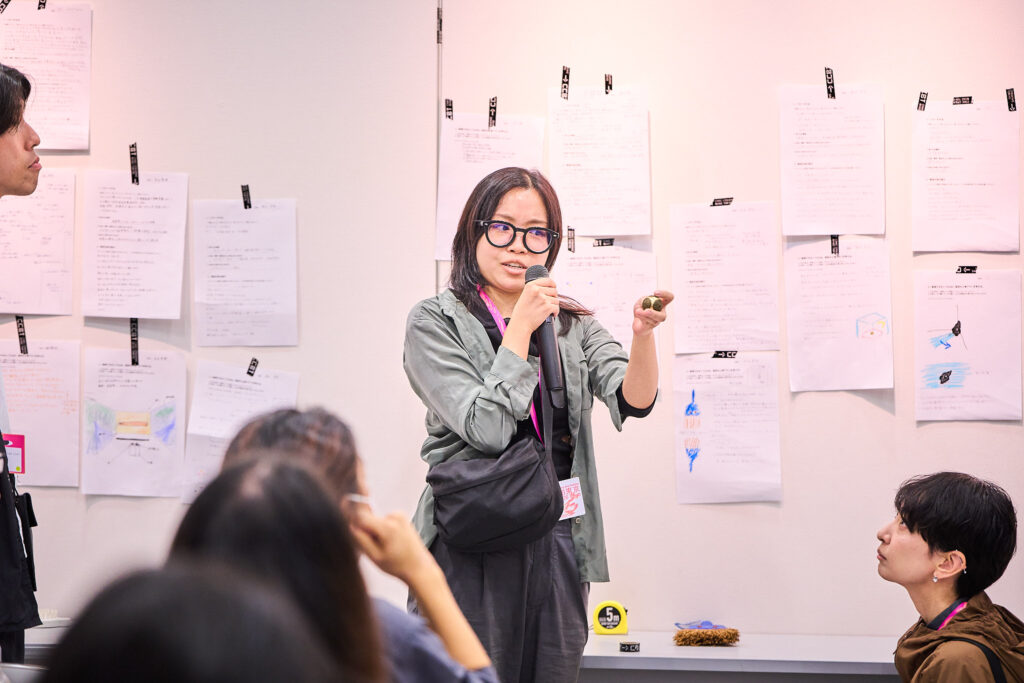
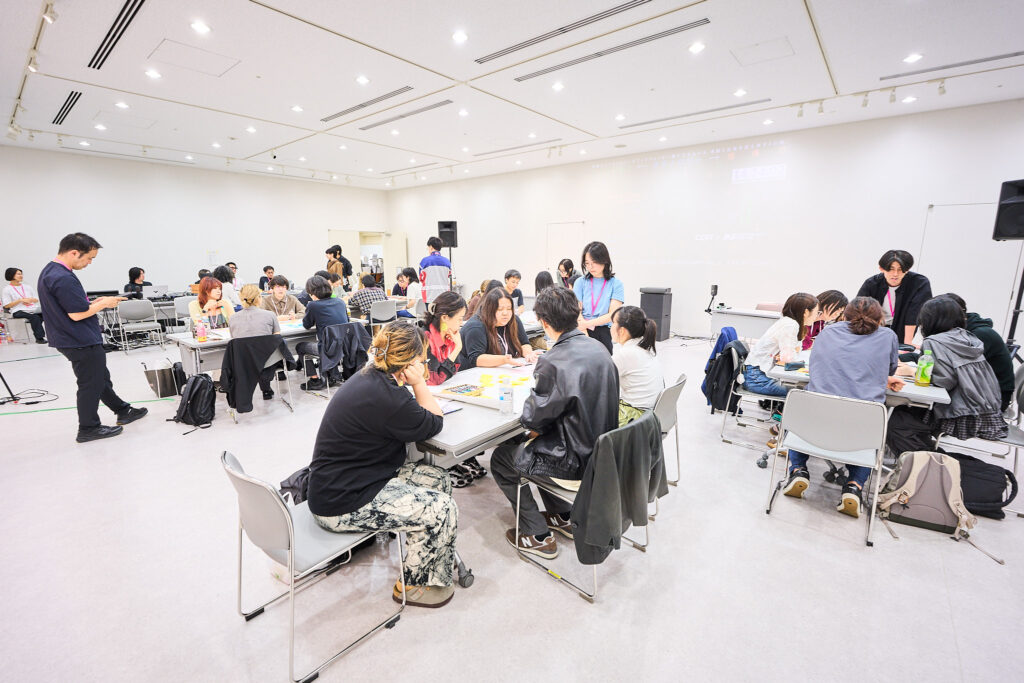
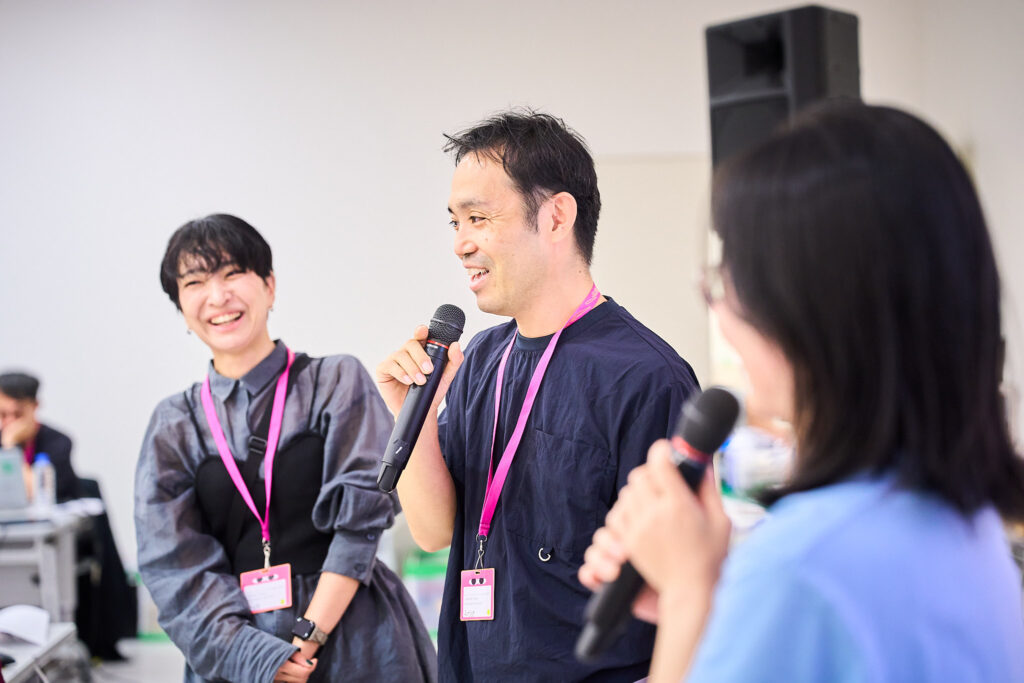
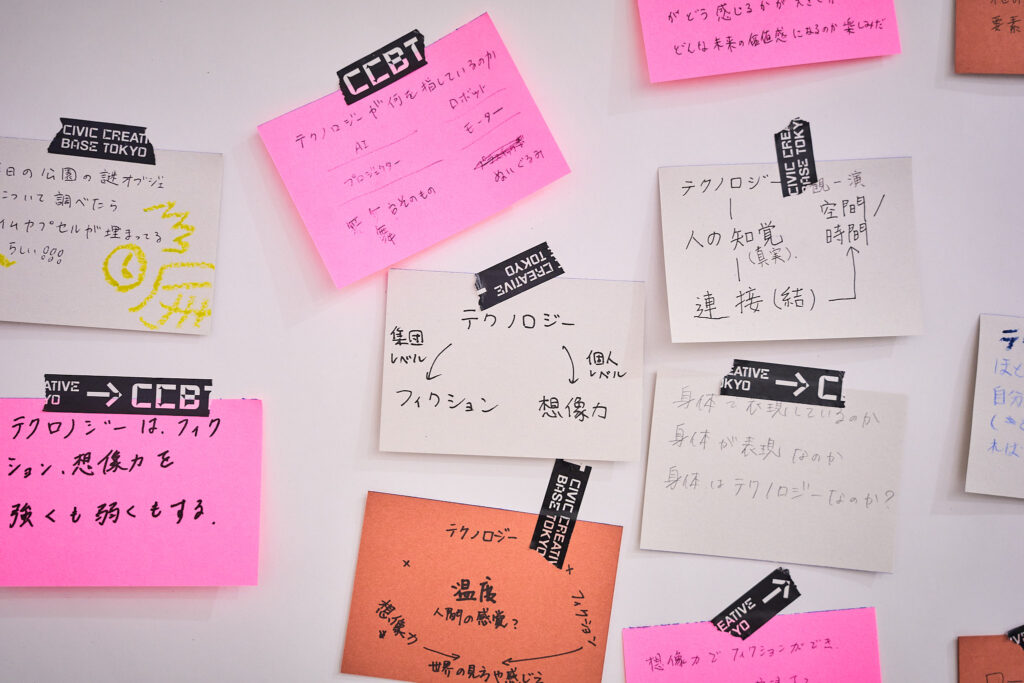
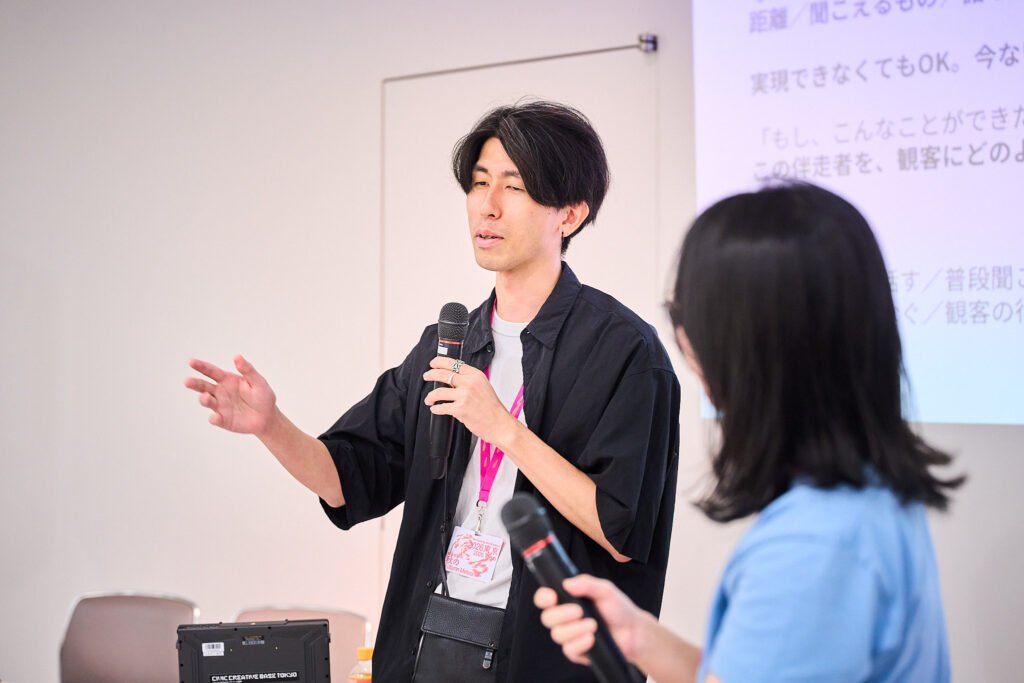
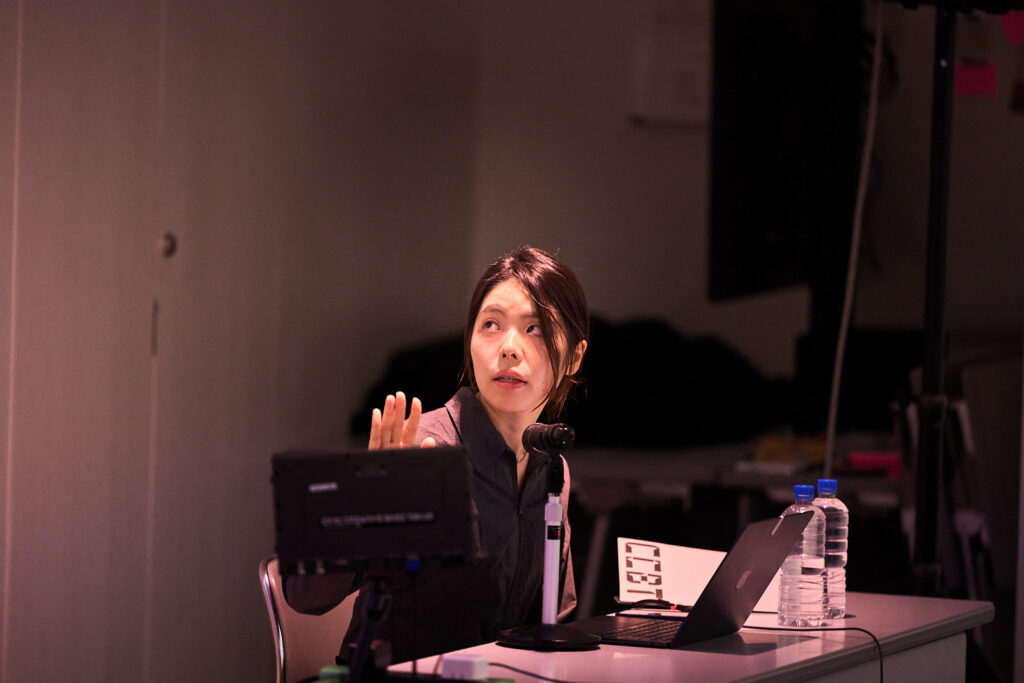
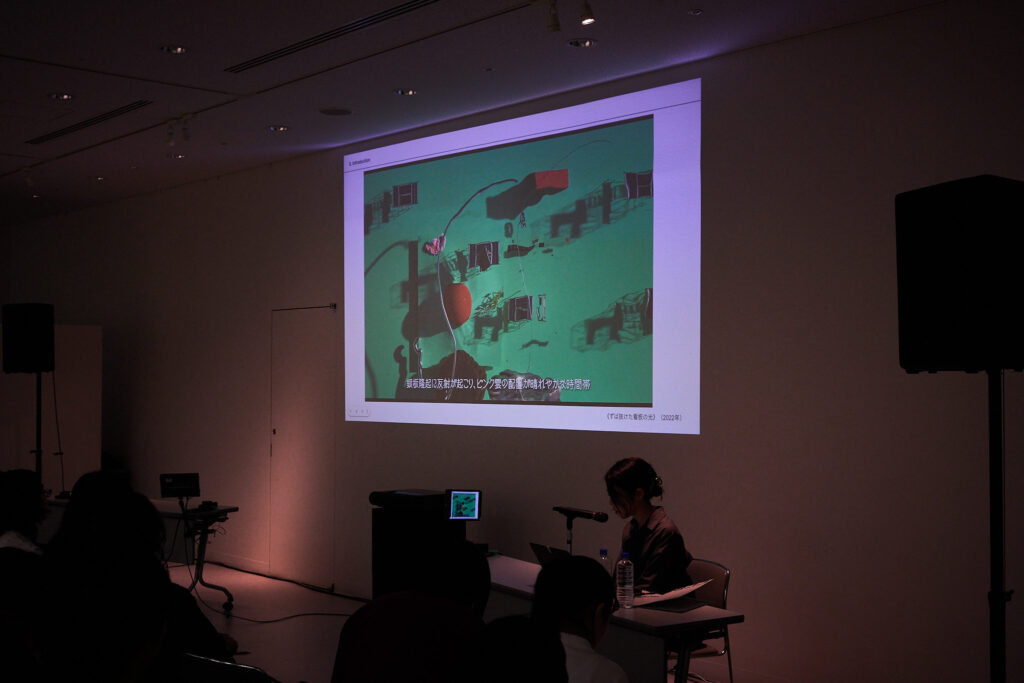
photo: Saito Jumpei
The second day began with “Fictional Introductions of an Other,” a workshop led by artist Sato Tomoko, one of the facilitators.
Participants had been asked to bring with them a “companion”: an everyday object, a tool, a model, a stuffed toy or figurine, or found object—anything they fancied. They were to treat this companion as “a presence for them to think and imagine together.” Each participant researched their “companion’s” background and developed an introduction for them, combining fact and imagination (fiction), together with a plan for staging it. They were invited to set aside the practical constraints and were encouraged to even imagine technologies that do not yet exist. Drawing on her own work, Sato introduced ways of exploring connections to society, history, and oneself through objects. As participants researched and developed their ideas, she held conversations at intervals with other facilitators, myself included, to offer clues for their work.
The participants shared their plans with one another and revised them further, after which their completed proposals were displayed on the wall with each corresponding “companion” placed in front. This brought out a diverse range of objects and approaches: in one proposal, a hammer’s autobiography explored its possibilities beyond simply striking an object, for example, and in another wheat, a bag, and other ingredients told the story of bread.
The workshop offered many ways to consider how performance and technology contribute to the sense of reality that goes beyond simply reproducing the perceived world. In the feedback and discussions, Okada framed this as a question of “letting the objects perform,” while Sato noted that the identity of the narrator can also transform how an audience experiences the introduction. Usami Nao discussed how the sense of reality can emerge without advanced technology or high-resolution tools and Nagamatsu Ayumu considered how proposals that incorporate color and a performance timeline—rather than text alone—can help bring an idea to life. Kakehi also identified possibilities in audio feedback—usually treated as an error—in one of the proposals featuring a recording device as a companion. Each observation and feedback connected the discussions from the previous day to the practical conditions of creating works.
In the afternoon, Konno Ena facilitated the World Cafe, a brainstorming session titled “Fiction←Technology→Imagination.” Participants switched tables every 10 minutes, leaving one person behind to relay the discussion so far. These conversations allowed participants to share the questions and concepts that had become personally meaningful to them through their processes of making and, as discussions unfolded, words, diagrams, and sticky notes gradually filled the large sheets of paper laid on the tables. In this Camp, even this simple and familiar brainstorming format began to resemble a practice in performance: imagining, retelling, and sharing.
The participants then returned to their groups for CCBT’s technical team to outline the requirements and constraints for the exhibit. Soon after, discussions resumed with only eleven hours of production time remaining. The groups now needed to find common ground among the many ideas generated and narrow them down into concrete exhibit plans. They continued to scribble their ideas on the sheets of paper and test the different equipment, trying to decide on the course of action for the following day.
After a break, Fujikura Asako delivered her keynote lecture, “Creating Points of Connection between the City and Wider Spaces.” Through examples in her practice and the Q&A that followed, Fujikura described a process of moving back and forth between 3D computer graphics and the physical world, using each as a blueprint or set of instructions for the other. The sense of “fulfillment” she seeks, she explained, is closer to discovering, in familiar surroundings, the possibility of momentary release—or liberation—from the shared rhythms of everyday social life. Fujikura explores new fissures that open up between 3D computer graphics and physical reality by translating the different rules that govern each sphere. Her lecture offered a critical inquiry into how technology shapes the relationship between fiction and reality.
The Camp participants asked a series of questions about her work process, and the atmosphere was charged with both uncertainty and enthusiasm. Tomorrow, collaborative production will get fully underway as the groups work rapidly toward the exhibit.
DAY 3
2026.10.12
What Can We Show to Spark the Imagination?
- Lecture: “Writing Captions”
Lecturer: Yamamoto Hiroki (Novelist, Designer, Critic, Editor, Founder / Inu no Senaka-za) - Group Work
- Progress Presentations
Respondents: Okada Toshiki, Usami Nao, Kakehi Yasuaki, Konno Keina, Sato Tomoko, and Nagamatsu Ayumu - Group Work
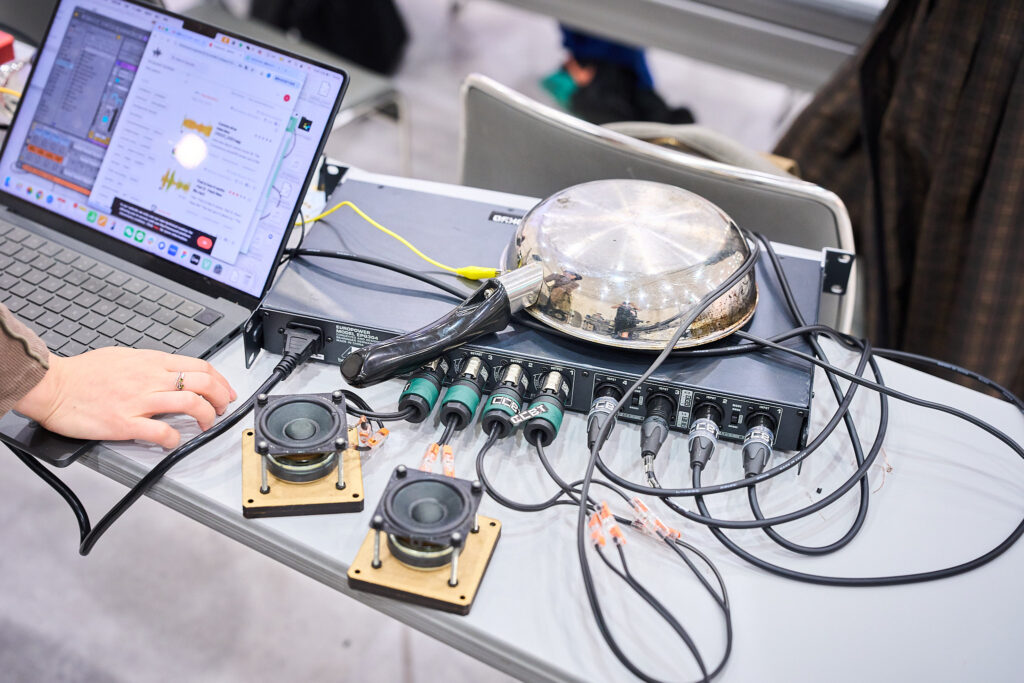
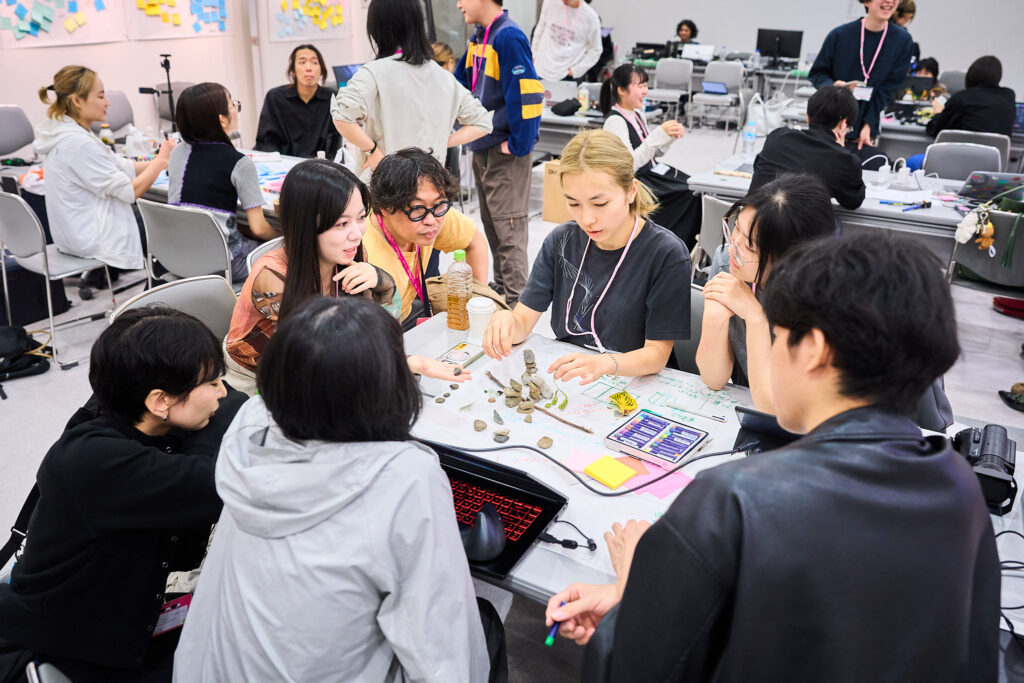
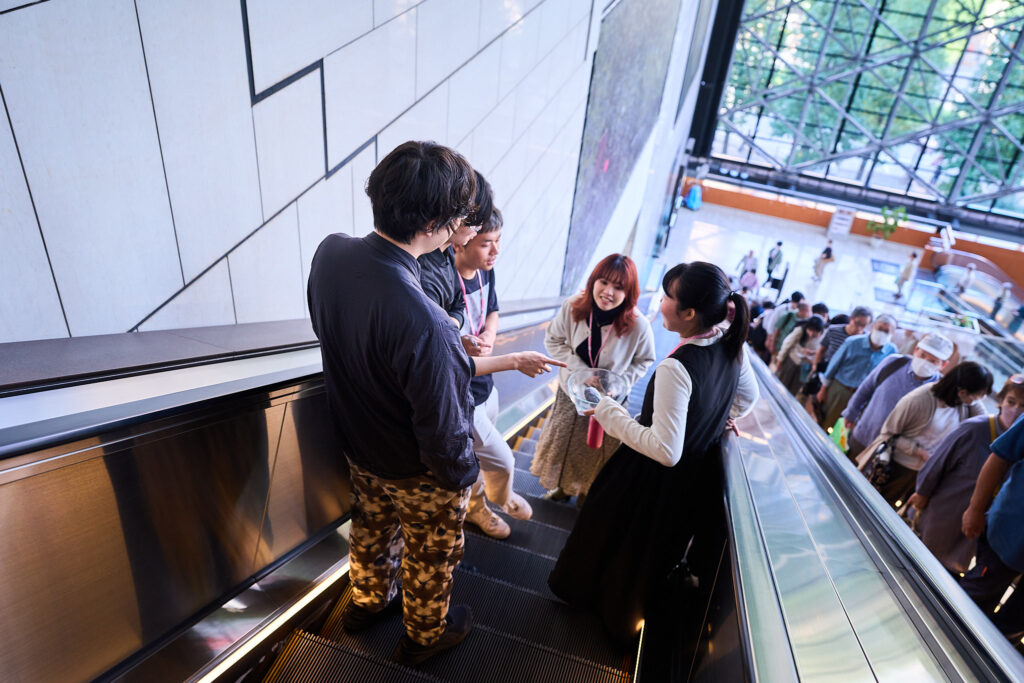
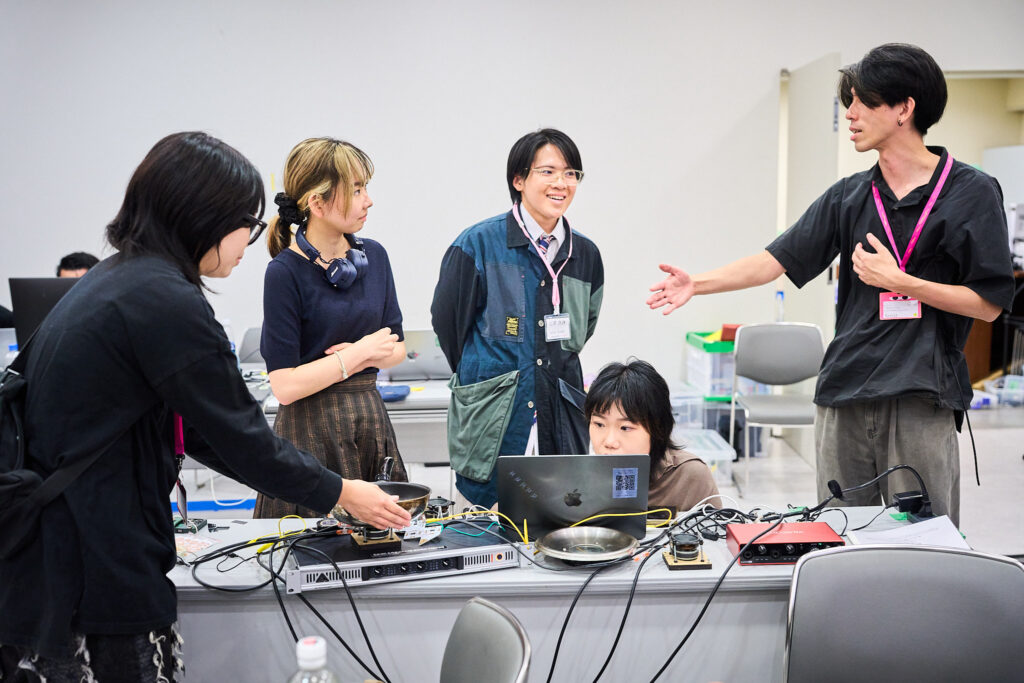
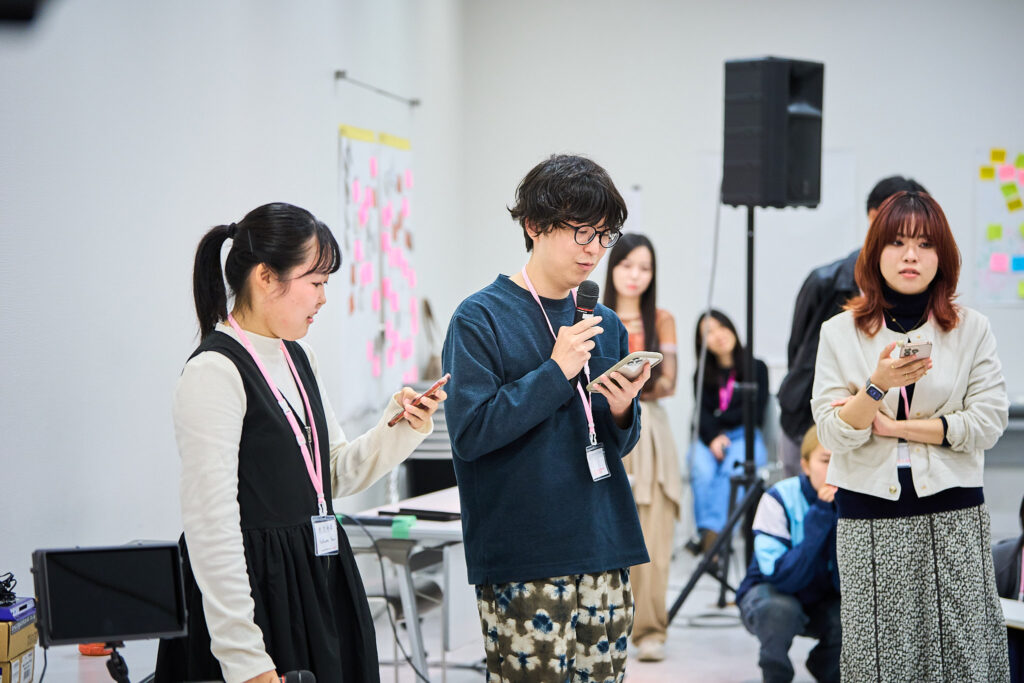
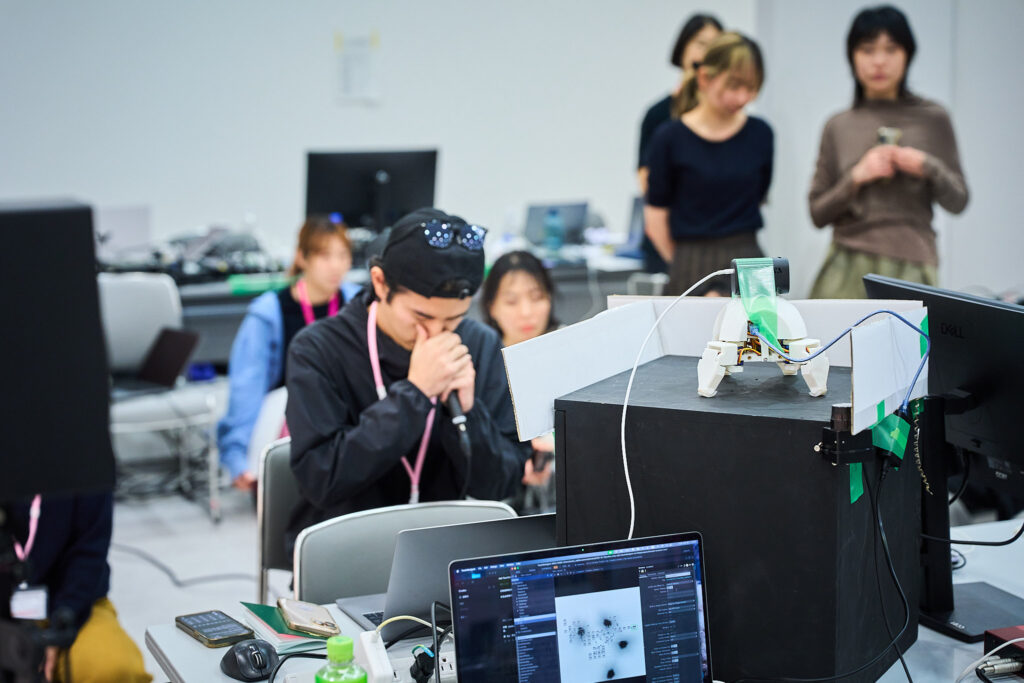
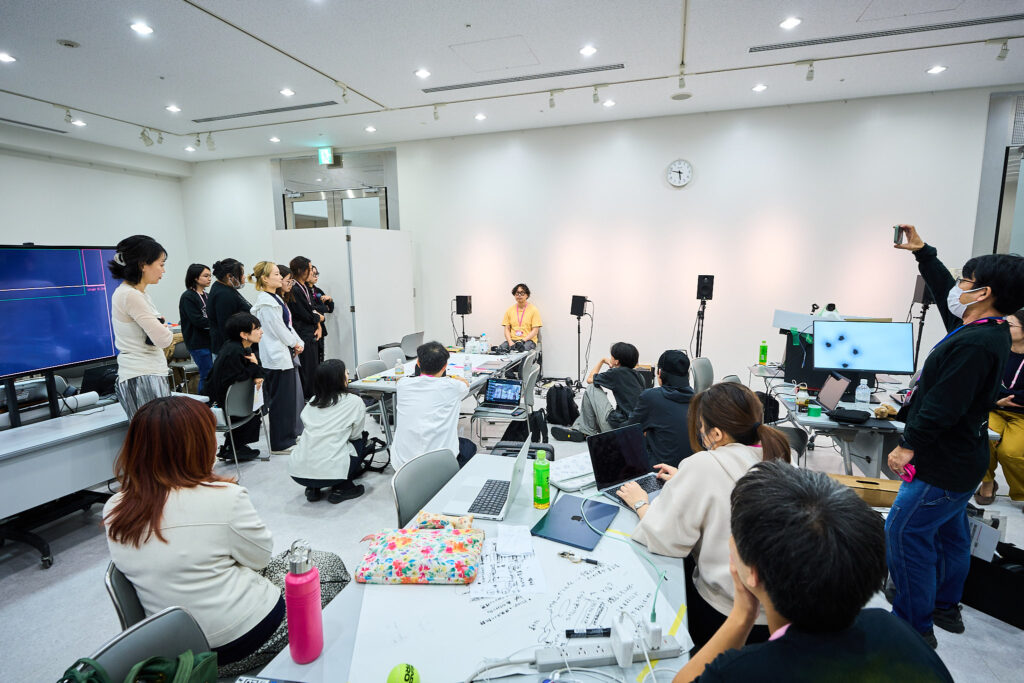
photo: Saito Jumpei
The third day began with my lecture on writing captions. Since visitors to the exhibit are without prior knowledge of the lectures and discussions from the past few days, it was important to consider what they should communicate and how they would like the visitors to approach the works. I used the example of showing a footage with four different texts accompanying it in a room to explain how captions can serve to provide more than explanations: they can change what people imagine and how they see what is in front of them. I also introduced a writing process that involved drafting with an intended reader in mind, then reading one another’s drafts to see how they come across to others.
Afterwards, group work recommenced. Each group continued to experiment with the objects and equipment; some went out onto the streets to film and collect stones for their projects, while others stayed inside to adjust their setups. The facilitators and technical team made their rounds actively, curiously asking what each group was testing out and if they had any concerns, offering advice in each step. Many groups continued working through lunchtime, they needed to be reminded to take breaks.
In the late afternoon, each group had 15 minutes to present their progress and receive feedback. Some materialized their many ideas and interests into an initial performance, while others had each member explain their plans so far and the thinking that led them there.
Group 1 has been exploring several different routes, including building an application based on Daruma-san ga koronda (a game similar to “Red Light, Green Light”). For their presentation, they brought their ideas together in a short performance where light and a frying pan played rock-paper-scissors to pass the time. Okada asked whether their exchange should be shown onstage or take place in the audience’s imagination. Sato spoke about the appeal of their persistent attempts to communicate through the incompatible languages of light and sound.
Group 2 took “re-fictionalizing fiction” as its theme, placing a 3D print of the 25143 Itokawa asteroid on a Roomba and sending it out to explore the terrain. Songs and a love story involving the asteroid were also featured, drawing laughter from the audience. Okada appreciated how collaborative work brought individual interests together to produce something unexpected. Nagamatsu, meanwhile, raised the questions of how to explain the work to those who are unfamiliar with its development and background.
Group 3 proposed an installation that would use image recognition to give stones various names, exploring both the history of how people have assigned roles to stones, and the stones’ own capability to own a record of the past. Okada saw a parallel with theatre in this approach: the power exercised in theatre when assigning roles to others in a performance. Kakehi asked what the work might reveal beyond the curious pairings of stones and their labels.
Group 4 presented a performance where the movements of a four-legged robot were translated into dots on a screen, while a performer breathed in tandem with the robot’s sounds which was amplified through a microphone. When one of the members spoke how it is very difficult to fully understand the physicality of someone close to them, Usami responded that she had empathized with the robot—tethered by cables and confined within an enclosure, Usami saw it as a condition of someone who was unable to move freely. Okada added that the group could also choose whether or not to show the performer alongside the robot.
Group 5 focused on the private space that is created when sitting in a public space, exploring how people sense one another’s presence and enter each others’ private spaces. During the presentation, Okada sat in a chair and listened to a recording of two women talking in a park, played through speakers on either side of him. He suggested that the women, talking as if he were not there, seemed like ghosts. Konno, by contract, commented that Okada himself had looked like a ghost. Sato noted that these strange and contrasting impressions may have risen precisely because the conversation was recorded rather than live.
The progress presentations revealed the difficulty of retaining all the possibilities that had emerged during the brainstorming and making processes. Nevertheless, an exhibit or (theatrical) performance cannot encapsulate every thought process that went into its making either. What [ideas] should be selected? Where should their efforts be focused? What kind of setup would allow the work to unfold with the greatest richness and deepest intensity? The feedback offered both starting points for revision and encouragement that strengthened the groups’ confidence in their chosen themes and technologies. It proved to be a productive session for all.
After the progress presentations, the groups carried on with improving their setups and layouts for the exhibit, barely pausing. How much could they adjust without losing sight of the core themes of their works? With the 7:30 p.m. deadline for the first drafts of their captions approaching, the final push towards the last day was underway.
DAY 4
2026.10.13
Fictions that Emerge, Possibilities that Endure
- Group Work
- Final Presentations (10min. Presentations + 10min. feedback)
Respondents: Okada Toshiki, Usami Nao, Kakehi Yasuaki, Konno Keina, Sato Tomoko, and Nagamatsu Ayumu
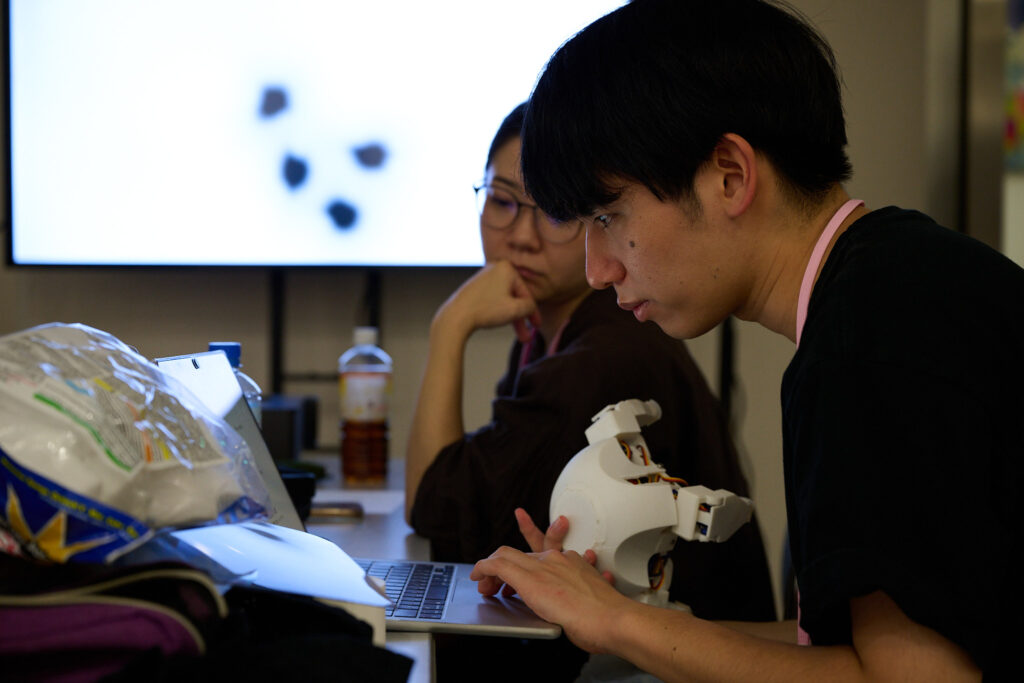
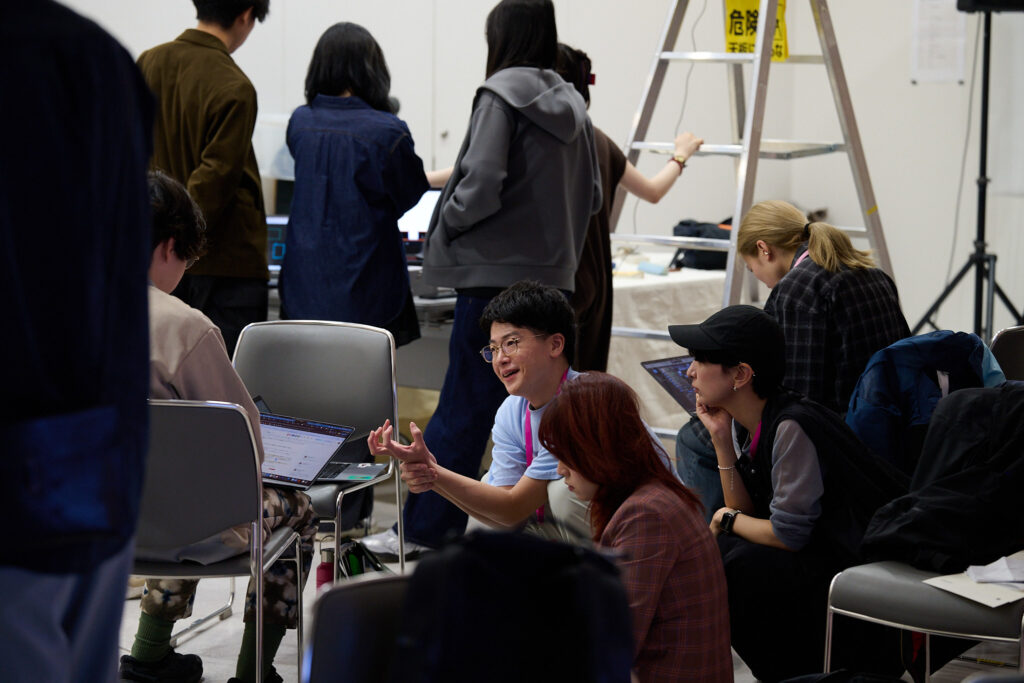
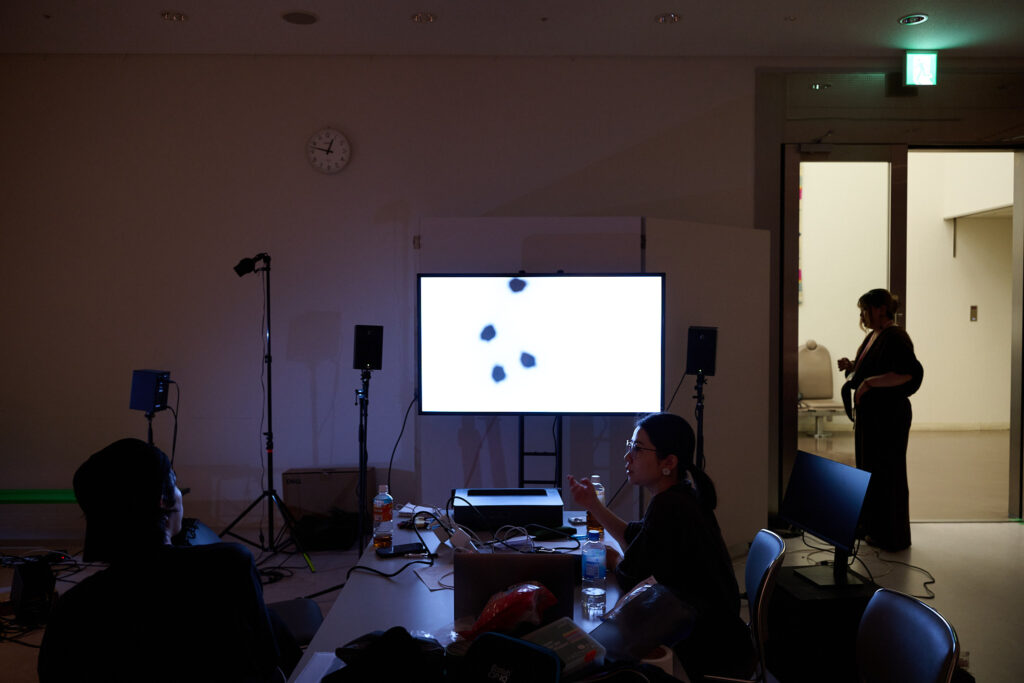
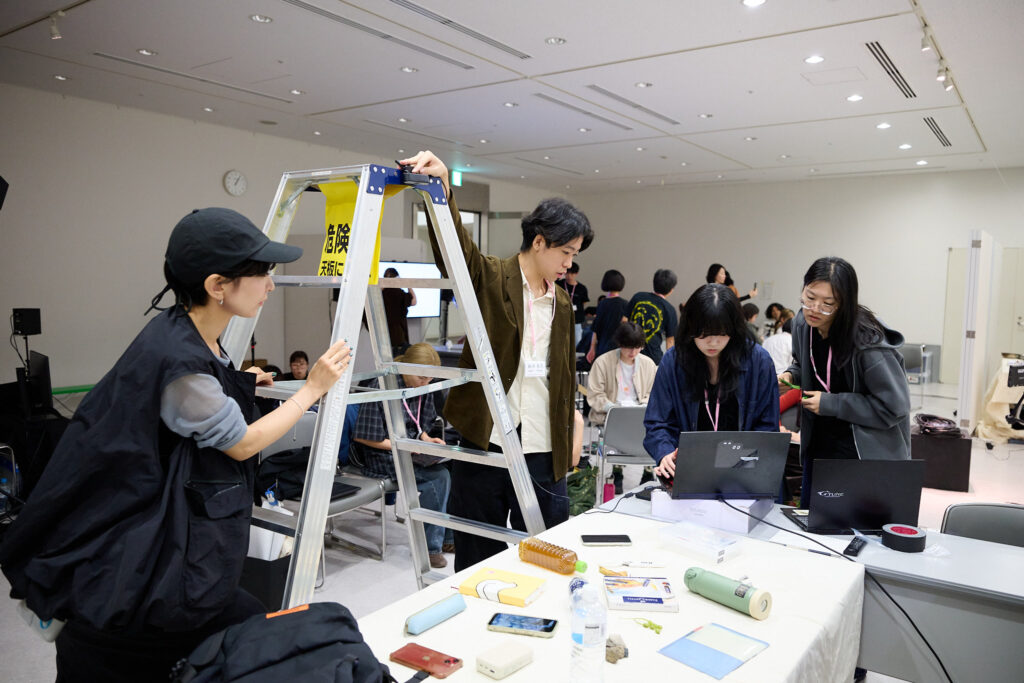
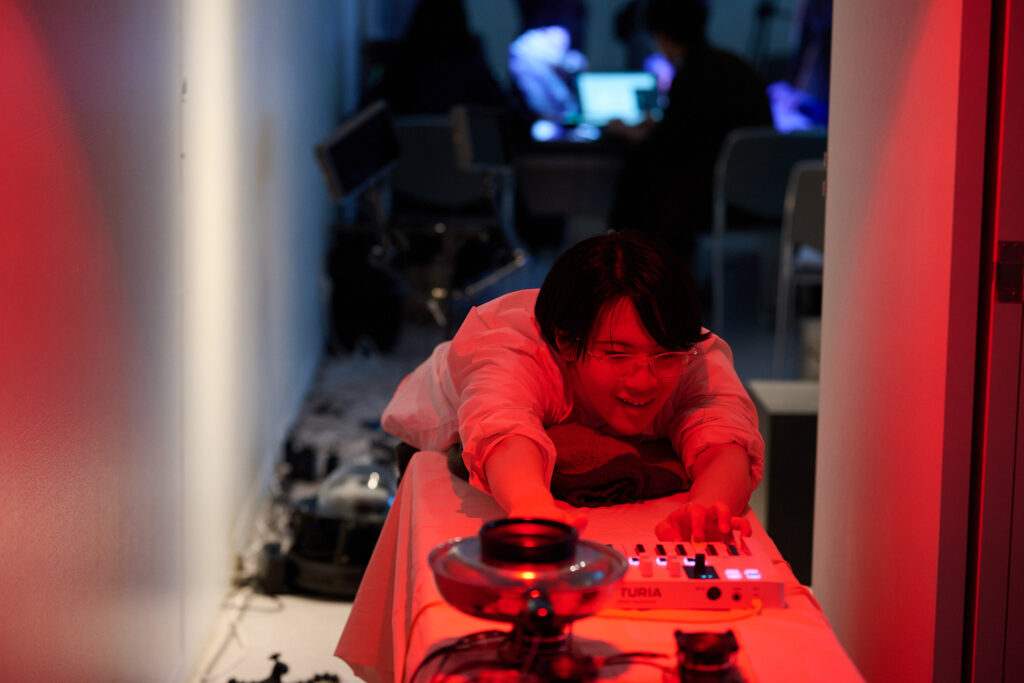
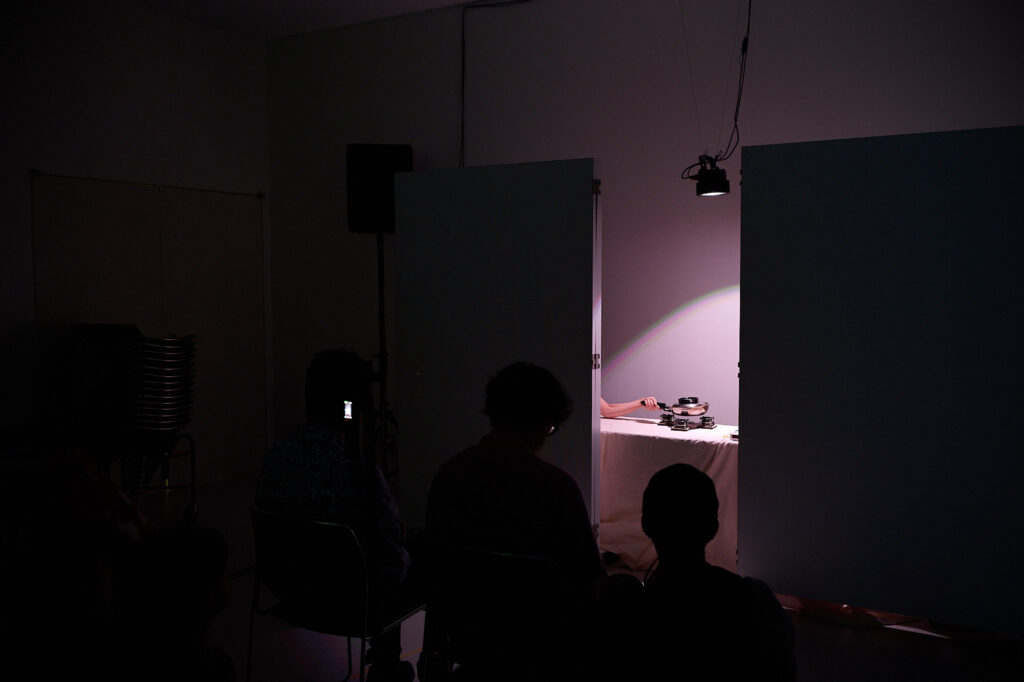
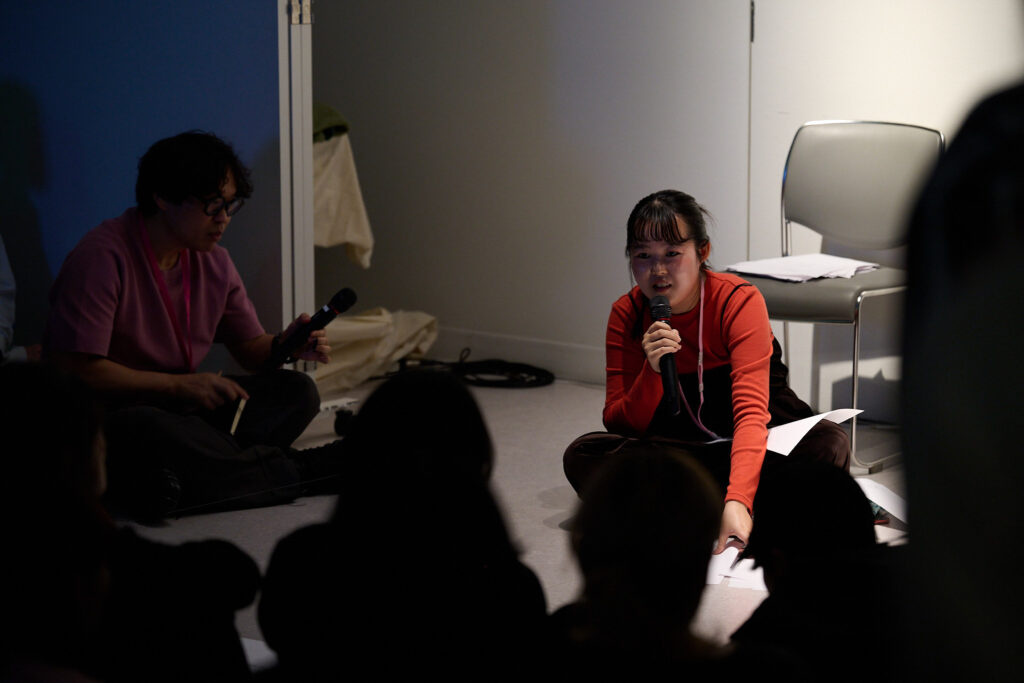
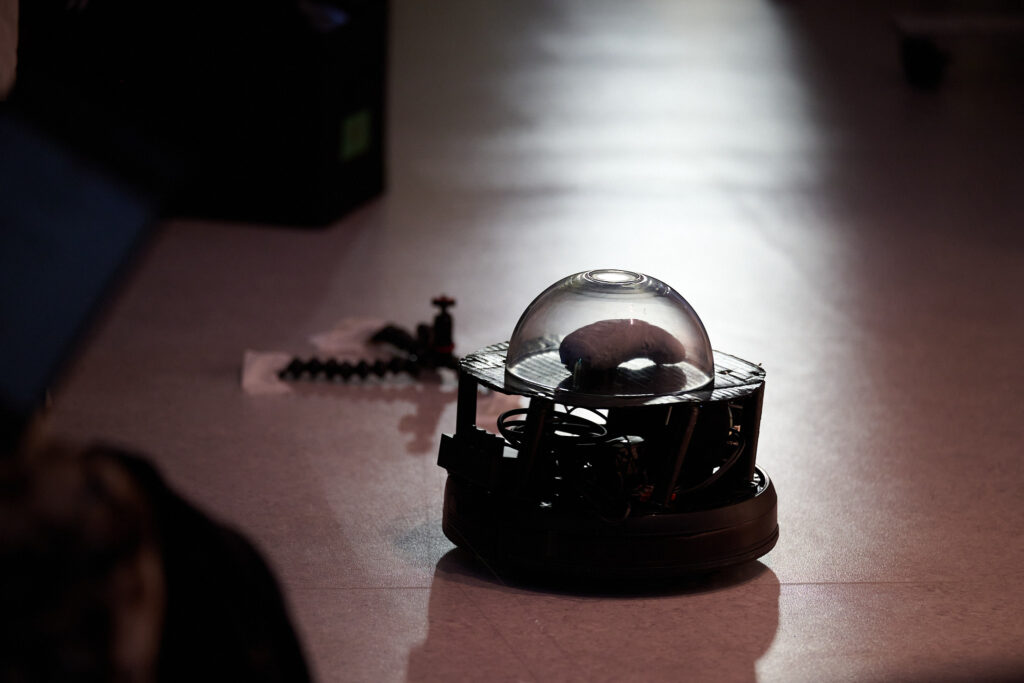
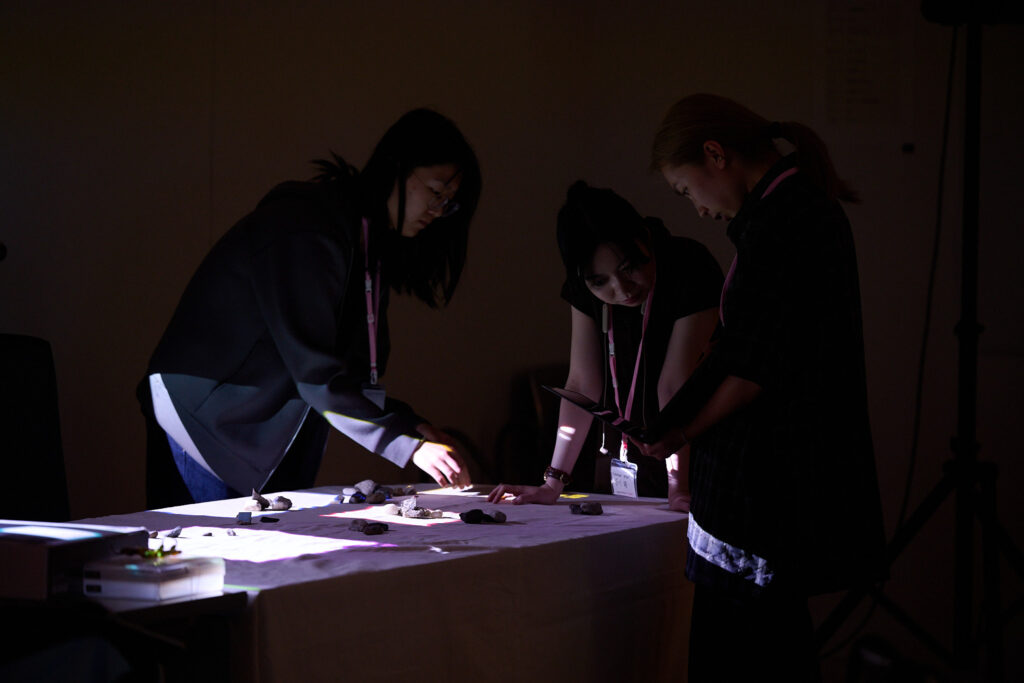
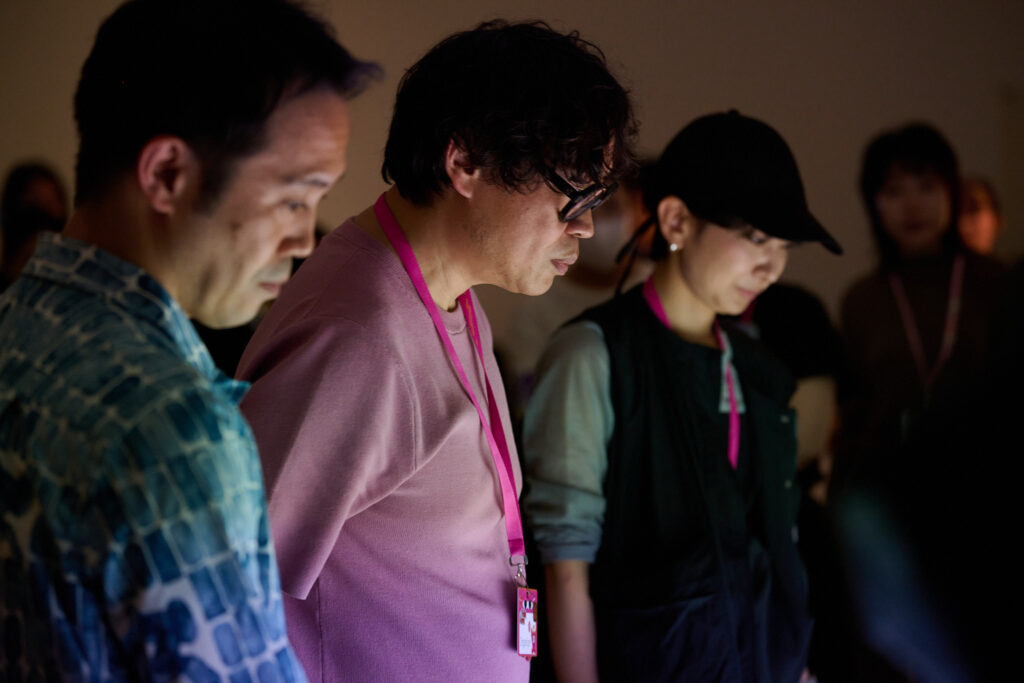
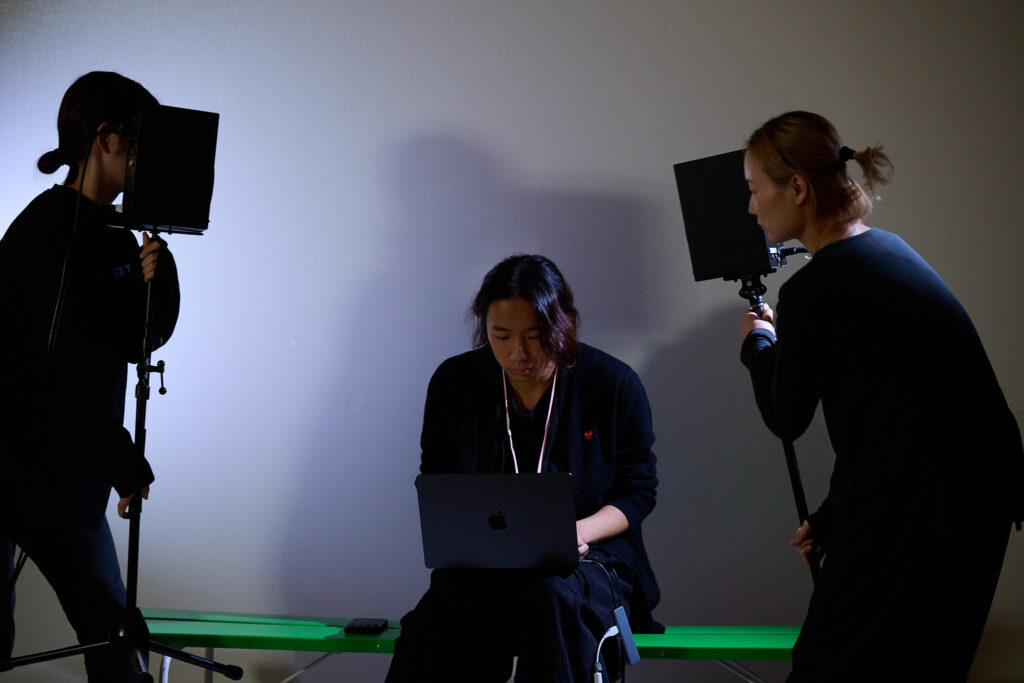
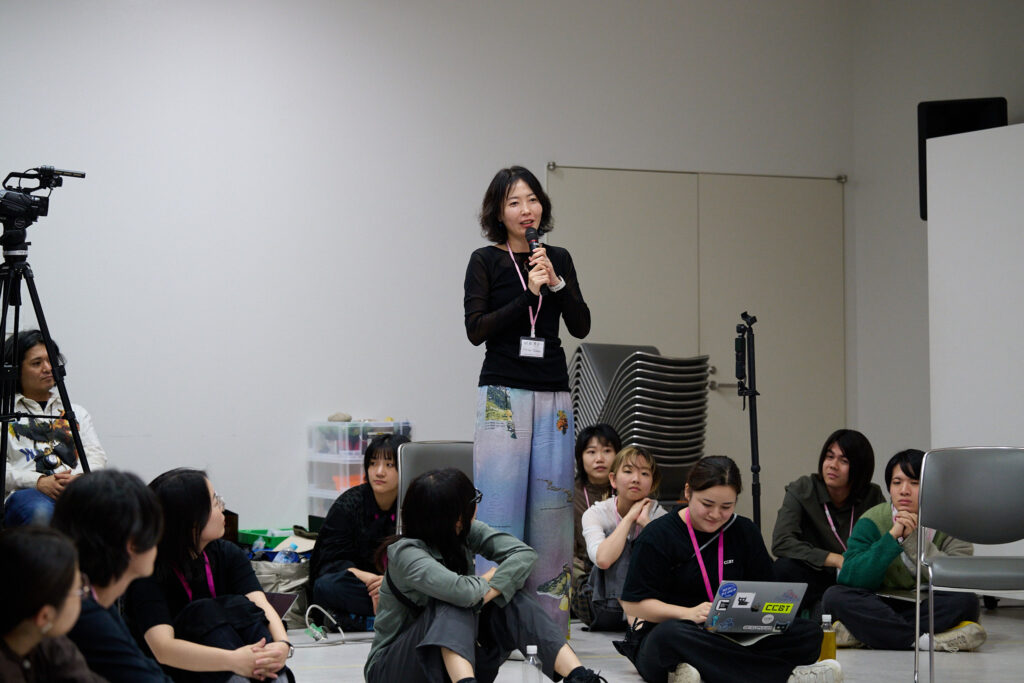
photo: Imai Tatsuya
The final day began with opening remarks from Okada in which he reiterated that he hopes to use his imagination to experience fiction emerging from the presentations and in the space before him. It would be even better, he added, if that experience was only possible through the particular devices (technology) each group had chosen.
Each member of the group contributed to the shared google document for their captions and on the Discord channels through the night and into the morning. When they returned, the groups immediately got back to work. The tables were cleared, the lights dimmed, and the entire venue began to transform into a performance space. I also stopped by each group to discuss their captions: what were they creating and how might the subtle nuances in their choice of words shape how their works are received? Refining their texts became an opportunity to identify differences in their understandings of the work and recalibrate their ideas.
In the late afternoon, the final presentations began with Konno as the moderator.
In Passing the Time, Group 1 had decided to do away with the verbal exchange. Through gaps in the partition, we could see hands manipulating a frying pan and a keyboard.The light and sound sensed their way towards each other, at times missing and overlapping each other. Usami praised the decision to remove elements, rather than simply add more, to engage the audiences’ imaginations. Okada enjoyed how the work playfully subverted the audiences’ expectations that momentous events should/would occur on stage.
Pooling Planets by Group 2 centered on a Roomba carrying a model of the asteroid 25143 Itokawa, with a succession of rallying songs, spoken narratives, and ideas for video. At one point, the Roomba failed to move as planned and wandered into the audience, ushering performers and viewers to help it along. Kakehi commented that he enjoyed this hiccup too. Okada saw considerable potential in the distance between outer space and the ubiquitous household appliance used. Sato was also struck by the sheer variety of stories that emerged from a single object.
For PLAY, Group 3 projected role names and frames onto a table, and people were invited to move the stones to give life to those roles. They had reversed the experiment from the previous day where AI interpreted these stones: now, people manipulated the stones in response to the words they were given. After the performance, audience members were invited to handle the stones themselves. Nagamatsu was impressed with the work as an installation, noting how the setup highlighted the stones themselves. Usami saw it as a form of expression for the post-AI generation: the installation took AI image recognition as a precondition, then turned that process into fiction.
Group 4 decided to conceal both the robot and performer in Ugomeku [Wriggling], combining four dots representing the movement of the robot’s feet with mechanical sound and human breathing. Usami suggested that the visuals and sound could be further developed to sustain the sense of uncertainty in the audiences’ imaginations; to keep the audience guessing if it was the robot or something else. Sato added that, once she dismissed it as a robot, it looked like an insect making strange sounds. The group explained, after the performance, that the core concept was an attempt to understand another’s body, which Sato remained strongly drawn to.
Performers pointed speakers towards other performers who were seated on a bench in Group 5’s Alternative Sitty (Sitting City). The work then developed into a sequence in which the performers leaned on each other, becoming chairs for one another. A space created through sound was dismantled and reconfigured as the equipment moved. Okada suggested that allowing more time for the fiction to take hold in the audiences’ imagination could strengthen the performative and fictive element of the work. Meanwhile, Nagatsuma praised their progress since the previous day, especially the intrusion into private space into a poetic critique of the relationship between the city and its inhabitants.
After a brief break, we sat in a circle to reflect on the four days. Kakehi observed that technology had merged with fiction and imagination, moving beyond its role as a tool to become a catalyst acting on environments and ways of thinking. Some of the participants admitted that it was a blur and found it difficult to wrap their heads around the entire process but still found hope in that very uncertainty. Okada, too, felt that the participants had each acquired an approach to theatre not only as a form of artistic expression, but also as a framework for thinking. He added that he had wanted to hear more in their final presentations, and that feeling itself was a wonderful thing to experience.
The participants still had final adjustments to make for the exhibit, which was due to open in two days. Bringing their works to life in two different formats—a live performance and the exhibit—must have opened up new possibilities while requiring others to be set aside. Amid these challenges, I came to see that the many ideas and discoveries that had not fully taken shape this time could resurface and develop in each of the participants’ future projects and everyday lives. These less visible possibilities were an equally valuable outcome of the four-day Camp.
Editor: Yamamoto Hiroki (Inu no Senaka-za)