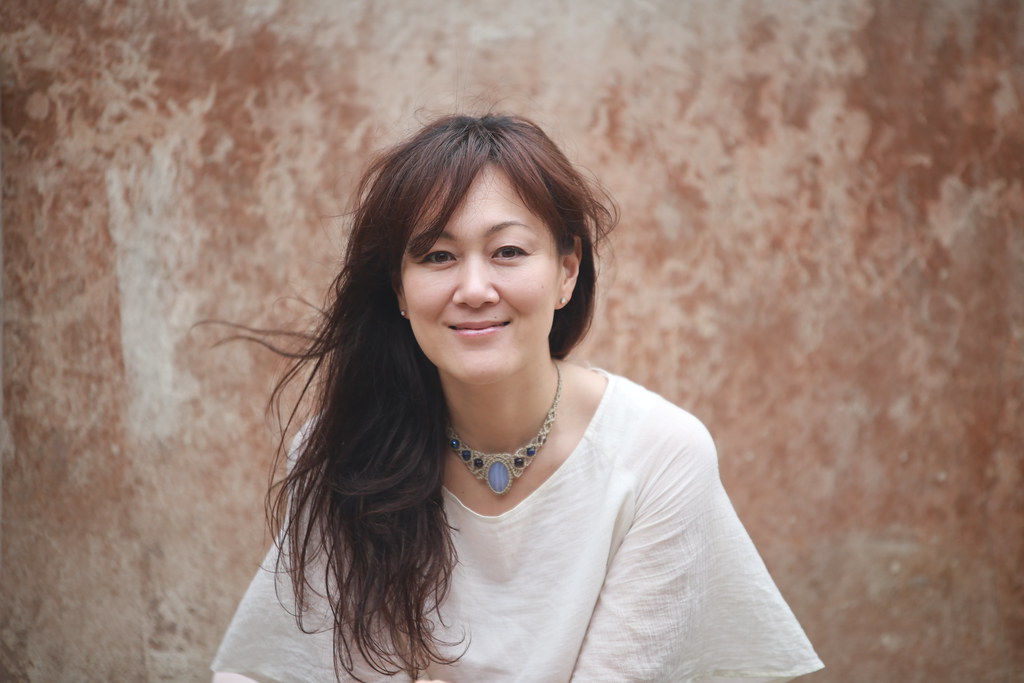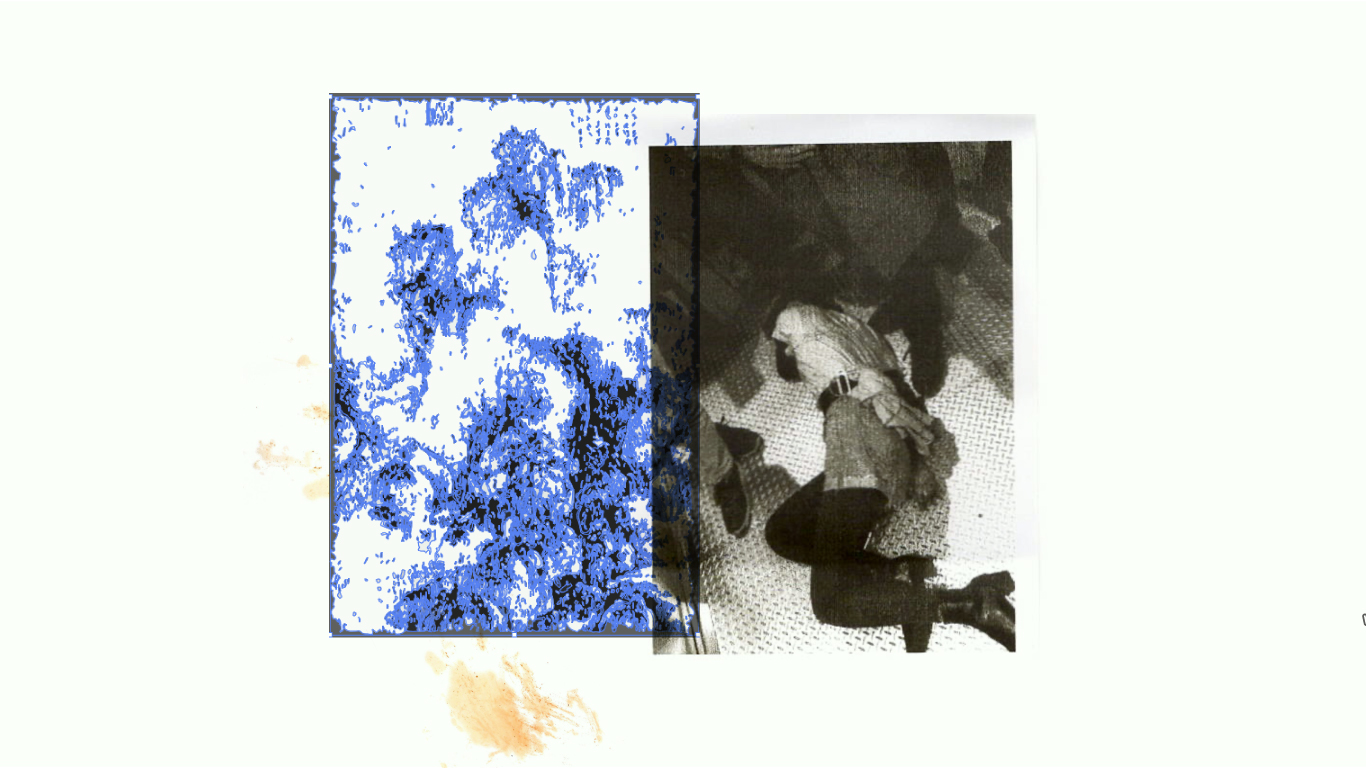
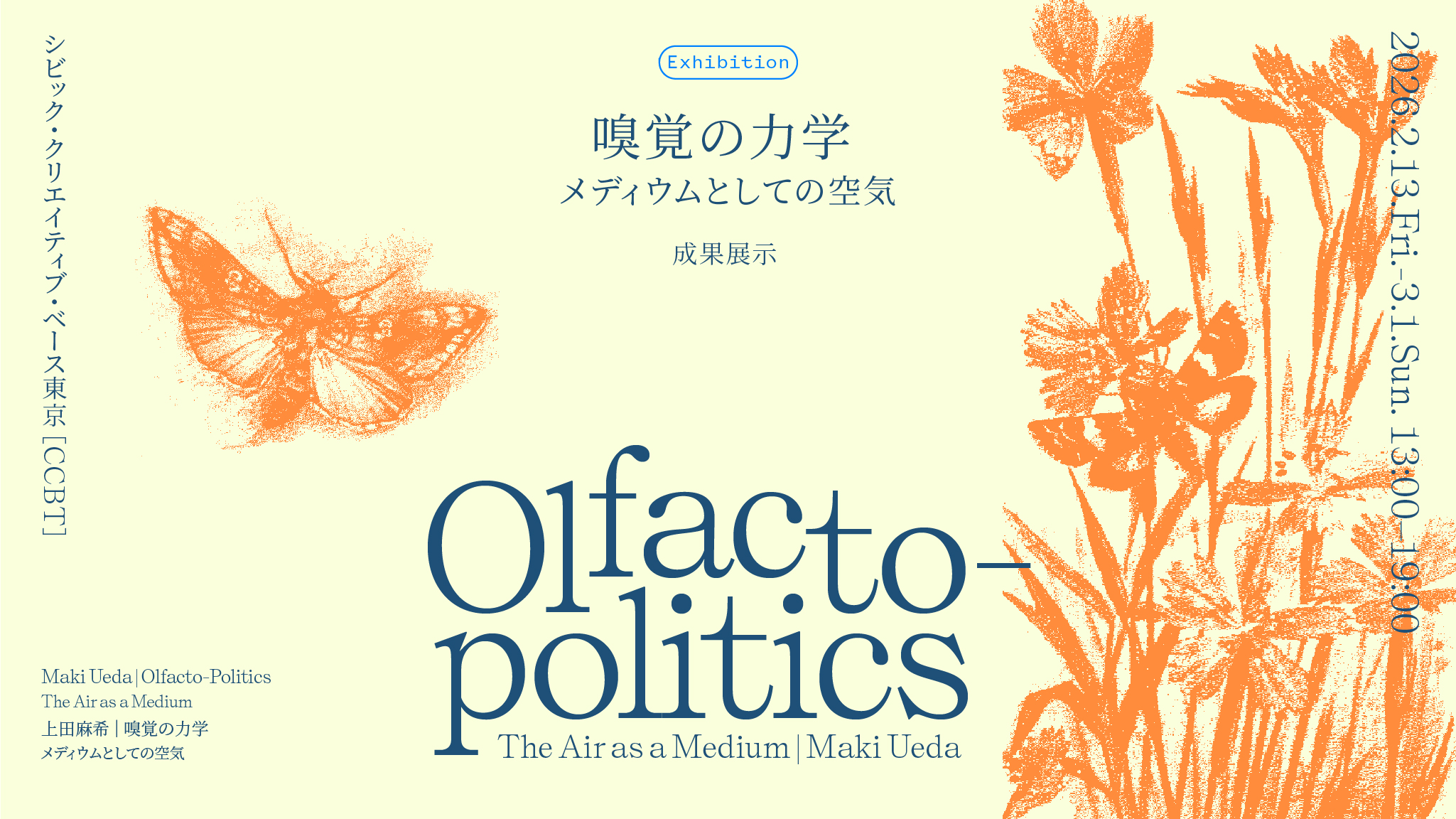
The CCBT exhibition Olfacto-Politics: The Air as a Medium comprehensively showcases the titular project by 2025 artist fellow Ueda Maki. In addition to documentation of the preceding exhibition at Yumenoshima Tropical Greenhouse Dome, it features new works based on research conducted for the project.
Olfacto-Politics: The Air as a Medium is 2025 CCBT artist fellow Ueda Maki’s multifaceted project attempting to use scent as a way of learning about the air as a commons, and of making the invisible air visible and possible to experience. This exhibition presents a comprehensive showcase of the project.
Olfacto-Politics: The Air as a Medium has developed across fiscal 2025 in three phases: education, research, and creative expression. It deals with smells beyond the ones regarded as pleasant and associated with everyday life. The project focuses also on smells linked to social issues like urban pollution and climate change, from the noxious stench of the sewers flowing beneath Shibuya to dangerous, potentially deadly smells like hydrogen sulfide.
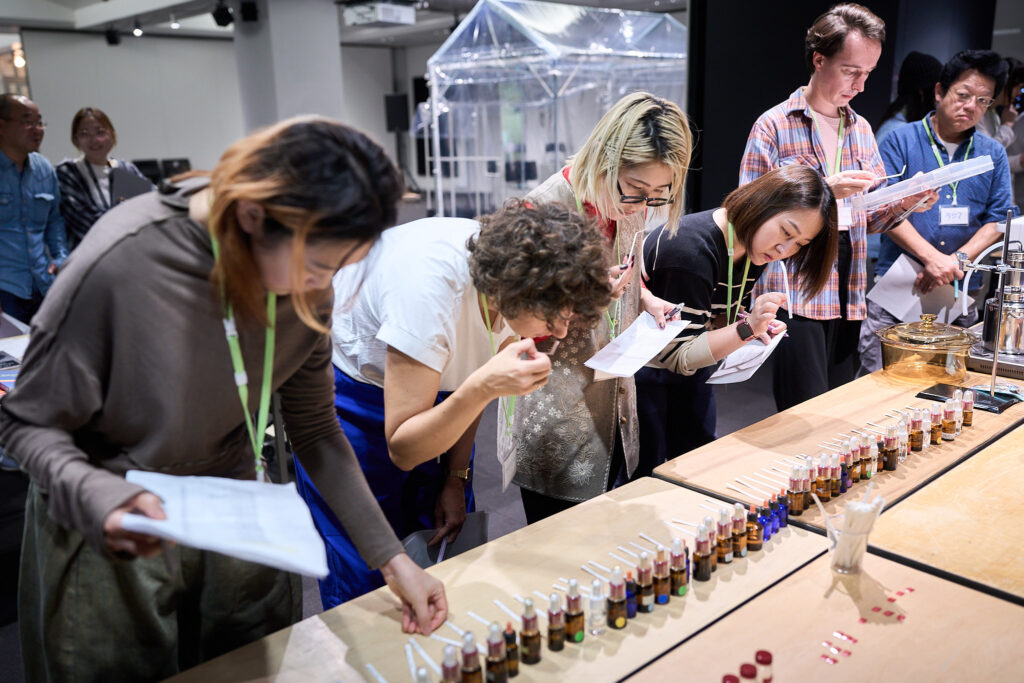
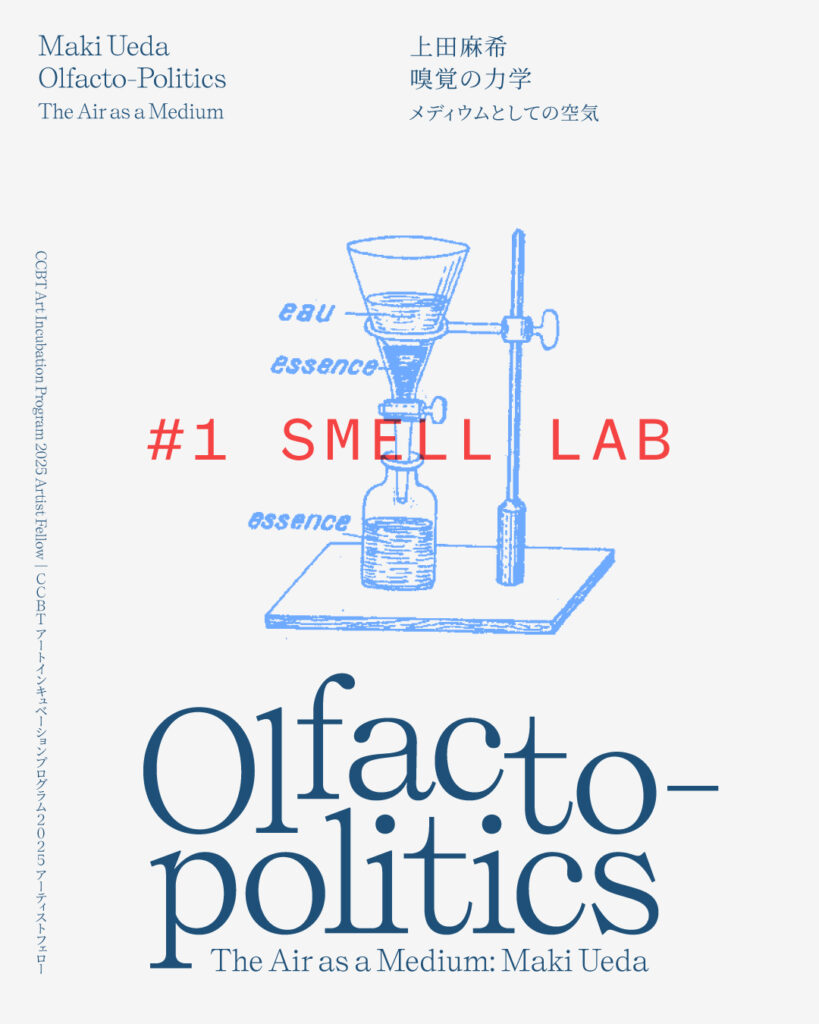
Although we live our lives surrounded by a wide variety of smells, we have few opportunities to learn about our sense of smell in a systematic way. Given this, the education phase of the project involved an olfactory seminar called “Smell Lab,” offering opportunities to learn through lectures and workshops.
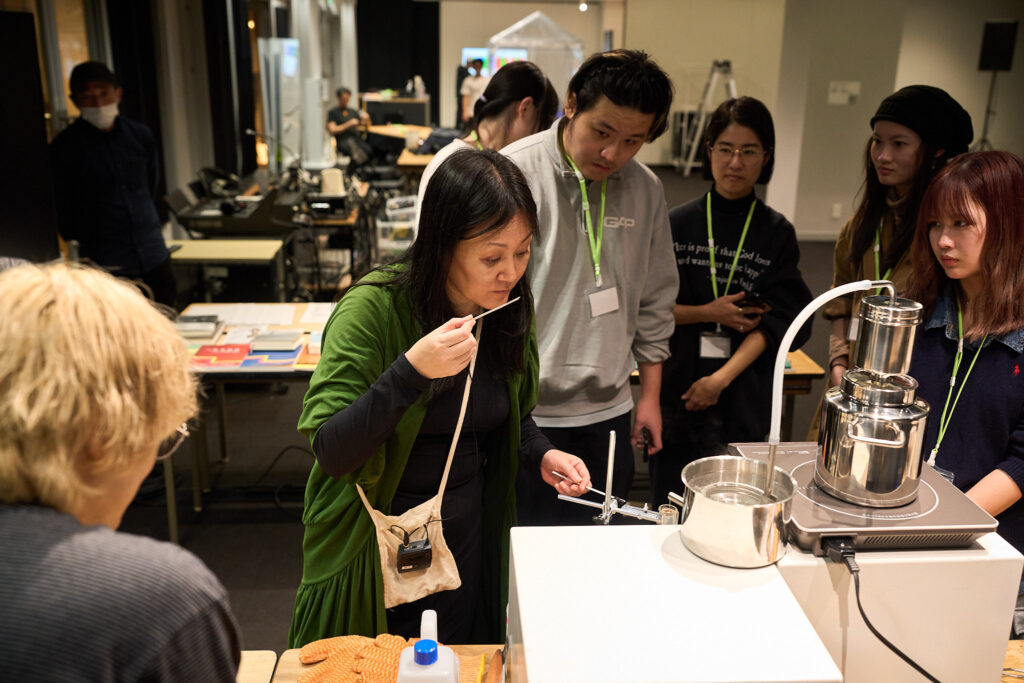
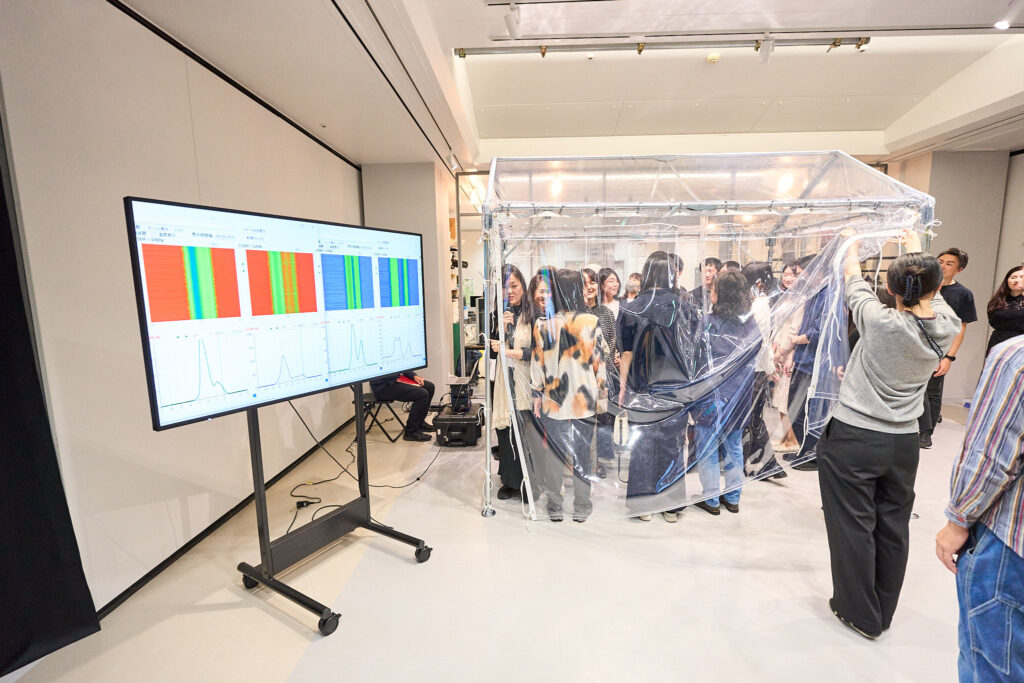
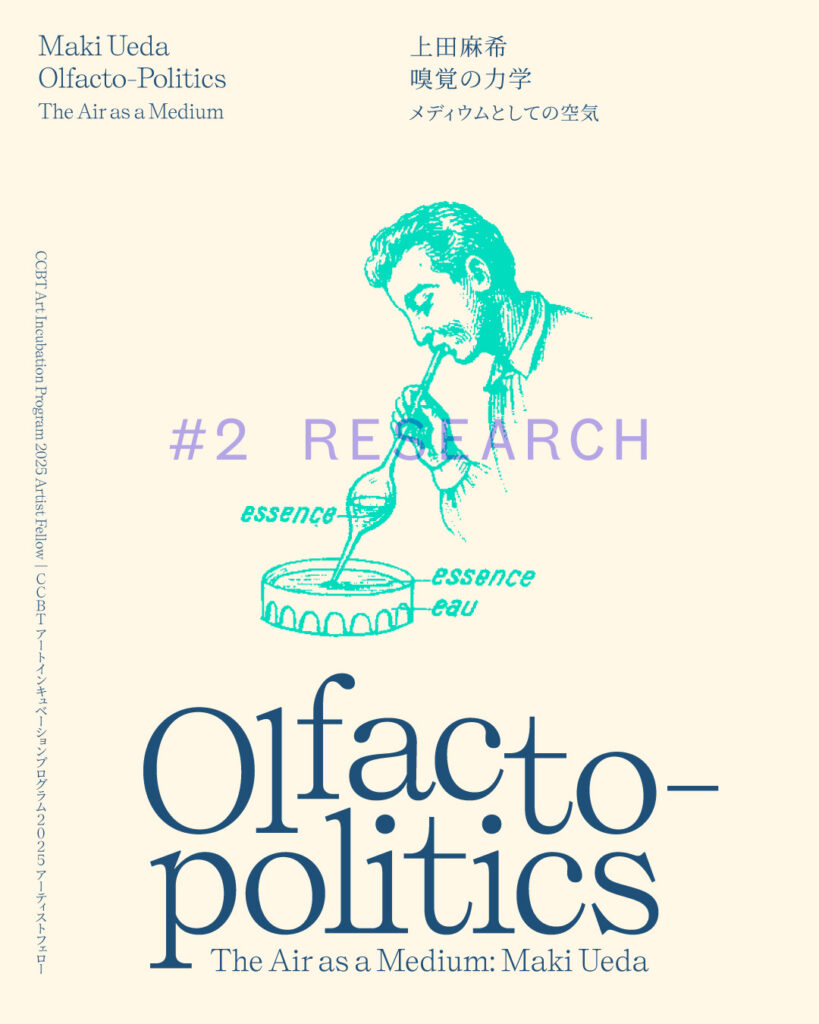
In the subsequent research phase, the project examined Shibuya as a case study, attempting to measure odors as objective data using Ricoh’s Field Asymmetric Ion Mobility Spectrometry.
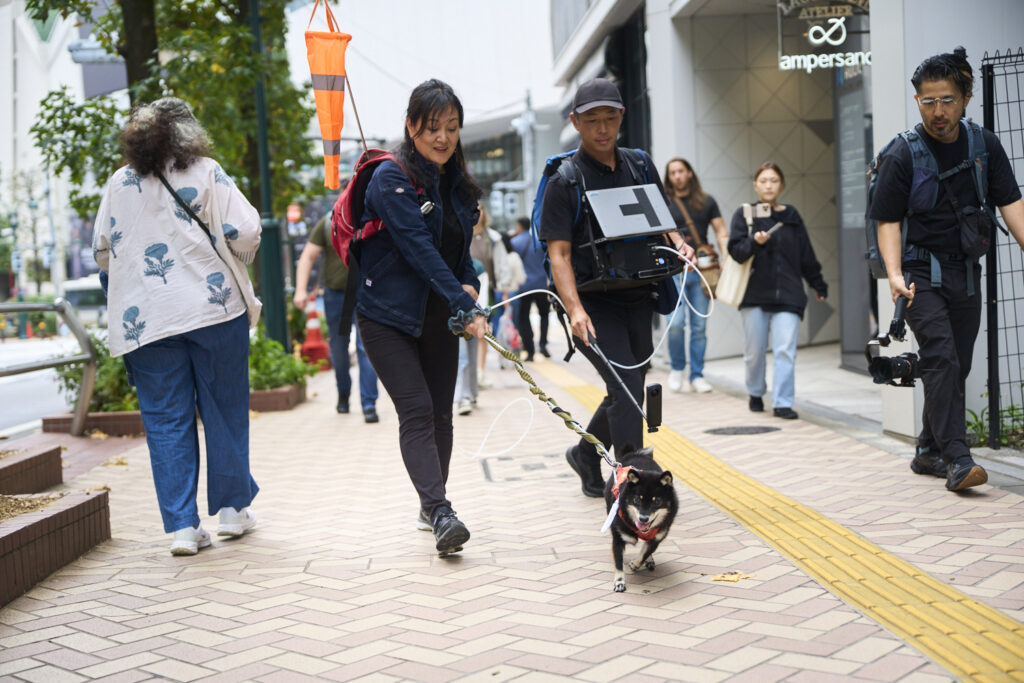
Focusing on how smell is an important means of communication not only for humans but also other animals and plants, the project conducted experiments to measure and record olfactory perception in dogs. Over the course of these efforts, the project explored ways to visualize the highly subjective and ephemeral smells that soon fade, and developed new perspectives on the invisible commons.
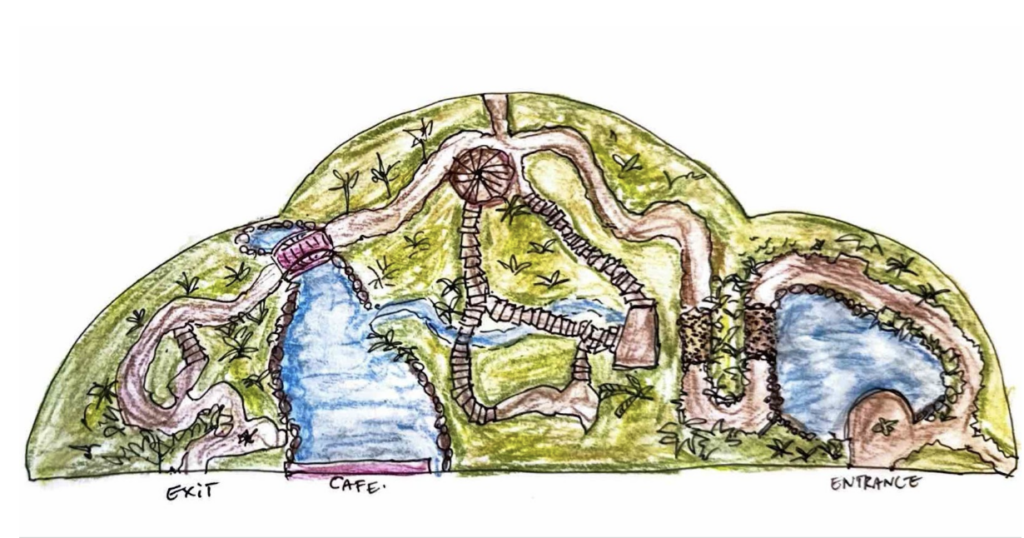
In the final creative expression phase of the project, the exhibition Aerosculpture Ver. 2: Biome of Scent is held at Yumenoshima Tropical Greenhouse Dome in January 2026. Intermingling artificially made scents with those of the natural environment, the installation conjures up a whole new olfactory experience.
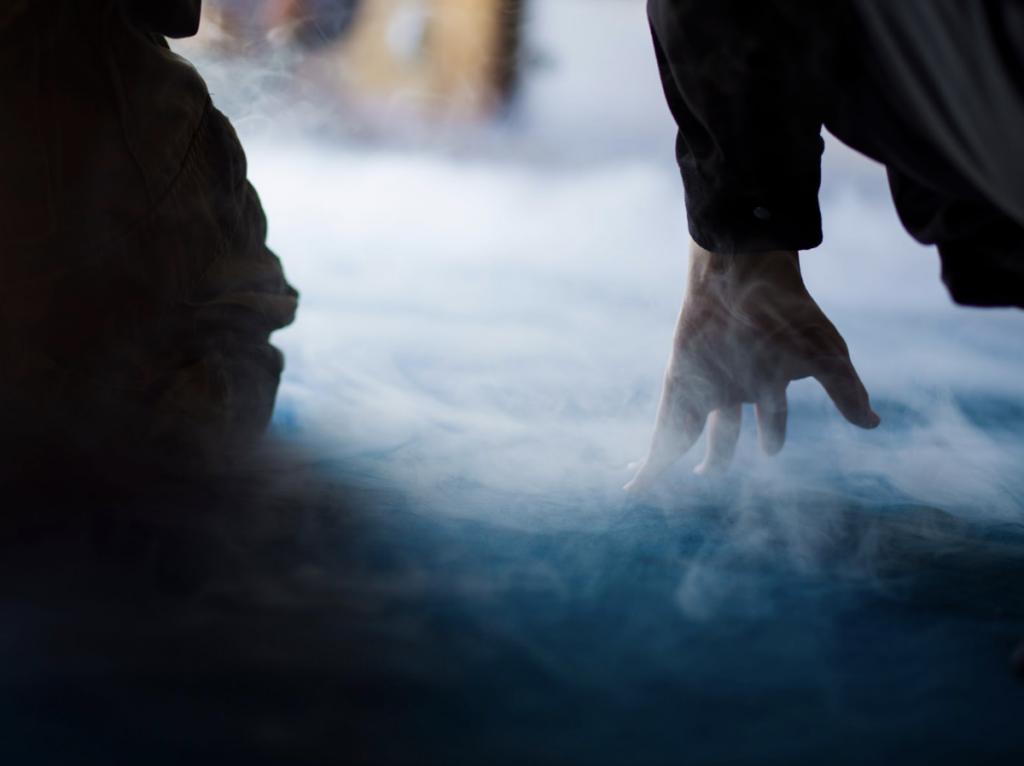
The CCBT exhibition introduces the process and trajectory of the various phrases of the project. It offers visitors the opportunity to come into contact with the air as part of the commons, made visible through technology, and to explore the environment we all share from a new perspective.
Project “Olfacto-Politics: The Air as a Medium“
This multifaceted project takes smell as a starting point for exploring the notion of the air we breathe as part of the commons, and attempts to make it possible to see and experience the air. The project comprises three parts: offering opportunities to learn in the form of lectures and workshops; conducting research to make the olfactory visible by using technology to measure the highly subjective sense that is smell; and creating and exhibiting spatial works that express air circulation. In this way, the project takes the air, the medium by which humans and all living creatures exchange manifold kinds of information, as a stepping stone to encourage us to think about biodiversity and biomes, and to inspire new ways of looking at the world.
Project structure
Phase 1
Olfactory Seminar “Smell Lab”
Phase 2
Research
Phase 3
Exhibition
Artist Statement Text : Ueda Maki
The air is a commons (that is, a shared resource). We all breathe in and out, meaning it is not possible to draw a line between what is mine and yours. The COVID-19 pandemic made us newly aware of this fact.
If we treat the air as a medium, then it is something through which all living things, humans included, exchange a vast amount of information. It contains gases such as oxygen and nitrogen, smells, aerosols, chemical compounds, viruses, and even things like life force that are difficult to explain scientifically. This project uses scent as a starting point for making visible how the air functions as a commons as well as the circulation of that commons, turning it into something that we can experience tangibly.
I have been working with smells as an olfactory artist for over twenty years. Scents and fragrances intrigue us by appealing to our emotions and memories. However, there is a tendency to exaggerate and focus too much on this aspect, and it is often thought that linking scents to emotions results in products and services more likely to sell. From another perspective, this also means that beings who need to breathe to survive are unconsciously manipulated. Moreover, crowded cities are, for better or worse, overflowing with artificial smells. If we consider odors in a broad sense as the volatile substances that enter the body through the sense of smell, the olfactory can also manipulate physiological phenomena, at times harming health and even leading to death.
In the recent sinkhole incident in Yashio, Saitama, a smell like that of rotten eggs (that of hydrogen sulfide, which corrodes metals) is said to have filled the surrounding area. The sarin gas used in the Tokyo subway terrorist attack thirty years ago was a volatile organophosphate nerve agent, which victims said gave off a foul odor. In overcrowded and confined Tokyo, one of the world’s most densely populated cities, smells always lurk under the surface as a potential source of conflict, as we saw in the well-publicized dispute that occurred in 2025 between a long-established eel restaurant and the new residents who lived in the apartment building above it. Even when things seem under control, odors then become an inevitable issue during disasters and emergencies.
If we think of air as a commons, then the various problems that arise in the air are also part of the commons—and the global commons. Recent Tokyo summers, for instance, have been dangerously hot. Climate change and global warming are urgent issues that we cannot put off any longer. Rather than usings smells to appeal to people’s memories and emotions, I want to use the power of technology (in the form of digital olfaction) to present objective data.
Cities are places where natural smells have been removed to become what we may call a human domain. Tokyo is a metropolis and people have only quite recently called such big cities home. It is also an immense olfactory laboratory. With Tokyo as its setting, my project aspires to question what it means to live (breathe), and to create a place where we can foster intelligence and resilience for our sense of smell.
CCBT Art Incubation Program
One of CCBT’s core programs, the Art Incubation Program provides opportunities for creative talent to undertake new projects and makes those processes accessible to the public, facilitating forms of artistic expression, exploration, and action that change our city for the better. Selected through an open call, five artist fellows will act as CCBT partners, developing their projects, making the creative process public, exhibiting the results, and holding workshops and talks.