
DAY 1
2026.08.07
Imagining Fashion of a Century Before and After
- Program Introduction: About the Program
- Participant’s Self-introductions
- Lecture: “What is Fashion?”
Lecturer: Ashida Hirofumi (Fashion Studies / Professor, Faculty of Design, Kyoto Seika University) - Lecture and Hands-on Workshop: “Reknitting a 100-Year-Old Knitting Pattern”
Instructors: TALK NONSENSE (Fashion Design and Research Practice) - Keynote Lecture: “What Is a Worthy Tomorrow?”
Lecturer: Ataka Kazuto (Professor, Faculty of Environment and Information Studies, Keio University / Senior Strategist, LY Corporation Group)
撮影:斉藤純平
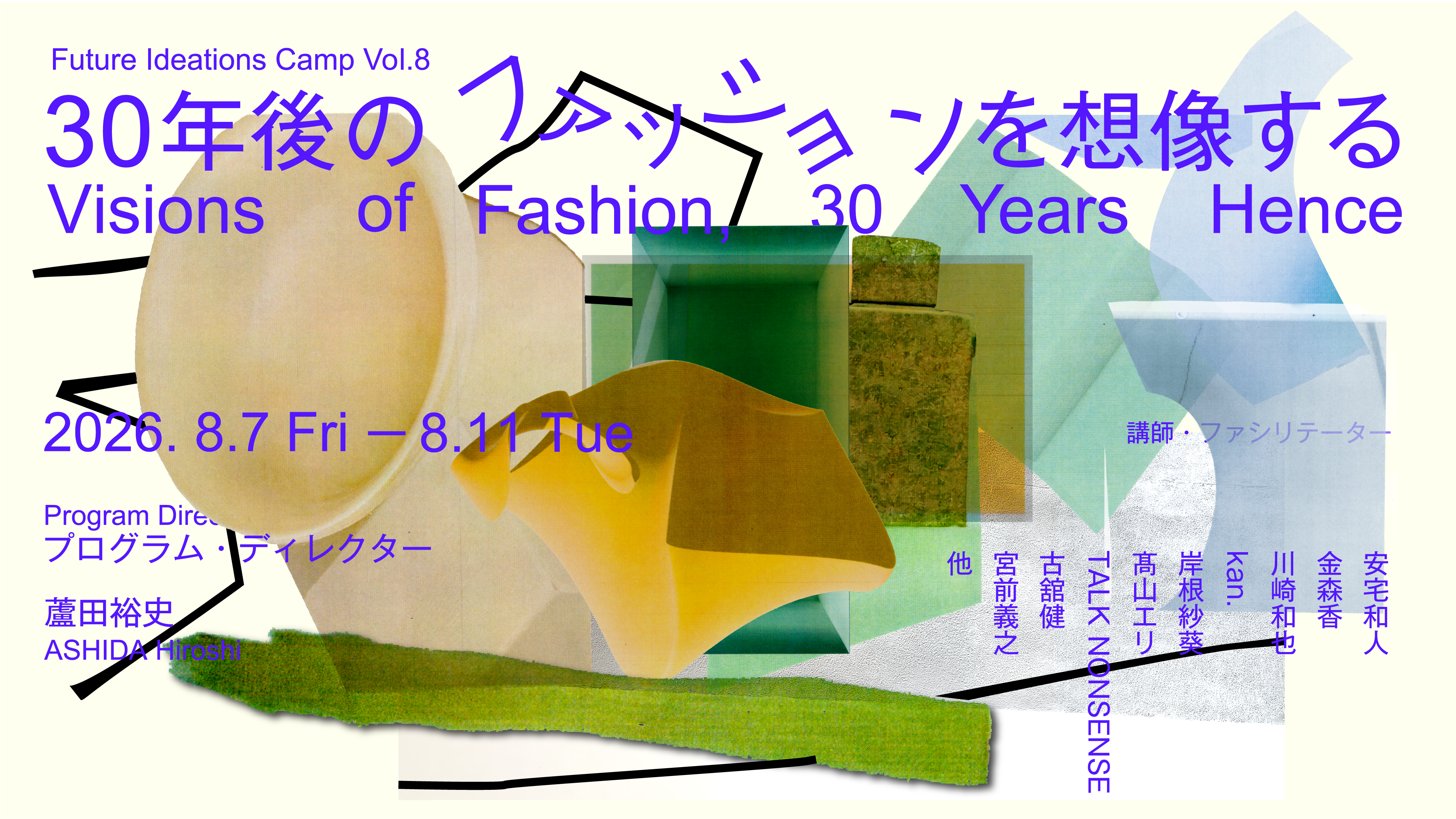
CCBT’s eighth edition of Future Ideations Camp is a five-day program held in the height of summer. Under the theme “Imagining Fashion 30 Years from Now,” 27 participants came together to explore the future of fashion and society.
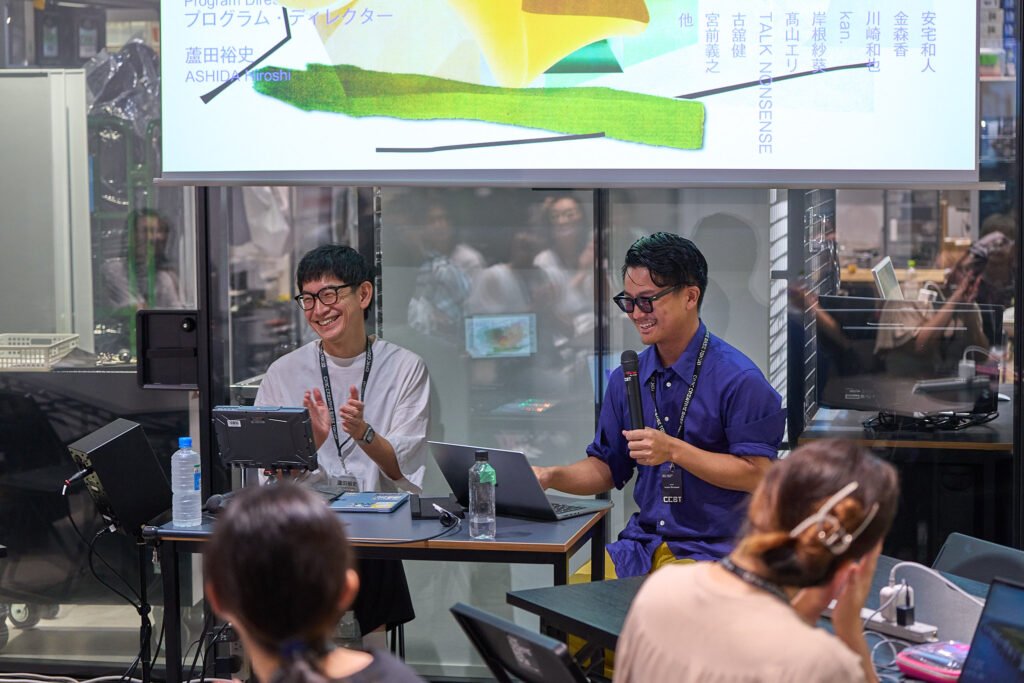
The first day opened with an orientation led by Camp Director, Ashida Hirofumi, and CCBT staff, Inada Shunpei. After outlining the purpose and structure of the Camp, Ashida discussed the difficulties of making concept-driven fashion part of everyday life, introducing FINAL HOME (1994–), the fashion brand founded by Tsumura Kosuke and its concept “the ultimate home is clothing” as an example. He suggested that one of the Camp’s key questions would be how to think about clothing in a way that feels grounded in our everyday lives and, by extension, in society.
After the orientation, each participant introduced themselves, bringing the morning to a close. The 27 participants came from a wide range of backgrounds, differing in age, expertise, and had each worked on projects that differed in scale and type. Still, each approached their work and creative practice with care and commitment. Although it was only the first day, the participants were already beginning to connect during the breaks
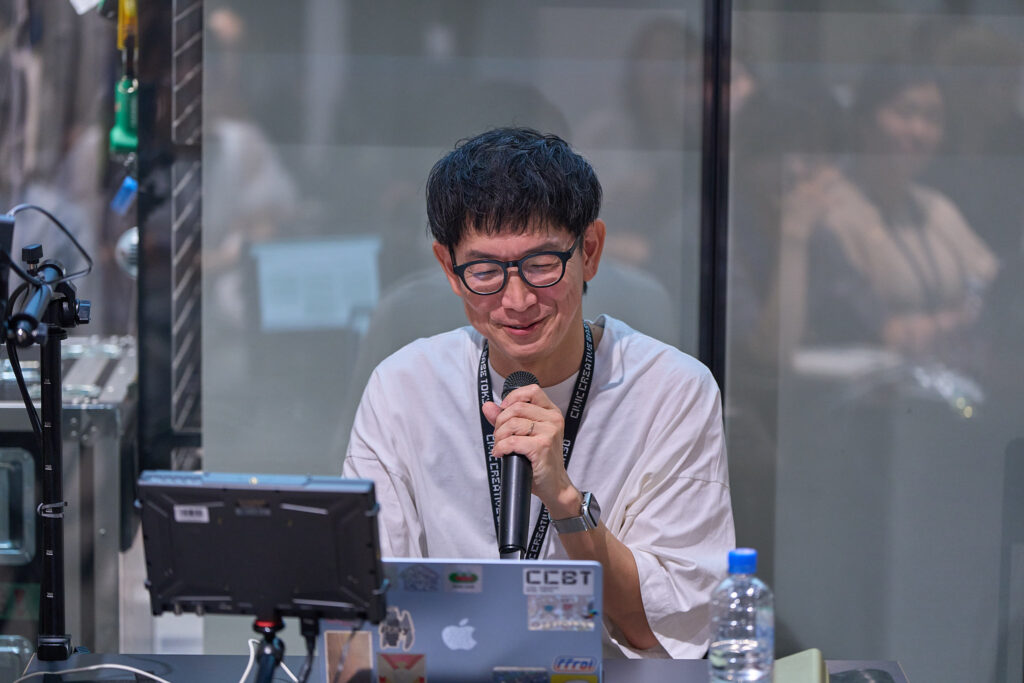
The afternoon featured two lectures and a keynote presentation. In his lecture “What Is Fashion?”, Ashida noted that the word “fashion” is highly ambiguous so, for this particular Camp, he argued that it is important to clarify exactly what participants mean when they use the term. The talk prompted everyone to reconsider the meanings of both “fashion” and “design.”
The session also incorporated Mentimeter, an online interactive poll used by technologist John Maeda back in Camp Vol. 1 (2023), allowing participants to respond to Ashida’s questions in real-time. This created an engaging, participatory format rather than a one-way lecture.
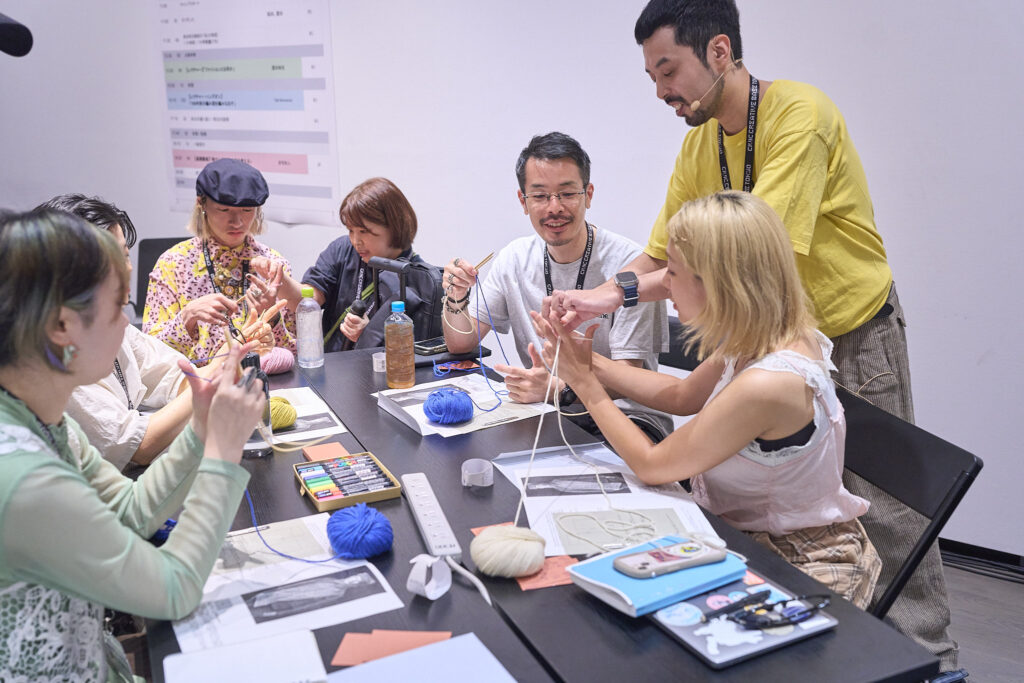
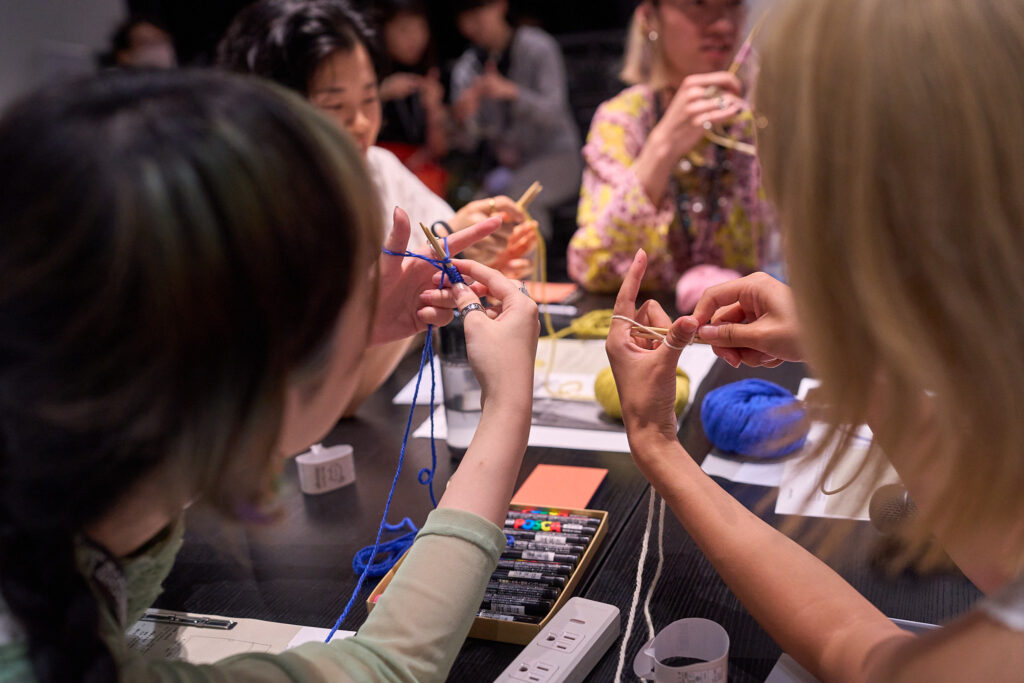
TALK NONSENSE’s lecture and hands-on workshop “Reknitting a 100-Year-Old Pattern” used a knitting pattern published in the United Kingdom in 1914. All the participants tried their hand at the practice reflecting on what has changed over the past 100 years and what has remained the same. It made for a fitting icebreaker, with participants teaching one another different knitting techniques.
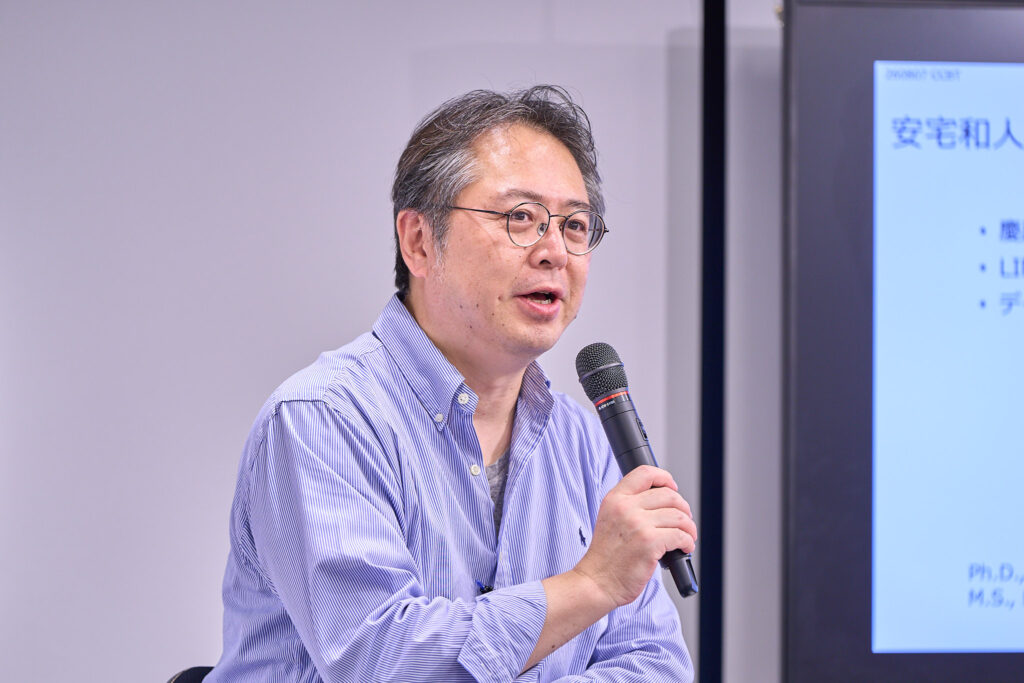
The day concluded with a keynote presentation by Ataka Kazuto, known for projects such as Valley of the Wind. Ataka began by noting that this was his first lecture on fashion and proceeded to propose that “imagining ‘fashion’ 30 years from now” is, in essence, “thinking about people and society 30 years into the future.”
What will people wear 30 years, or even in 100 years, from now? Starting from issues such as population decline, global warming, and increasingly crowded cities, Ataka presented a series of fundamental questions and the many possible approaches to the challenges we face. His ideas were clear and thought-provoking that they offered enough material for each participant to develop their own artwork or project.
At the same time, the real value and purpose of the Camp lies in how the lectures and group work over the coming days will bring multiple perspectives together and build on these questions in collaborative, concrete ways.
Day 1 ended with a growing sense of anticipation for the new ways of thinking about fashion that will surely emerge from Day 2.
DAY 2
2026.08.08
Beyond Clothing
- Lecture and Hands-on Workshop: “Fashion I Would Want for My 150-Year-Old Self”
Lecturer: Kanamori Kaori (Representative Director, DRIFTERS INTERNATIONAL / Associate Senior Producer, precog Inc.) - Lecture and Hands-on Workshop: “Imagining and Creating Fashion 30 Years from Now, Starting with the Planet”
Lecturer: Kawasaki Kazuya (CEO, Synflux / speculative fashion designer) - Presentations and Critiques
- Keynote Lecture: “ISSEY MIYAKE and the Possibilities of “A Piece of Cloth””
Lecturer: Miyamae Yoshiyuki (Designer, A-POC ABLE ISSEY MIYAKE)
撮影:斉藤純平
Temperatures reached 34°C on Day 2. Although the Camp was held indoors, we made sure to stay hydrated to avoid getting heatstroke.
The first lecturer was Kanamori Kaori who organizes and produces events centered on “theater and the body.” She began by introducing the projects she had worked on with people with disabilities, along with examples of international fashion brands offering adaptive clothing lines designed around their needs.
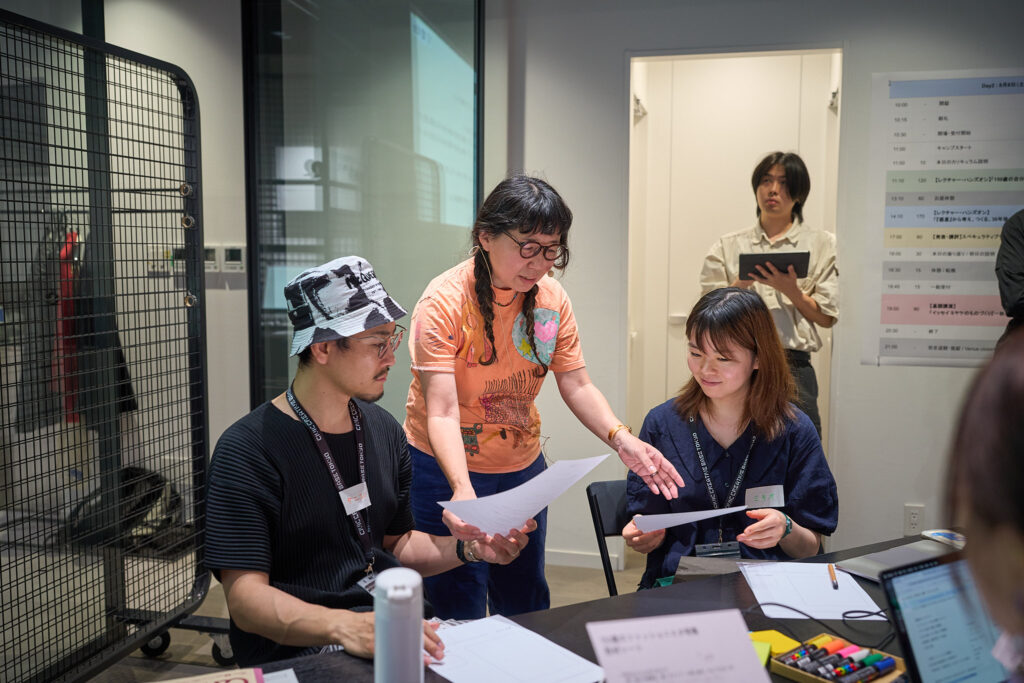
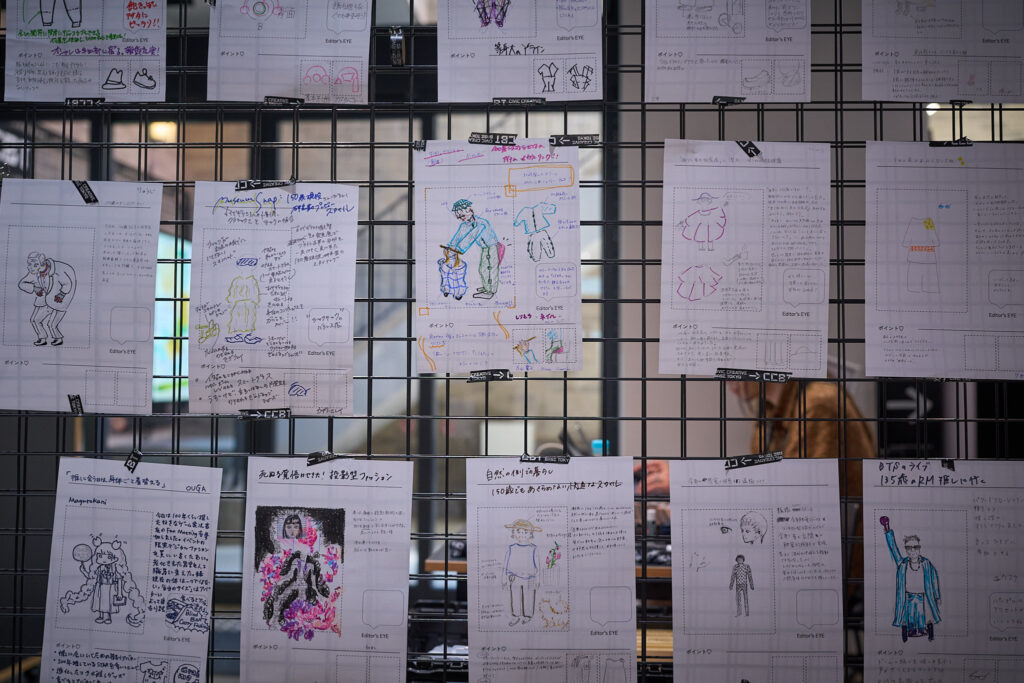
The participants then took part in a workshop titled “An Exclusive Interview with a 150-Year-Old Fashionista.” Working in pairs with question sheets and interview templates, they interviewed one another, developed their ideas, and turned them into articles. Designing for older people can seem unrelated to younger generations but imagining how our own bodies and everyday lives might change over the coming decades made the subject feel more immediate and personal. The completed articles were displayed in the venue, where Kanamori added comments and participants exchanged their thoughts.
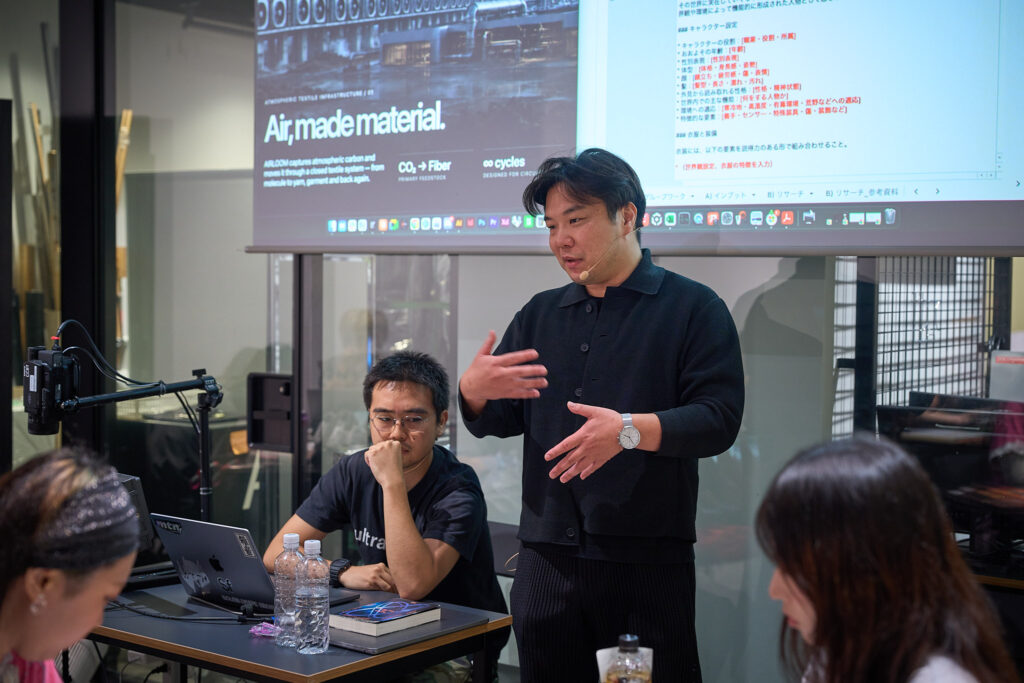
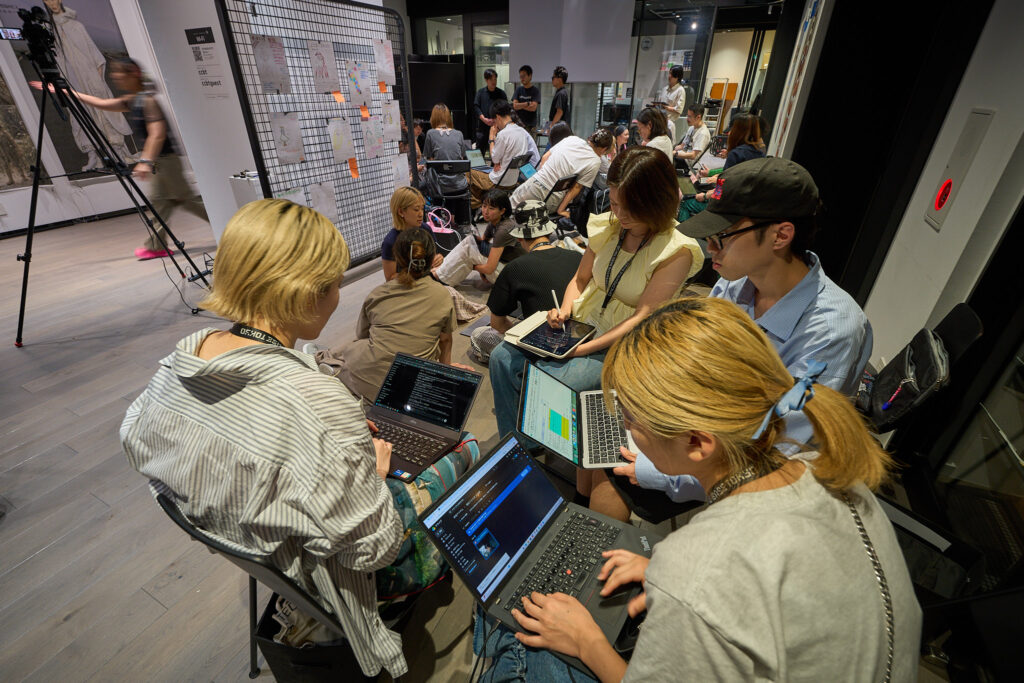
The second lecturer was Kawasaki Kazuya of Synflux. Participants began the session in pre-assigned teams and were given a fictional premise: they had left their current jobs to launch startups in the fashion industry. Each team was asked to imagine the landscape of clothing 30 years from now and develop a vision and product for its hypothetical company.
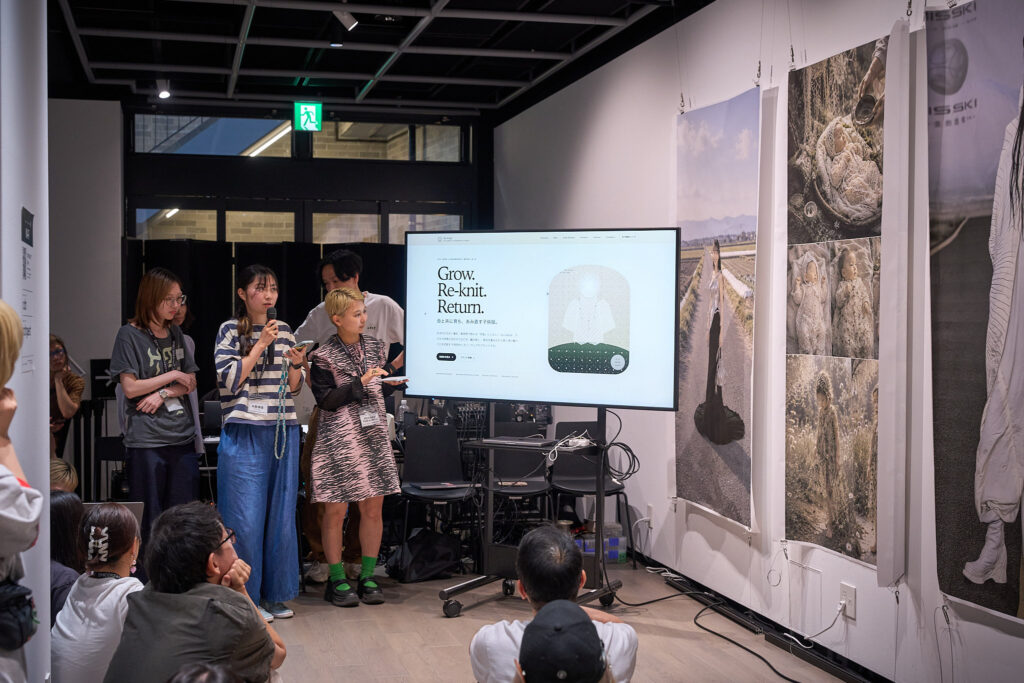
Using carefully designed worksheets prepared by Kawasaki, the teams worked through a series of timed tasks. After receiving background information and relevant examples, they answered a set of questions and entered their responses into AI tools to create the visuals and websites articulating the identities and worldview of their companies and services. Presenting a business and its services in just three hours was a considerable challenge, and the teams continued to work right up to the deadline.
After three hours of research and production, the teams presented their ideas and received feedback. Their proposals included a platform connecting designers with factories, garments that could be grown, and a 3D-printing service connecting designers and consumers. During the feedback, participants were reminded to consider the value a project offers both its makers and its users.
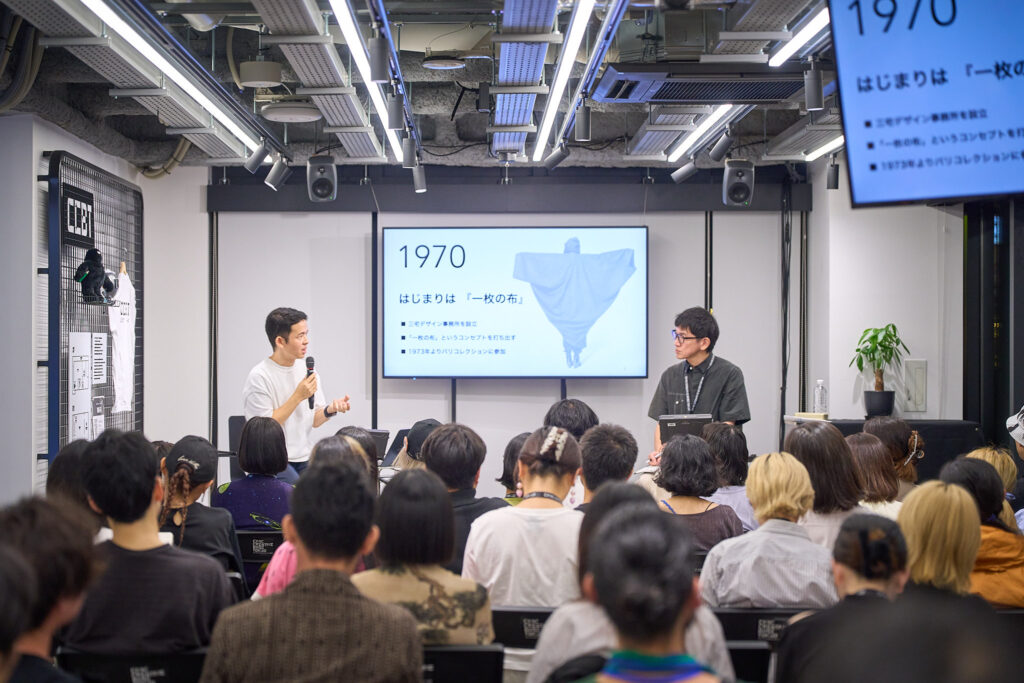
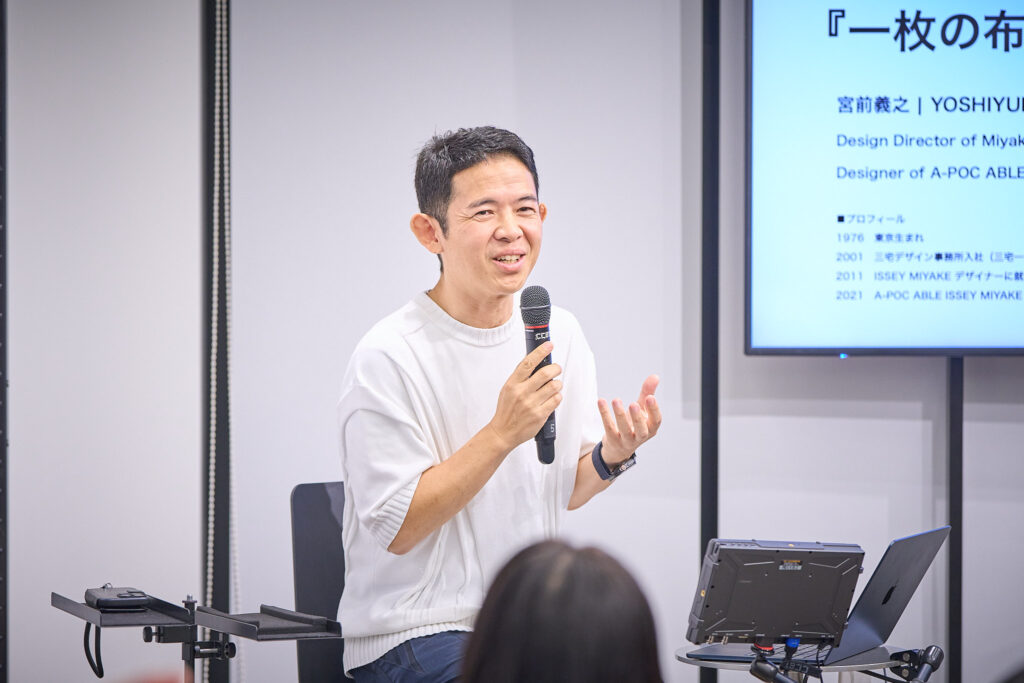
The final lecturer of the day was Miyamae Yoshiyuki, a designer at A-POC ABLE ISSEY MIYAKE. He began by introducing Issey Miyake’s 1960 proposal concerning the first World Design Conference held in Japan, where clothing design had initially not been included. Although the fashion industry has made significant progress over the past 60 years, Miyamae pointed out that fashion in Japan, unfortunately, remains somewhat detached from society.
In his current work at A-POC ABLE ISSEY MIYAKE, Miyamae says that what he is looking for “cannot be found in the world of fashion alone.” He emphasized the importance of crossing disciplinary boundaries, making connections, and working through misunderstandings in order to arrive at genuine understanding. During the Q&A, he remarked, “Seeing something you have never seen before and feeling exhilarated is what makes us human.” His words revealed a childlike curiosity at the heart of his sincere approach to making.
DAY 3
2026.08.10
Talk, Wear, and Talk Again
- Introduction of Facilitators
Kishine Saki, Furudate Ken, kan., Hiraoka Mao, Kokaji Shingo (TALK NONSENSE), and Oki Yuki (TALK NONSENSE) - Lecture and Hands-on Workshop: “I Think Anything Is Fine—but Why Isn’t Everything Fine?”
Lecturer: Takayama Eri (stylist) - World Café
- Group Work
撮影:斉藤純平
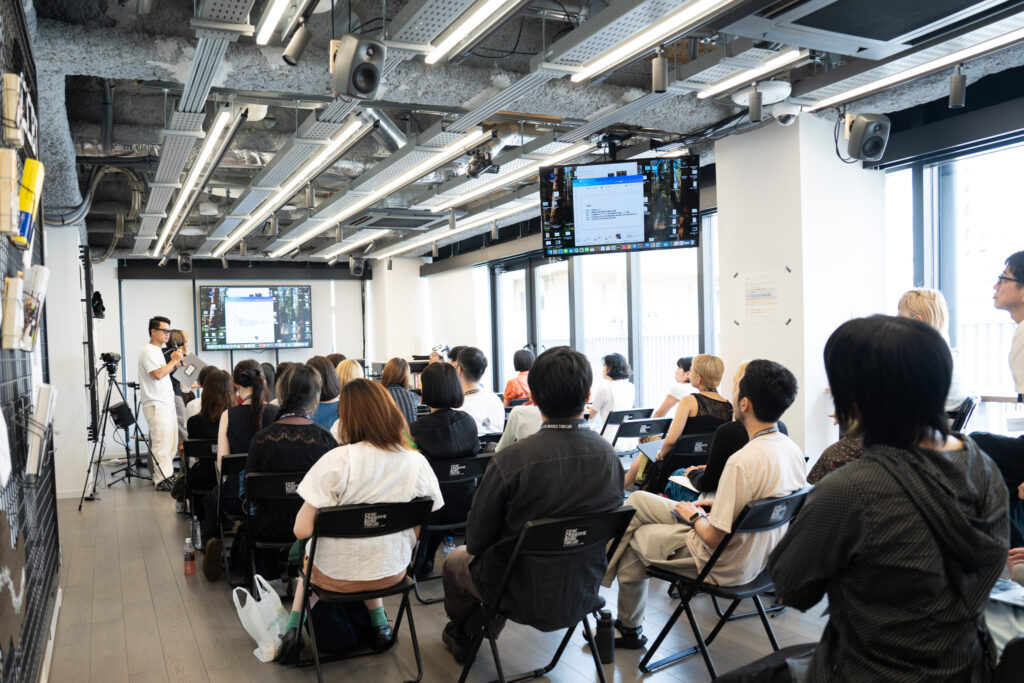
Day 3 began with introductions to the facilitators of the Camp: Kishine Saki researches the intersection of thanatology and fashion; Furudate Ken is a musician and engineer who also works with textiles; kan. develops projects centered on traditional textile crafts while traveling around the world; and artist Hiroaka Mao creates works that explore the shifting intimacy that emerges through relationships with others. Each facilitator introduced their work and practices as the Camp moved into its third day.
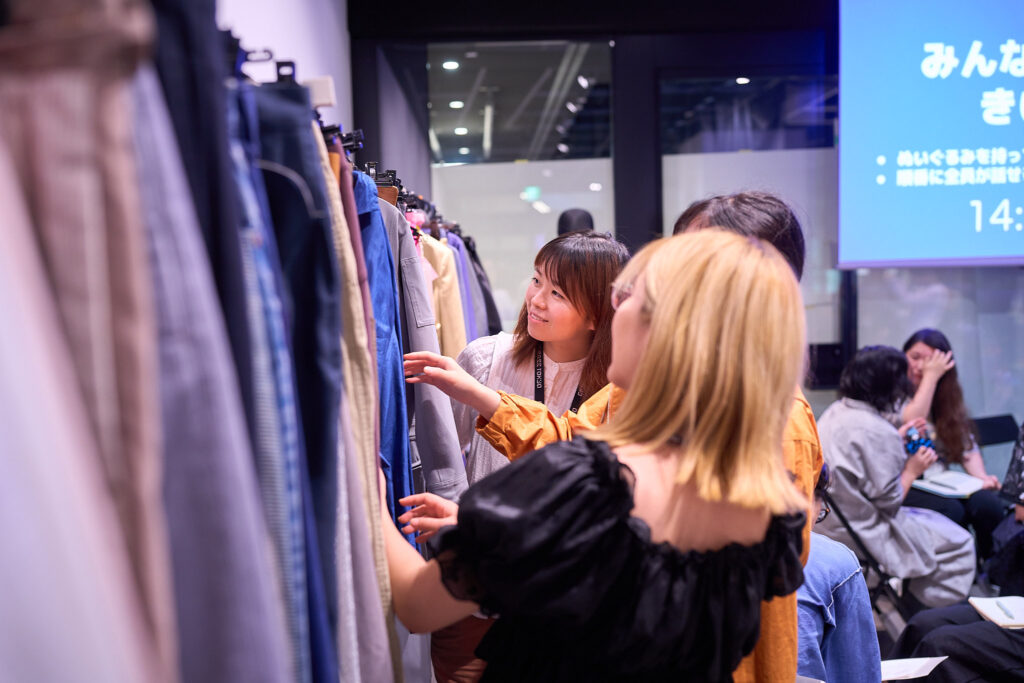
In the afternoon, stylist Takayama Eri led a lecture and hands-on workshop: approximately 150 pieces of clothing prepared by Takayama were displayed on racks covering an entire wall of CCBT. The session began with an informal conversation about clothing among Takayama, Camp Director Ashida Hirofumi, and the participants. The participants then formed groups of three to share their questions, concerns, and desires surrounding getting dressed.
They then continued to style one another: some of the clothes were unfamiliar to participants because of their professions, lifestyles, or where they lived, but they eagerly experimented with combinations suggested by others. To close the session, Takayama emphasized the importance of thinking about designs with “rounded edges”—that is, accessible to many people—and also valuing one’s own emotional responses, such as what feels enjoyable or appealing in clothing, referring to Kanamori Kaori’s lecture from the previous day.
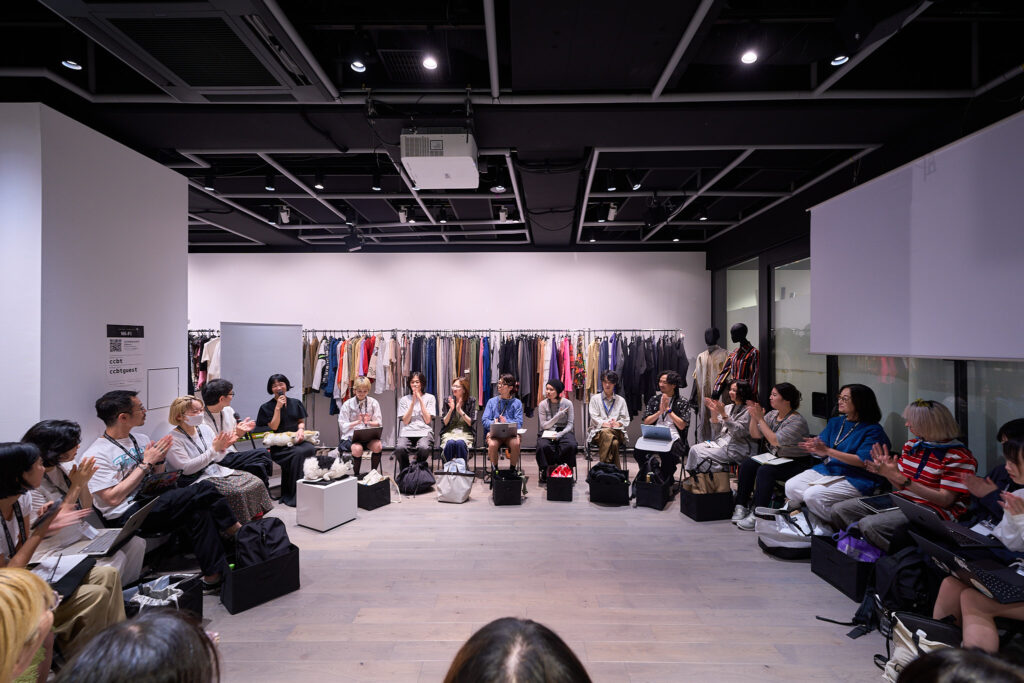
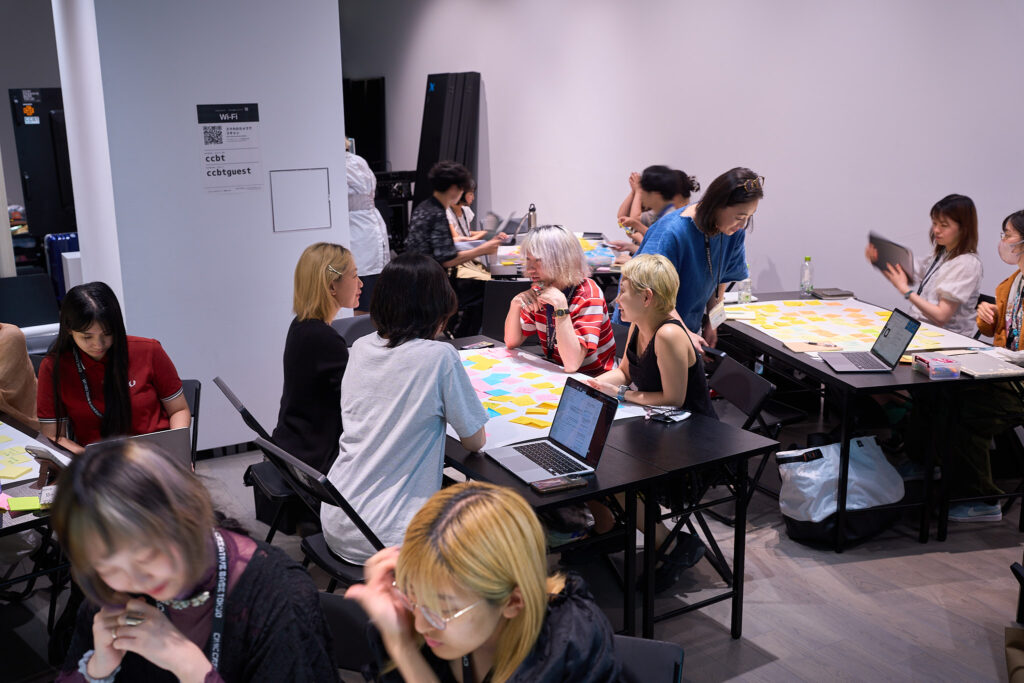
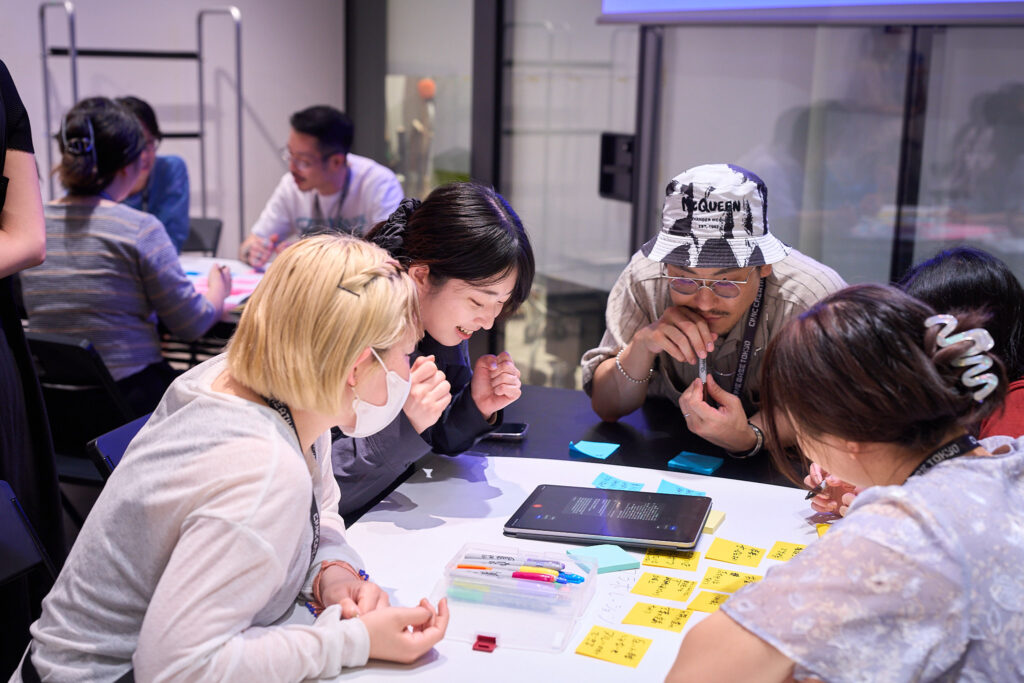
In the evening, the participants took part in a World Café, rotating between groups to discuss the six themes that emerged from the previous lectures and feedback: 1) Circulation, 2) Making for oneself, 3) Collaboration, 4) Communication, 5) What to Preserve, and 6) the Body. Each table was covered with large sheets of paper and sticky notes, where participants recorded their thoughts and discoveries. By the end, the sheets were filled with notes, and some of the conversations continued well into the break.
The participants then formed six teams for the final presentations, each participant joining the table whose theme interested them most. Using these themes as starting points, each team will develop a work toward the final presentation and exhibit.
The day ended with group work with one facilitator joining each team. The participants spent nearly two hours discussing ideas and developing their projects, with breaks and light refreshments as needed.
DAY 4
2026.08.11
Group Work and Progress Presentations
- Group Work
- Progress Presentations
- Group Work
- Lecture: “The Mice’s Sleep Talk | We Squeak”
Lecturer: Eiki Mori (Photographer)
撮影:斉藤純平
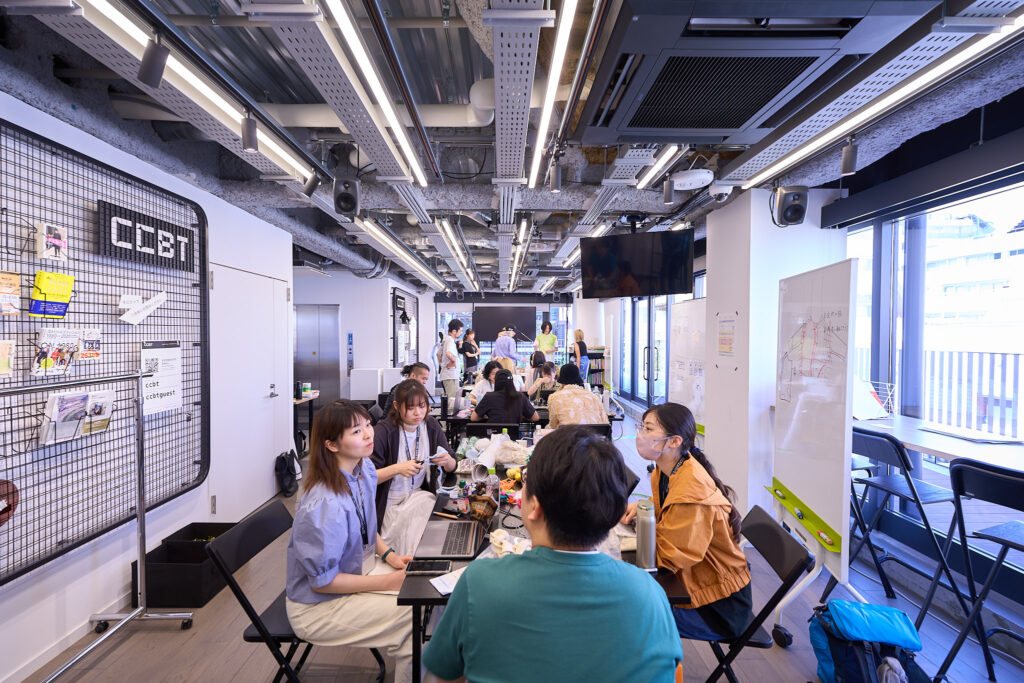
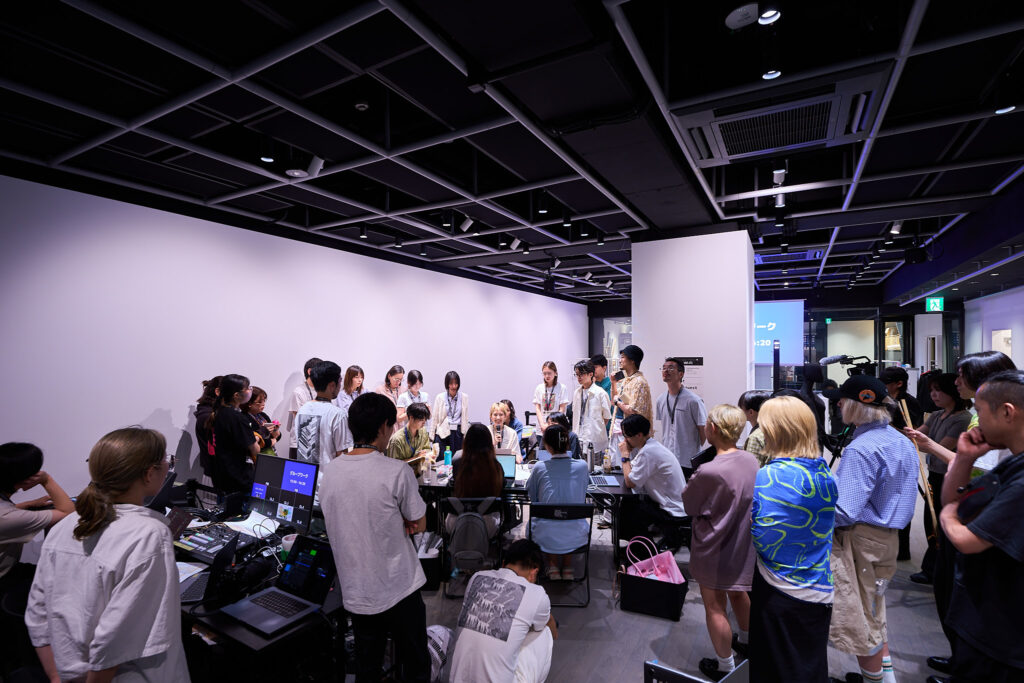
Day 4 began with a review of the previous day by Ashida as, from today. From this point on, group work became the focus as participants were now expected to develop their ideas into prototypes for the exhibit. In addition to the facilitators, they received the full support of CCBT’s technical team—specialists in software engineering, hardware, woodworking, sound, and lighting and other fields—who helped bring their ideas to life.
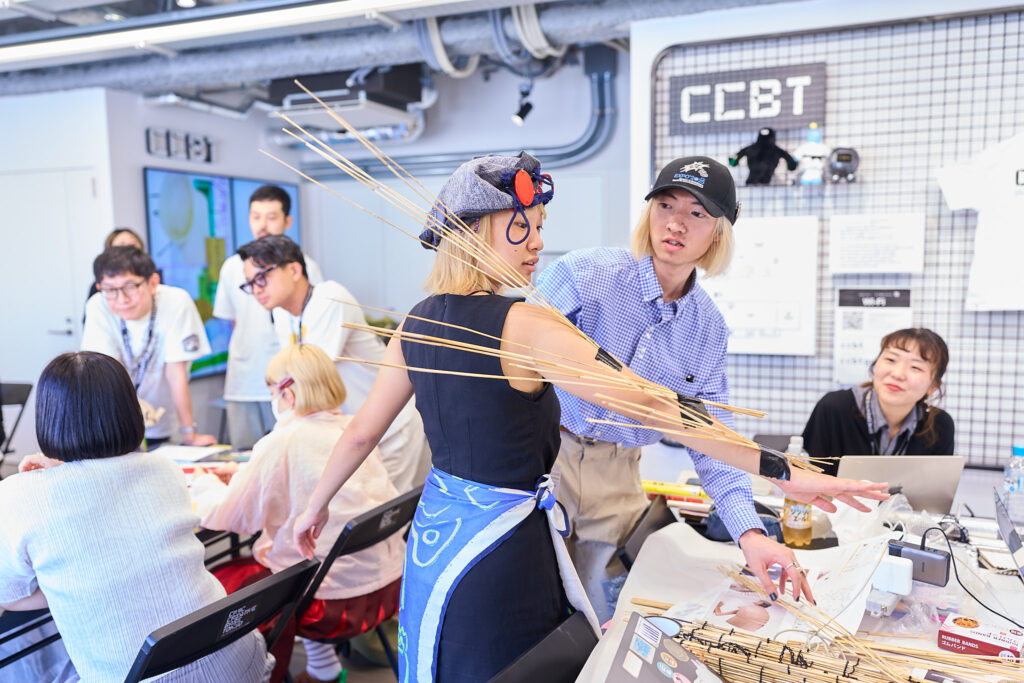
During the morning, some groups brainstormed using large sheets of paper and sticky notes, while others spread out research and homework from previous days t begin their discussions. Some had already begun exploring material and fabrics for their prototypes. In the afternoon, the groups began narrowing down their ideas in preparation for the progress presentations. Some continued their discussions using whiteboards and AI tools, while others experimented directly with materials, attaching them to their bodies. Groups with a clearer vision of their prototypes worked backwards from their intended outcome, refining their concepts and considering how the work might be showcased.
At the subsequent progress presentations, each group reported on the development of its initial ideas over the two days of group work. The “Remnants” group focused on how keepsakes and traces of our loved ones might be carried across time and space. The “Circulation” group had initially planned to address the negative aspects of (re)cycling, but reconsidered their approach in response to feedback. They ultimately chose to explore forms of circulation that convey love and the touch of human hands.
The “Physical Body” group developed a prototype based on the idea of clothing that does not leave its wearer feeling isolated. They explored garments that feel like an extension of one’s own body even when their movements are not produced by the wearer’s own actions. The “Collaboration” group focused on the experience of buying clothes. Following a visit to SHEIN’s physical store in Harajuku, they observed there is a lack of continuity between trying on clothes in-stores and buying them online. From there, they proceeded to explore what trying on clothes might be like in 30 years. The “Communication” group focused on the human instinct to want to connect with others. They began developing their prototypes by asking themselves how they might find their friends in 30 years? The “Make It Yourselves” group began by asking when a piece of clothing becomes “complete” and further worked on a prototype where visitors at the exhibit participate in completing the displayed garment. Camp Director Ashida and the facilitators offered feedback to help each group further develop their ideas. With only a few hours remaining, the groups entered their last stretch to finalize their prototypes.
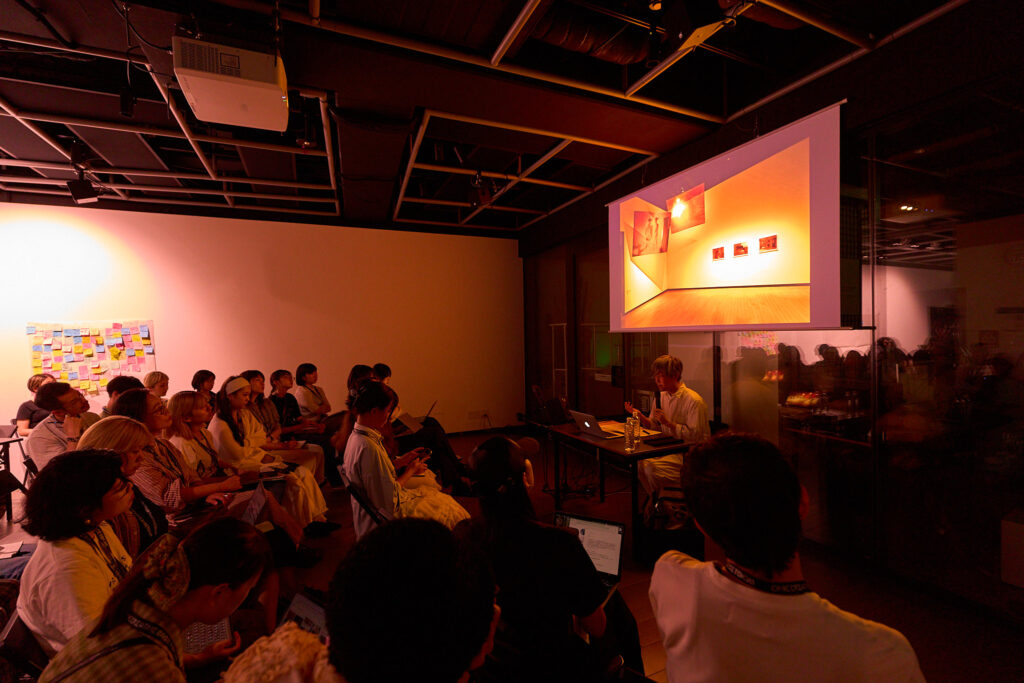
The day ended with a lecture by photographer Mori Eiki. His works explore relationships between people—familial relations and partnerships—and among the projects he introduced was a body of work in which he became part of a fictional family and created family photographs. He also discussed the photograph of him with a young man, and a series of snapshots taken by passers-by of a group of three boys in red clothing walking through the streets in Ikebukuro.
Mori’s photographs capture relationships that cannot be fully named through existing language. Although his work is sometimes interpreted as political, he explained that he has no intentions of making political statements. Everyday acts—baking or eating a cake, for instance—can sometimes be misconstrued as gestures of protest. His reflections prompted us to consider forms of expression that unintentionally raise questions about society, and whose meanings expand through the imagination of those who encounter them. Perhaps fashion, too, can communicate something without the use of language.
DAY 5
2026.08.12
Group Work / Final Presentations
- Group work
- Final presentations
撮影:斉藤純平
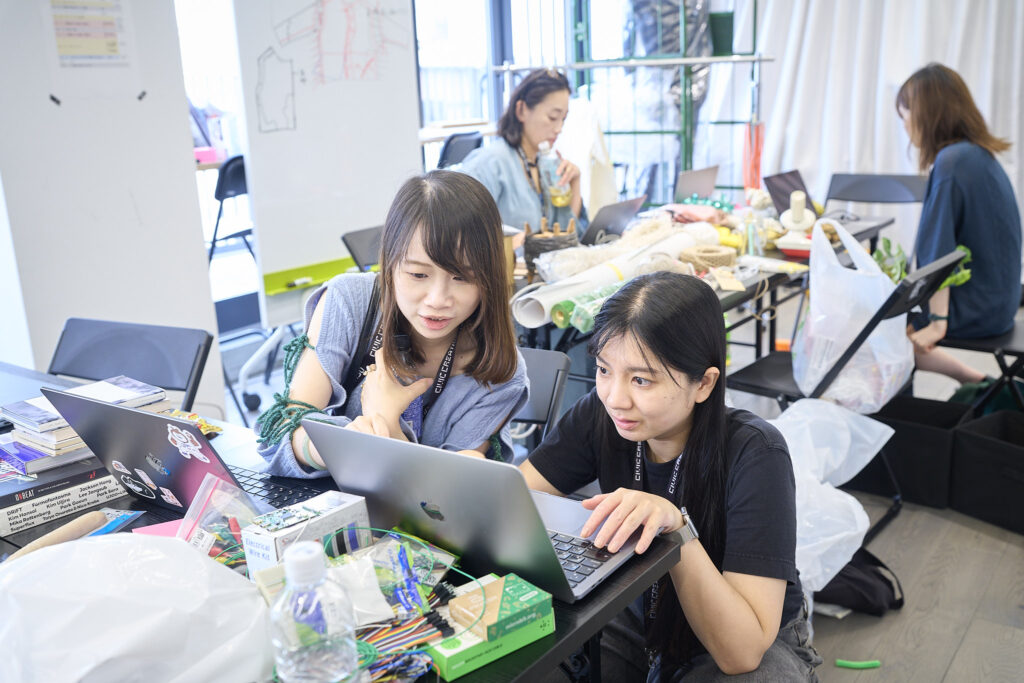
The final day of the Camp, Day 5, began with a strong sense of commitment. Some groups had already met by phone that morning, while others arrived after purchasing materials for their prototypes.
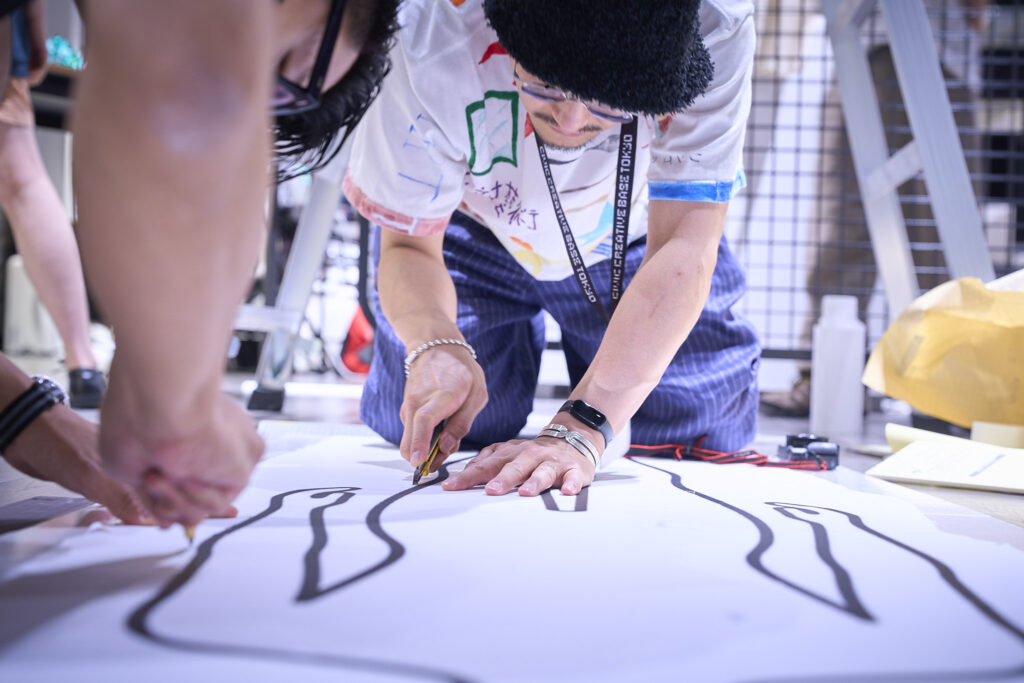
As soon as they arrived at CCBT, the groups got to work. Some were still refining their ideas but, through active consultation with the CCBT team and facilitators, they gradually moved into production. Around noon, they shared their exhibit plans with the technical team and considered ways to present each work—using monitors, projectors, mannequins, large-format prints, and more. With limited time remaining, everyone worked quickly to complete their prototypes for the exhibit.
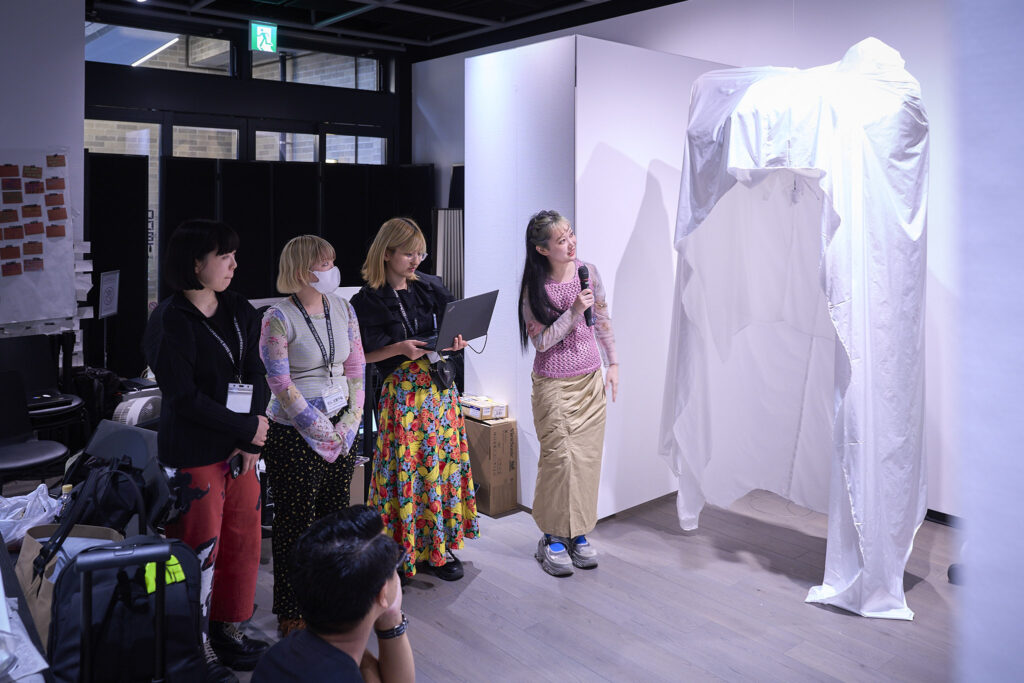
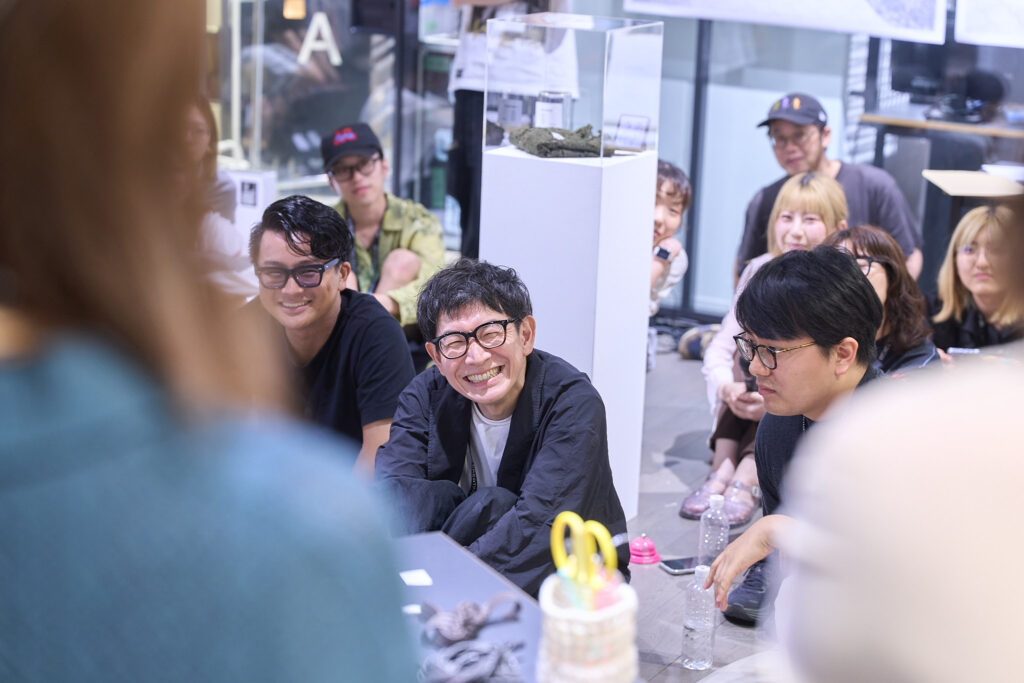
That evening, the groups gave their final presentations. Each shared a prototype and installation plan developed in response to feedback from the previous day’s progress presentation. Some continued in the same direction, while others made significant changes. Below are selected comments from the Camp Director and facilitators.
Collaboration
A portable personal space inspired by a canopy.
・Beginning with the idea of carrying one’s own space, the discussion considered whether it could function as a shelter in a disaster, or whether drones might enable the entire space to float.
・These suggestions opened up further possibilities in the use of technological devices.
Physical Body
A garment worn by two people.
・The group’s research into changing perceptions of the body over the past thirty years and their attempt to imagine how our bodies may change in 30 years, were particularly compelling.
・The presentation also prompted discussions about how the mannequins might be displayed.
Communication
Items that signal communities 30 years from now.
・At present (the time of the final presentation), one mannequin wears items representing several communities.
・To differentiate the affiliations clearer, the group was encouraged to consider using several mannequins.
Circulation
A helical textile and audio exploring “circulation with love.”
・The heartbeat-like audio was especially striking.
・The group was encouraged to further explore ideas such as “love” and the “inorganic,” which could further expand the worldview of the work.
Remnants
A service for preserving clothing and their memories.
・The group carefully designed the user’s experience, down to details such as creating a contract for the service.
・Their consideration extended beyond the service itself to the exhibit’s visual presentation, including the use of photographs and a laboratory-like display.
Make It Yourself
An unfinished piece of clothing “completed” with the help of visitors.
・The mechanisms that invite visitors into the work—such as tags attached to each material that visitors can handle—were effective.
・The discussion also considered specific installation approaches that would make the most of this participatory structure.
Over the five days of the Camp, participants were asked to imagine how our behaviors and “fashion” of living might change in 30 years; their response ultimately took material form in the 6 prototypes.
In closing, Ashida spoke about the importance of imagination. Acting for someone is important, he said, but first we must consider and imagine their lives and the circumstances in which they live. This ongoing effort can ultimately benefit us all and may even contribute to peace. The Camp came to a close with CCBT’s hope that the participants would carry the insights and questions gained over the five days into their future practice and everyday lives.